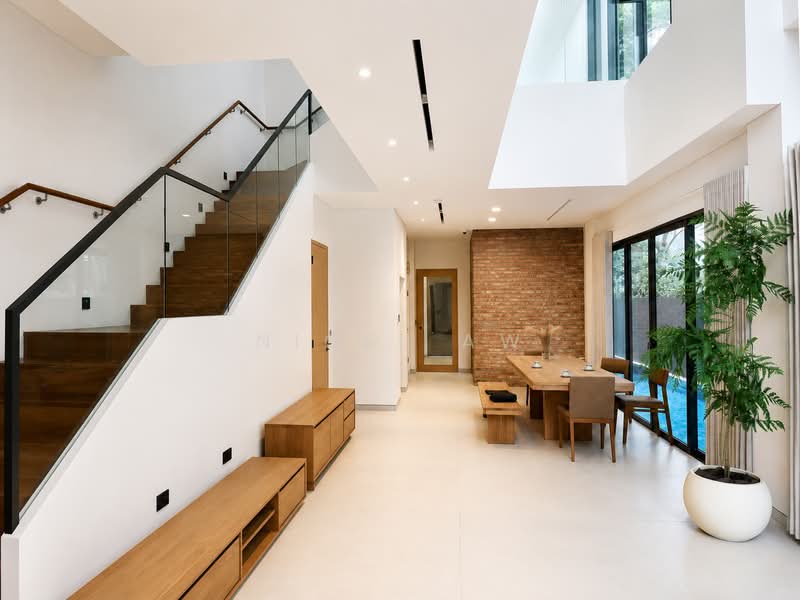
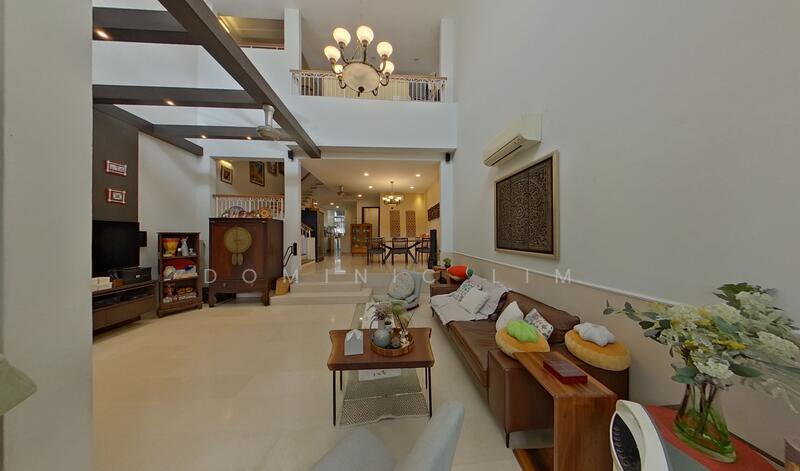
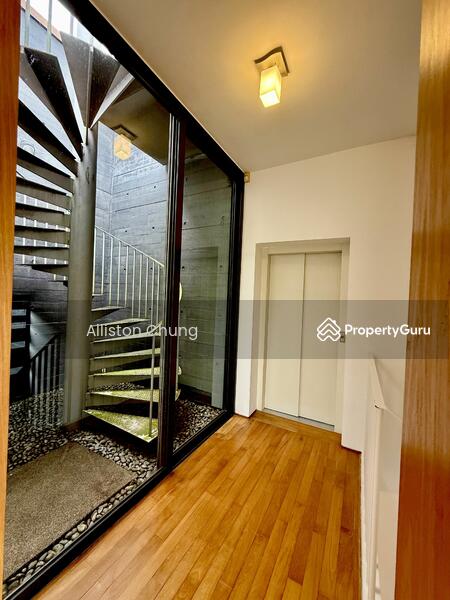
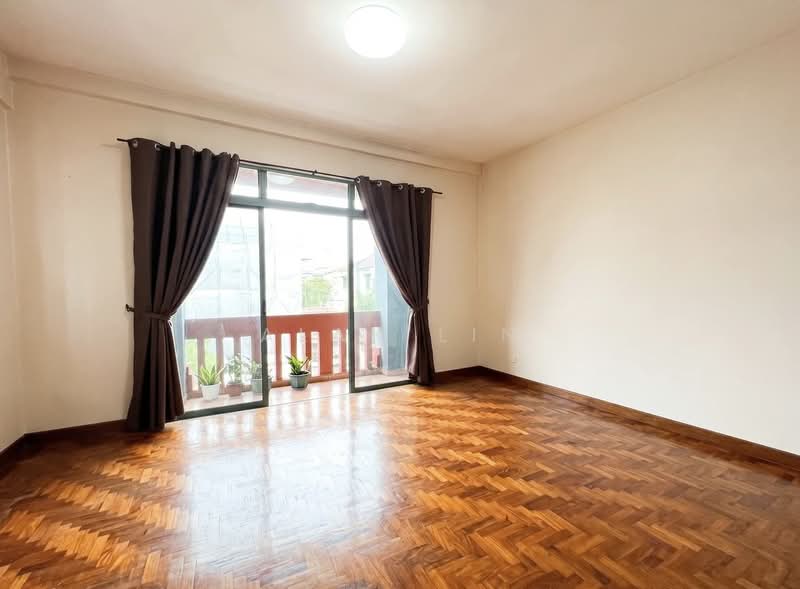
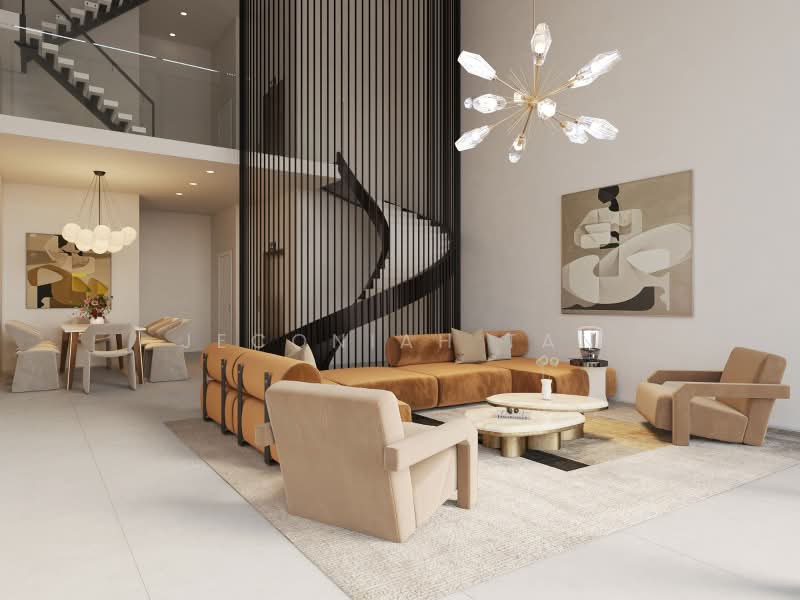
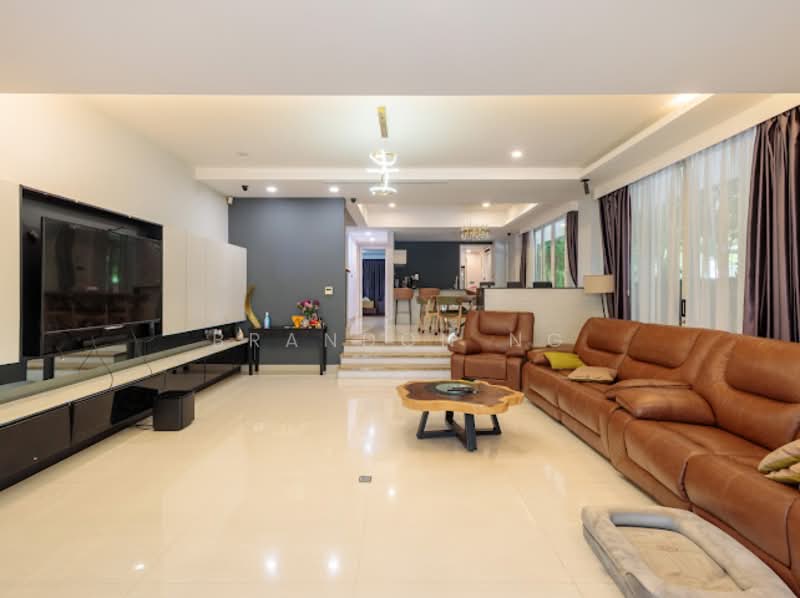
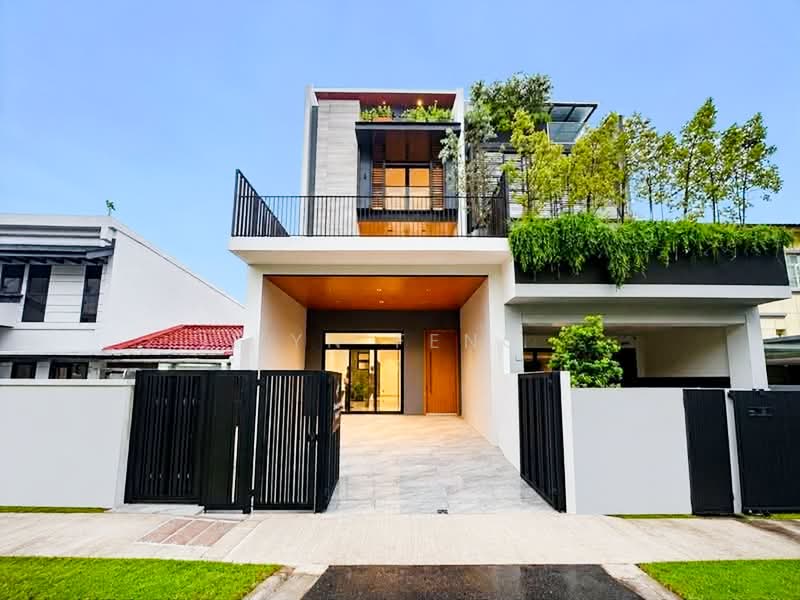
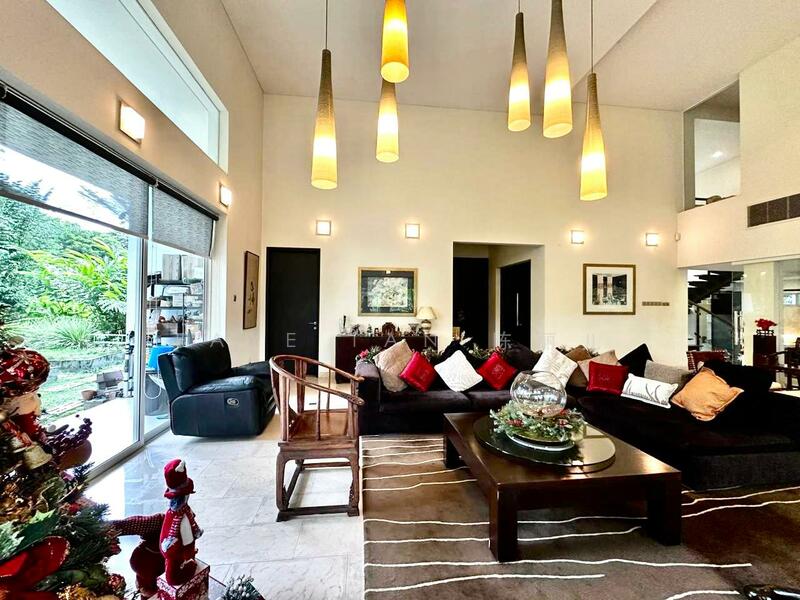
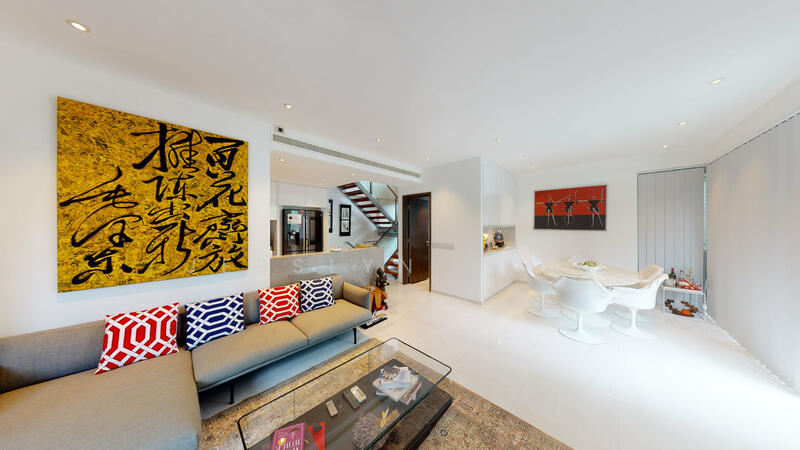
Singapore's landed property market represents the pinnacle of residential living, offering discerning buyers and renters a lifestyle fundamentally different from apartment-style accommodation. These properties—comprising terrace houses, semi-detached homes, and detached villas—command some of the highest valuations in the nation's real estate landscape, reflecting both their scarcity and the exceptional quality of life they deliver.
Landed properties are residential structures built on individual plots of land, where owners possess both the building and the underlying land title. This distinction fundamentally differentiates them from condominium units, where residents own only the apartment itself whilst the land remains collectively owned by all proprietors. In Singapore's context, landed homes include terraced houses (also called row houses), semi-detached dwellings, and detached villas—each offering varying degrees of privacy and spatial freedom.
The landed housing segment represents approximately 25 percent of Singapore's total residential stock, making these properties particularly coveted. Their limited availability, combined with stringent land-use planning regulations, ensures that landed properties maintain strong appreciation potential over extended ownership periods.
Singapore's most desirable landed enclaves cluster around established residential zones that have maintained their character and prestige for decades. Bukit Timah stands as the quintessential landed property destination, renowned for verdant surroundings, proximity to nature reserves, and a demographic profile that skews heavily towards established families and successful professionals. Properties here command valuations frequently exceeding SGD 15 million for substantial detached villas.
Holland Village and its surrounding precinct offer a more cosmopolitan flavour, with landed homes positioned alongside trendy cafés, boutique restaurants, and expatriate-friendly amenities. This district appeals particularly to international residents seeking authentic Singapore character combined with modern conveniences. The tree-lined streets and colonial-era charm of many homes add significant emotional and financial value.
Sentosa represents Singapore's most exclusive residential address, where sprawling estates sit mere metres from pristine beaches and world-class leisure facilities. Sentosa's landed properties occupy a rarefied category, with absolute waterfront villas reaching valuations that represent the absolute apex of Singapore's residential market. The island's 24-hour patrolled security and private beaches create an unparalleled sense of refuge from urban density.
Beyond these iconic locations, discerning purchasers discover excellent value in established neighbourhoods like Thomson, Tanglin, and the East Coast, where mature landed communities offer good schools, shopping facilities, and transport connectivity at comparatively rational price points.
Whilst landed properties prioritise privacy and space, they maintain excellent connectivity to Singapore's transport infrastructure. The Land Transport Authority operates comprehensive bus networks serving residential estates, enabling seamless journeys to commercial districts, retail hubs, and educational institutions.
Residents of landed homes in Bukit Timah benefit from proximity to the Bukit Timah MRT station and established bus routes connecting to the CBD. Holland Village properties sit within comfortable walking distance of transport options, with the district's bustling commercial character reducing reliance on personal vehicles for daily necessities. Sentosa residents enjoy dedicated shuttle services and road access enabling efficient travel to the city centre despite the island's exclusive positioning.
For families valuing education, proximity to Ministry of Education primary and secondary institutions provides crucial decision-making criteria. Many landed enclaves were deliberately developed around strong school catchments, making family-oriented purchasing particularly logical in these locations.
The financial profile of landed property ownership differs substantially from apartment-style living. Whilst purchase prices stretch significantly higher than comparable condominium units—often doubling the cost per square metre—the ownership structure delivers distinct advantages.
Property taxes on landed homes generally remain lower than condominiums due to the absence of sinking fund contributions and collective management fees. A substantial detached villa might incur annual property tax of SGD 3,000-5,000, compared to SGD 8,000-12,000 for a luxury apartment of similar market value. This tax differential compounds significantly over 20- or 30-year ownership periods, delivering meaningful financial benefits.
Landed properties appreciate predictably due to land scarcity. Whilst residential buildings age, the underlying land value—constrained by Singapore's finite geography and urban planning restrictions—typically escalates annually at rates matching or exceeding broader inflation. Successful landed property investors frequently witness 150-200 percent appreciation across 15-year holding periods, substantially outpacing savings account returns or bonds.
The Inland Revenue Authority of Singapore classifies landed properties under specific valuation frameworks that recognise both structural improvements and land value components separately. This understanding helps buyers and investors make informed decisions regarding financing, taxation implications, and long-term wealth accumulation strategies.
Beyond financial considerations, landed properties deliver lifestyle advantages that justify premium pricing for substantial buyer segments. Private gardens enable outdoor entertaining without noise complaints or restrictions. Swimming pools, tennis courts, or putting greens become feasible investments on spacious plots. Children enjoy secure outdoor play areas whilst parents supervise from comfortable sightlines—luxuries increasingly rare in high-density urban apartment living.
The absence of shared walls eliminates concerns regarding neighbour disturbances. Landed residents enjoy authentic silence during evening hours, uninterrupted by adjoining apartments' domestic activities. This acoustic privacy proves particularly valuable for professionals requiring concentrated work environments or families prioritising peaceful sleep for growing children.
Customisation freedoms distinguish landed ownership from apartment living. Structural modifications, renovation timescales, and aesthetic choices remain entirely within individual owners' discretion, subject only to Urban Redevelopment Authority planning guidelines. This flexibility enables properties to evolve alongside families' changing needs, whether through additional bedrooms, home office installations, or wellness features like saunas.
Prospective landed property purchasers should recognise that ownership encompasses greater maintenance responsibilities than apartment living. Roofing maintenance, garden upkeep, drainage systems, and external structures require proactive attention to preserve long-term value. Many successful owners engage professional property managers handling these responsibilities, costs typically ranging from SGD 100-300 monthly depending on property scale and complexity.
Renovation timelines extend considerably on landed properties compared to apartments. Planning approval processes, contractor coordination, and physical construction on spacious plots demand realistic 6-18 month expectations for substantial modifications. First-time landed property owners frequently underestimate these timescales, creating frustration during ownership transitions.
Security arrangements deserve careful consideration. Whilst landed properties offer privacy, they require comprehensive security systems—perimeter fencing, CCTV coverage, alarm systems, and controlled access—to maintain safety. Sentosa and established gated communities provide professional security management; independent properties necessitate individual arrangements.
Singapore's landed property market remains robust despite evolving demographics and urbanisation patterns. Young professionals increasingly delay landed property acquisition until family stages warrant additional space, creating sustained demand from established professionals and successful entrepreneurs. International buyers perceive landed properties as Singapore's most secure long-term investment, driving continued interest despite premium valuations.
Government policies through the Urban Redevelopment Authority increasingly focus on preserving established residential character in landed enclaves, reinforcing conservation-area designations across Bukit Timah, Holland Village, and comparable districts. These protections simultaneously constrain development and support value preservation, making landed property ownership particularly resilient against unpredictable market cycles.
The landed property segment demonstrates remarkable resilience, with valuations typically fluctuating less dramatically than apartment markets during economic uncertainties. This stability reflects the fundamental appeal of space, privacy, and land ownership—characteristics that transcend economic cycles and fashion-driven market trends.
Landed properties represent Singapore's most exclusive residential offering, delivering unmatched space, privacy, and lifestyle benefits to those for whom financial capacity aligns with lifestyle priorities. Whether pursuing Sentosa's absolute exclusivity, Bukit Timah's established prestige, or Holland Village's cosmopolitan character, landed property ownership remains among Singapore's most significant residential achievements and potentially rewarding long-term investments.
81 properties in Landed
S$ 8,900,000
East Coast Road, Upper East Coast Road, Siglap · Landed · 13 min (1.09 km) from TE31 Sungei Bedok MRT Station
S$ 3,380,000
Eastwood Walk · Landed · 2 min (210 m) from TE31 Sungei Bedok MRT Station
S$ 4,300,000
Bukit Way · Landed · 11 min (940 m) from DT5 Beauty World MRT Station
S$ 2,680,000
Westwood Avenue · Landed · 9 min (780 m) from JW1 Gek Poh MRT Station
S$ 7,500,000
Boon Teck Rd · Landed · 15 min (1.23 km) from NS19 Toa Payoh MRT Station
S$ 4,800,000
8 Eastwood Place · Landed · 2 min (200 m) from DT37 Sungei Bedok MRT Station
S$ 6,200,000
Jalan Sankam · Landed
S$ 43,000,000
Swiss Club Road · Landed · 1 min (1 m) from CR14 Turf City MRT Station
S$ 4,280,000
Matlock Rise · Landed · 1.1 km (13 mins) from CC14 Lorong Chuan MRT
The landed property market in Singapore remains resilient, with prices ranging from S$2.9 million for terraced houses to over S$60 million for Good Class Bungalows, indicating sustained demand across segments. Market conditions favour buyers seeking long-term appreciation rather than short-term gains, as landed properties have demonstrated stability compared to the broader residential market volatility. However, with ABSD rates at 20% for investors and cooling measures in place, serious owner-occupiers with strong equity positions should consider current valuations more favourably than speculative investors.
Landed properties have generally outperformed the broader residential market, particularly in established estates like Braddell Heights and premium zones, where freehold and near-freehold properties command significant premiums. Terraced houses and corner terraces have shown more moderate appreciation, typically tracking inflation plus 2–3% annually, whilst Good Class Bungalows remain a store of value for ultra-high-net-worth individuals despite cyclical demand. The price spread in current listings—from S$2.9 million to S$63.8 million—demonstrates that landed properties have retained their positioning as a hedge against currency and property market cycles.
Terraced and corner terrace houses (S$2.9–S$5.5 million range) appeal to upgraders and young families seeking capital appreciation with manageable leverage, typically requiring 35–45% equity commitment. Bungalows (S$6.5–S$16.5 million) attract affluent professionals and business owners who prioritise privacy, land size, and renovation potential, often viewing these as long-term owner-occupier investments rather than trading vehicles. Good Class Bungalows and ultra-premium landed properties (S$16.5 million and above) cater to ultra-high-net-worth individuals, family offices, and foreign talent seeking investment diversification and legacy assets with freehold tenure.
For terraced houses at S$2.9–S$3.5 million, conventional bank financing is readily available with loan-to-value ratios of 75–80%, making these accessible to married couples with combined incomes above S$300,000 annually. Bungalows in the S$6–S$10 million range face stricter debt servicing criteria, typically requiring minimum household incomes of S$800,000–S$1.2 million and 40–50% cash equity given larger loan amounts. Properties exceeding S$15 million often fall outside standard HDB housing loan schemes and require private banking solutions, structured financing, or substantial cash reserves, effectively limiting the buyer pool to the top 1–2% income bracket.
Investors purchasing landed properties as their second residential property face a 20% ABSD charge on the purchase price, significantly increasing the effective cost compared to owner-occupiers who pay no ABSD on their first property. Stamp duty is calculated on a progressive scale up to 4.5% for properties exceeding S$3 million, meaning a S$10 million bungalow purchase incurs approximately S$450,000 in stamp duty plus S$2 million in ABSD for an investor. Foreign investors face an additional 5% ABSD on top of the standard 20%, making landed property investment substantially more expensive unless held within a corporate structure or family office framework.
Terraced and corner terrace houses in accessible locations like Springside Avenue and Pavillion typically generate gross rental yields of 2.5–3.5% annually, with vacancy periods of 2–4 weeks for well-maintained units in demand areas. Bungalows command higher absolute rents (S$8,000–S$15,000 monthly) but face longer vacancy windows of 1–3 months due to a smaller tenant pool and more specific occupant requirements such as expatriate families or corporate housing. Good Class Bungalows and premium landed properties (S$16+ million) suffer from liquidity constraints in the rental market, with yields often below 2% and extended vacancy periods of 3–6 months, making these assets primarily suitable for owner-occupiers rather than yield-seeking investors.
Proximity to MRT stations materially impacts landed property valuations, with properties within a 5-minute walk (approximately 400 metres) commanding 8–12% price premiums compared to equivalent units 800–1000 metres away, as evidenced by Braddell Heights (2 minutes to CC14 Lorong Chuan) commanding S$14.8 million. Terraced houses benefit most from MRT proximity in terms of percentage uplift, as the availability of public transport significantly enhances affordability and appeal to upgraders and young families without reducing land size or privacy. However, MRT accessibility becomes less critical for Good Class Bungalows and premium bungalows, where private transportation, privacy, and land size are prioritised, meaning MRT proximity may add only 3–5% to valuations in the ultra-premium segment.
The landed property market is constrained by land scarcity and urban densification policies, with minimal new supply of terraced and corner terrace housing expected in mature estates like Braddell Heights and Sembawang. Government efforts to increase housing supply focus primarily on HDB flats and Build-To-Order projects rather than private landed housing, effectively capping future supply growth at under 2% annually across the sector. This structural undersupply supports long-term value retention and appreciation, particularly for freehold and near-freehold properties, though investors should note that older estates with aging housing stock face higher maintenance costs and potential collective en bloc sale risks.
Freehold landed properties command significant premiums over 99-year leasehold equivalents, with freehold bungalows typically trading at 15–20% above identical leasehold comparables, reflecting perpetual ownership and intergenerational wealth transfer benefits. Properties on 99-year leases with remaining tenures above 80 years present minimal financing or valuation challenges and remain attractive for owner-occupiers, though buyer pools contract as lease expiries approach 50 years, with corresponding 15–25% valuation haircuts. Investors and owner-occupiers should prioritise freehold or near-freehold properties in their initial purchase analysis, as leasehold tenure degradation becomes a material valuation risk beyond 70 years, potentially limiting future buyer interest and requiring substantial maintenance reserves.
Buyers should conduct detailed structural audits assessing foundation condition, roof integrity, subsidence risk, and historical flood exposure—particularly for properties in low-lying areas near Pasir Ris or Sembawang—as remedial works can cost S$200,000–S$1 million and significantly impact net investment returns. Land tenure, encumbrance history, and potential en bloc sale exposure should be reviewed through land titles office searches and estate management committees, as collective sales can impose forced transactions at potentially unfavourable valuations for minority holdouts. Finally, evaluate renovation scope and compliance with current planning regulations, including conservation status, setback requirements, and density restrictions, as non-compliant alterations may trigger enforcement action and reduce future resale appeal, particularly in heritage conservation areas or restricted bungalow zones.
Free Property Valuation
Enter your postal code and get a free instant valuation report straight to your inbox.