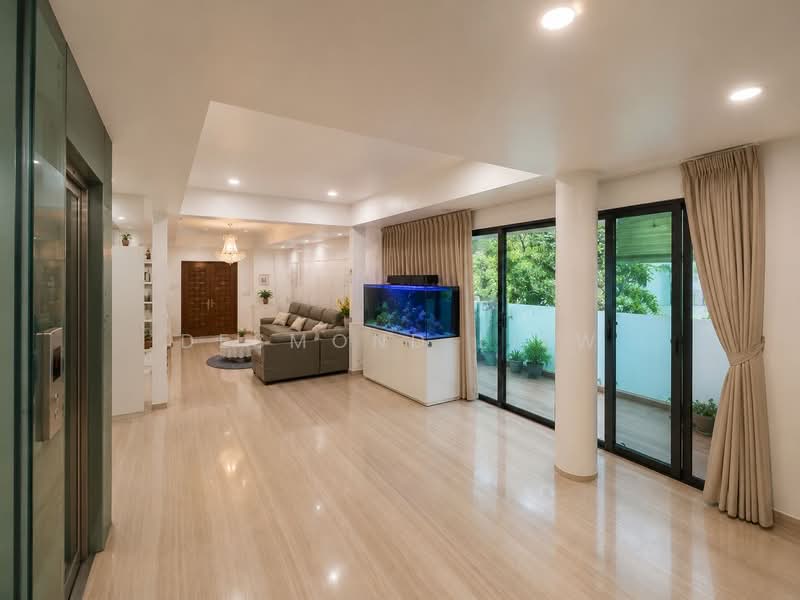
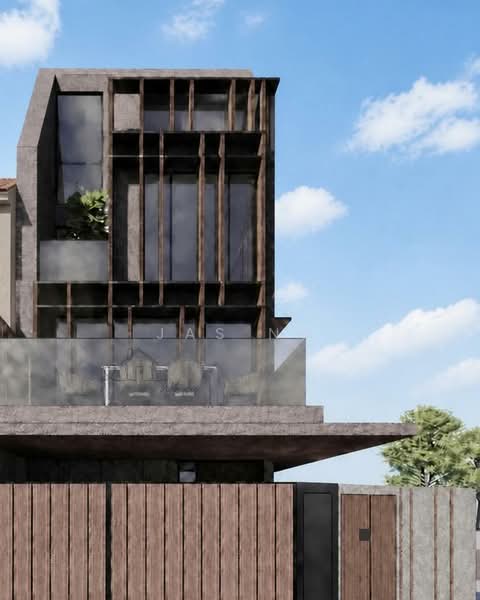
2 properties in Tai Seng MRT
S$ 7,000,000
Jalan Anggerek, Aljunied Road, Macpherson Road · Landed · 8 min (650 m) from CC11 Tai Seng MRT Station
S$ 6,500,000
Landed · 2 min (160 m) from CC11 Tai Seng MRT Station
The Tai Seng MRT corridor, situated in the mature East Zone, continues to attract investors seeking established neighbourhood credentials and direct Circle Line connectivity, which are particularly valued during economic uncertainty. Landing prices in this pocket typically range from S$6.5 million to S$7.5 million for corner terraces, representing relatively stable value retention compared to newer estates further out. However, the limited supply of just 2 listings suggests a tight market where buyer competition is moderate; investors should monitor upcoming collective sales or en bloc opportunities in surrounding older estates like Macpherson and Tanjong Katong, which could influence long-term appreciation prospects.
Landed properties in the Tai Seng catchment have historically appreciated at a moderate pace of 1–2% annually, outpacing HDB resale markets but lagging newer freehold landed developments in suburban zones like Bukit Timah or Kranji. The CC11 Circle Line station, operational since 2019, has provided sustained demand from owner-occupiers and downsizers seeking MRT connectivity without moving to Mattar or Macpherson precincts that experienced sharper rental yield compression. The current listing prices at S$6.5–S$7 million align with pre-pandemic levels, suggesting the market has consolidated rather than surged, making this a consolidation period rather than a strong growth phase.
The primary buyer demographic comprises owner-occupier families and semi-retirees aged 45–65 seeking established estates with stable community character, proximity to Tai Seng Primary School and the upcoming Tai Seng integrated transit hub developments. Secondary buyers include investors targeting stable rental yields from expatriate tenants and local families who value the 8–10 minute commute to CBD offices via the Circle Line, combined with accessibility to upper East Coast amenities. These properties appeal less to speculative traders due to modest capital appreciation but strongly to wealth-preservation buyers prioritising asset stability and rental income over capital gains.
For owner-occupier purchase, Singapore banks typically offer 75–80% loan-to-value ratios on landed properties of this age and location, translating to required down payments of S$1.3–S$1.75 million after stamp duty, with monthly instalments circa S$22,000–S$27,000 on 25-year terms at current rates of 3.2–3.5%. TDSR caps at 60% mean purchasers require gross monthly incomes exceeding S$38,000–S$45,000, effectively limiting the buyer pool to established professionals and business owners. Additionally, renovation budgets of S$300,000–S$600,000 should be factored into total acquisition costs, as older terrace units in this corridor typically require structural and systems upgrades.
Investor buyers (non-first-time purchasers of residential property) incur an Additional Buyer's Stamp Duty (ABSD) at 15% on the purchase price, meaning a S$6.75 million transaction triggers approximately S$1.01 million in ABSD costs on top of standard buyer's stamp duty of circa S$200,000, resulting in total stamp duties exceeding S$1.2 million. Singaporean citizens who already own residential property overseas are classified as non-resident purchasers, attracting the full 15% ABSD rate, whilst corporate investors purchasing through entities incur ABSD at 25%, making individual ownership substantially more cost-effective. These elevated upfront costs compress investment returns significantly, requiring gross rental yields above 3.5% to justify the entry price, which is achievable but dependent on securing quality expatriate or PMET tenants in this specific location.
Corner terraces in the Tai Seng MRT precinct typically command rental yields of 2.8–3.5% based on current market rents of S$5,500–S$7,000 monthly for quality units, appealing to PMET expatriates and relocating families from Tiong Bahru or Joo Chiat. Vacancy risk is relatively low given the established residential character and Circle Line connectivity, with typical void periods of 1–2 weeks between tenancies; however, the market is sensitive to economic downturns affecting expatriate demand and cooling measures restricting foreign ownership sentiment. Investors should note that older terrace properties carry higher tenant acquisition costs due to perceived maintenance risks, potentially reducing net yields by 20–30 basis points compared to newer developments, and require proactive property management to minimise void periods.
The direct Circle Line connectivity at Tai Seng MRT station commands a premium of approximately 8–12% over comparable terrace units 500–800 metres away in Macpherson or Mattar, translating to roughly S$480,000–S$840,000 on a S$6.5–S$7 million base price. Properties within 200–300 metres of the station (such as the 2-minute listed freehold unit) realise additional value appreciation relative to those 650 metres distant, reflecting buyer preference for sub-5-minute walking times in mature estates where car dependency remains socially normative. The MRT premium has stabilised post-2019 as the Circle Line matured; future appreciation is unlikely to substantially exceed this capitalised benefit unless major employment nodes consolidate around Tai Seng or significant transit-oriented development materialises in the immediate vicinity.
The near-term pipeline around Tai Seng MRT remains constrained, with no greenfield HDB or private residential projects visible in the immediate 500-metre radius through 2027, reflecting the maturity of this 1960–1980s landed estate fabric. However, the broader Tai Seng precinct is subject to long-term URA planning incorporating mixed-use intensification and potential public housing redevelopment in adjacent precincts (particularly Macpherson and Mattar), which could introduce moderately higher density housing competing for similar demographic segments. Investors should monitor URA Master Plan announcements and en bloc development momentum in neighbouring estates, as successful collective sales could trigger gradual gentrification and yield compression, though owner-occupier capital values may appreciate modestly as neighbourhood amenities enhance.
Landed properties in Singapore (terraces, semi-detached, detached) typically carry either freehold or 999-year leasehold titles; the sampled listings include a freehold unit at S$6.5 million versus presumably longer-leasehold units at S$7 million, with freehold commanding approximately 3–5% price premiums due to indefinite tenure security and lower refinancing risk. For investors, freehold status significantly improves long-term hold valuations and tenant appeal, as expatriate tenants and PMET owner-occupiers increasingly prioritise freehold tenure to mitigate future lease-decay risk; 999-year leasehold properties remain financeable but face gradual tenure depreciation acceleration beyond 800 years remaining, impacting refinancing and exit liquidity. Buyers should verify actual remaining lease tenure (not assumed 999 years) and model potential tenure-based value erosion beyond 50+ years, particularly critical for property prices exceeding S$6 million where annual depreciation impact becomes material at 0.05–0.10% per annum beyond that threshold.
Priority due diligence items include verifying the structural integrity and Foundation condition of units built in the 1960–1980s (when this estate developed), conducting mandatory pest and moisture surveys, and assessing accumulated maintenance deficiencies including roof condition, plumbing systems, and electrical rewiring status, which typically necessitate S$300,000–S$600,000 capital expenditure within 5 years of purchase. Secondary considerations include plot orientation (north-south-facing units command 5–8% premiums due to natural light and cooling efficiency), internal yard space and privacy provisions relative to building coverage, and confirmation of unobstructed MRT access without pedestrian underpass dependencies. Critically, buyers must verify absence of neighbouring en bloc sale activity or heritage conservation constraints that might restrict future redevelopment optionality, engage independently with municipal councils regarding maintenance reserves and pending upgrading initiatives (such as lift installation in older terraces), and stress-test cash flow projections assuming 3–6 month vacancy periods and S$80,000–S$120,000 annual maintenance costs for properties of this age profile.
Free Property Valuation
Enter your postal code and get a free instant valuation report straight to your inbox.