Singapore's property market remains one of Asia's most robust and transparent real estate sectors, offering buyers an exceptional range of residential and commercial options. Whether you're a first-time purchaser, an investor seeking capital appreciation, or a family upgrading to a larger home, the island nation's diverse property landscape caters to varying needs and financial capacities. The current market presents compelling opportunities across different price points and property types, making this an opportune moment to explore available options.
The Singapore property market encompasses several distinct segments, each with unique characteristics and buyer demographics. HDB flats represent the largest housing segment, with over 80 per cent of Singaporeans residing in public housing. These properties offer exceptional value, strong rental yields, and stable appreciation over time. For those seeking premium amenities and lifestyle options, private condominiums provide modern facilities, security, and often enviable locations near business districts or shopping precincts.
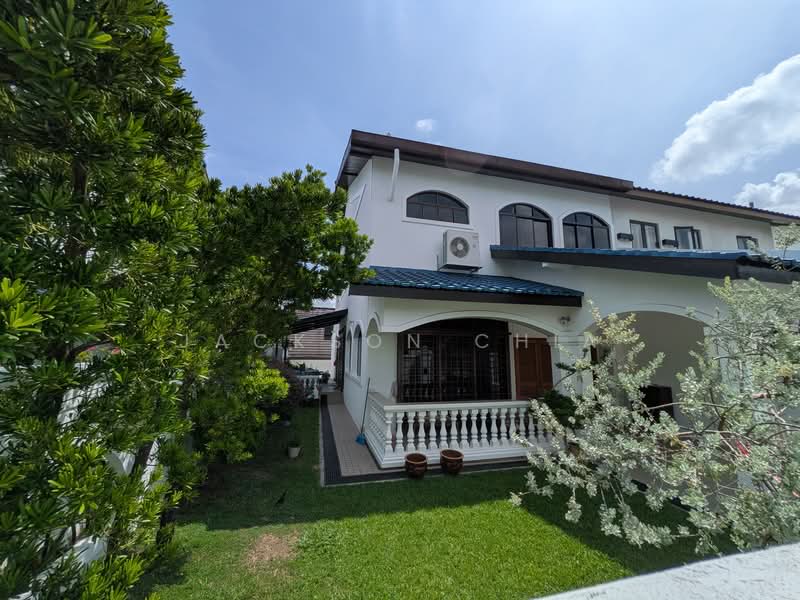
Landed properties, including detached houses, semi-detached villas, and terraced homes, appeal to buyers prioritising space, privacy, and potential for home customisation. Commercial properties and industrial spaces cater to entrepreneurs and investors seeking stable rental income or operational headquarters. Each segment responds differently to market cycles, interest rate adjustments, and economic conditions, making portfolio diversification an intelligent investment strategy.
Singapore's geographic location significantly influences property valuations. District 9 properties, encompassing Orchard and Tanglin areas, command the highest prices per square metre, reflecting proximity to shopping, dining, and financial hubs. District 10, covering Bukit Timah and the Botanical Gardens, attracts affluent buyers seeking leafy neighbourhoods with established communities. Conversely, outer regions like Woodlands, Jurong, and Punggol offer significantly better value, with modern amenities, excellent transport links via the LRT and MRT networks, and growing commercial precincts attracting young families and investors.
The resale HDB market demonstrates remarkable stability, with four-room flats in established estates like Tampines, Clementi, and Toa Payoh maintaining consistent appreciation. Five-room and executive flats command premiums, particularly in centrally-located new towns. Meanwhile, the private residential market shows greater price volatility, with luxury condominiums in District 9 experiencing significant fluctuations compared to mass-market projects in suburban locations.
Prospective buyers must navigate several financial components before completing a purchase. Buyer's Stamp Duty (BSD) applies to all property acquisitions and scales progressively based on purchase price. Additional Buyer's Stamp Duty (ABSD) imposes supplementary charges on non-citizen purchases and multiple property acquisitions, substantially increasing transaction costs for investors acquiring additional properties.
Mortgage loans typically extend up to 80 per cent of property value for HDB flats and 75 per cent for private residences, though Individual financial circumstances determine actual loan eligibility. First-time buyer schemes offer concessional stamp duties and maximum loan-to-value ratios. Buyers should engage licensed financial advisors to comprehensively model total acquisition costs, including legal fees, survey charges, and insurance premiums, ensuring their budgets accommodate unexpected expenses and provide contingency reserves.
The resale market dominates Singapore's property sector, offering established communities, transparent transaction histories, and immediate possession possibilities. Properties undergo mandatory inspections, and HDB regulations ensure transparent pricing benchmarks, reducing information asymmetries between buyers and sellers. Negotiation opportunities exist in quieter markets, particularly for older properties requiring renovation or those positioned in less fashionable neighbourhoods.
New launch projects provide alternative acquisition pathways, with developers offering flexible payment schemes, completion warranties, and modern specifications aligned with contemporary preferences. These projects typically command price premiums reflecting newly constructed status, modern amenities, and often superior layouts compared to older properties. First dibs allocation and show unit inspections allow buyers to customise finishes and secure preferential locations within developments.
En bloc collective sales occasionally emerge, enabling residents of ageing buildings to reinvest proceeds into newer properties or alternative investments. These opportunities require collective consensus and governmental land acquisition approvals, creating intermittent but occasionally lucrative windows for strategic buyers.
Successful property investments extend beyond square metres and price per unit. Neighbourhood evaluation encompasses proximity to quality schools, transport nodes, hawker centres, supermarkets, healthcare facilities, and recreational spaces. Young families prioritise school catchments and parks, while working professionals value MRT accessibility and proximity to business districts. Empty-nesters often seek vibrant precincts with diverse dining and entertainment options.
Connectivity matters significantly in a compact island nation. Properties within 400 metres of MRT stations command notable premiums, whilst excellent bus connectivity extends affordable access to suburban locations. Future infrastructure developments, including new MRT extensions and expressway upgrades, can substantially impact long-term property values and rental demand.
Community infrastructure matters equally. Established estates like Toa Payoh and Clementi offer mature neighbourhoods with diverse resident profiles and extensive facilities. Newer towns like Punggol and Sengkang provide modern planning, contemporary amenities, and growing social communities. Neighbourhood character—whether bustling and cosmopolitan or quiet and residential—should align with personal lifestyle preferences and family requirements.
Singapore's property market experiences cyclical patterns influenced by interest rates, economic growth, foreign investor sentiment, and policy adjustments. Patient investors recognise that property ownership historically delivers wealth accumulation over extended timeframes rather than short-term speculation. Interest rate hikes increase borrowing costs and reduce property affordability, typically moderating prices; conversely, rate reductions frequently stimulate demand and accelerate appreciation.
Owner-occupiers benefit from personal enjoyment and shelter provision regardless of market cycles, whilst investors require analytical discipline regarding rental yields, capital growth potential, and opportunity costs relative to alternative investments. Properties offering rental yields above 3 per cent represent compelling opportunities in current contexts, particularly in expanding neighbourhoods attracting young working populations.
Purchasing property demands rigorous due diligence encompassing title searches, structural inspections, fire safety evaluations, and neighbourhood verification. Licensed property agents provide market insights and transaction facilitation, though independent legal advice from conveyancing practitioners remains essential for protecting buyer interests. Loan eligibility pre-assessment prevents disappointing situations where buyers lose deposits following failed mortgage approvals.
Properties with unusual title encumbrances, outstanding utility arrears, or regulatory violations require particularly careful evaluation. Older properties may harbour concealed defects necessitating expensive remediation. Professional surveyors and structural engineers identify issues invisible during standard viewings, preventing costly surprises post-acquisition.
Singapore's property market continues evolving with increasing sustainability standards, smart home technology integration, and evolving workplace patterns shaping future demand. Properties offering flexibility for home-based working increasingly appeal to professional demographics. Environmental certifications and energy-efficient specifications attract environmentally-conscious buyers willing to pay premiums for reduced utility costs and improved sustainability profiles.
Whether pursuing primary residence acquisition, investment portfolio diversification, or wealth preservation, Singapore's property market offers sophisticated investors and owner-occupiers compelling opportunities across diverse price points, locations, and property types. Engaging professional advisors, conducting thorough market research, and aligning purchases with personal financial objectives and lifestyle requirements maximises satisfaction and long-term value creation in this dynamic market.
181 properties in For Sale
S$ 1,750,000
2 Harbourfront Avenue · Condo · 6 min (540 m) from NE1 HarbourFront MRT Station
S$ 5,200,000
Springside Walk · Landed
S$ 2,800,000
Riverina View · Landed · 18 min (1.53 km) from CP1 Pasir Ris MRT Station
S$ 6,150,000
50 Draycott Park · Condo · 13 min (1.09 km) from NS22 Orchard MRT Station
S$ 708,000
68 Upper Serangoon View · Condo · 14 min (1.15 km) from SE4 Kangkar LRT Station
S$ 3,380,000
1A One Tree Hill · Condo · 5 min (390 m) from TE13 Orchard Boulevard MRT Station
S$ 4,499,900
Mimosa Drive · Landed
S$ 9,680,000
seaside park · · 12 min (990 m) from TE28 Siglap MRT Station
S$ 6,288,000
Landed · 11 min (930 m) from TE5 Lentor MRT Station
S$ 1,850,000
56 Edgedale Plains · Condo · 6 min (480 m) from CP3 Riviera MRT Station
S$ 10,500,000
Jalan Senang · Landed · 6 min (470 m) from EW6 Kembangan MRT Station
S$ 5,680,000
Toh Close ·
The Singapore residential market remains relatively stable with selective growth in prime locations, making now a strategic time for discerning buyers willing to transact. Interest rates have stabilised following the initial tightening cycle, which has restored some purchasing power for homebuyers, though borrowing costs remain elevated compared to the pandemic era. Properties demonstrating strong fundamentals—particularly those within 10 minutes' walk of MRT stations like Centro Residences and Grand Dunman—continue to command healthy demand, suggesting that well-located units offer better value retention prospects than peripheral locations.
Condominiums have outperformed the broader residential market, with prime location units appreciating 3–5% whilst mid-tier HDB flats have seen more muted growth of 1–2% during this period. The divergence reflects investor preference for private housing with amenities and freehold or long-lease tenure, particularly among foreign buyers and upgraders seeking capital appreciation. Projects with exceptional MRT proximity, such as those within 2 minutes of stations, have appreciated faster than average, indicating that location premium continues to strengthen in the current cycle.
This price segment predominantly attracts upgraders from HDB flats seeking quality of life improvements, owner-occupiers aged 35–50 with established incomes, and younger investors building property portfolios with intention to occupy initially. Foreign talent on Employment Passes and holders of Permanent Residence status represent a significant secondary demographic, as this price range offers superior amenities and security compared to suburban locations. Young families seeking proximity to schools and established neighbourhoods—such as those near Tanjong Katong and King Albert Park—form a growing cohort within this bracket.
Banks typically cap loan-to-value ratios at 75% for residential condominiums in this price range, requiring purchasers to secure a minimum down payment of S$500,000 to S$750,000 depending on property value. Current mortgage rates of 4.0–4.5% translate to monthly servicing costs of approximately S$8,000–S$12,000 on a S$2.5m property financed over 25 years, necessitating monthly household income of at least S$28,000–S$38,000 to satisfy debt service ratio requirements. Additionally, total acquisition costs including stamp duty, legal fees, and disbursements typically amount to 5–8% of purchase price, so a S$2.5m purchase should be accompanied by liquid reserves of S$250,000–S$300,000.
Owner-occupiers purchasing their first residential property incur stamp duty of 1–3% on property value and no ABSD, resulting in acquisition costs of approximately 4–5% inclusive of legal and disbursement fees. Investors or second property buyers face stamp duty of 3–4% plus ABSD of 5% on the purchase price, elevating total acquisition costs to 9–11%, creating a significant financial burden at the S$2m+ level. For a foreign investor purchasing a S$2.5m condominium, ABSD liability alone reaches S$125,000, making it critical to evaluate expected rental yields against these non-recoverable upfront costs.
Condominiums in prime MRT-proximate locations command rental yields of 2.5–3.5% gross per annum, with well-maintained units near Buona Vista, Dakota, and Tanjong Katong MRT stations achieving the higher end due to professional tenant demand. Vacancy risk remains relatively low at 3–6 months annually for properties in desirable neighbourhoods, though this increases to 8–12 weeks during market softness, particularly for units exceeding S$3m with more limited tenant pools. Investors must factor in property tax (approximately 10% of annual rental value), maintenance fees of S$400–S$800 monthly, and occasional capital expenditure for upkeep, which collectively reduce net yields to 1.5–2.5%.
Condominiums located within 5 minutes' walking distance of MRT stations command an approximate 8–15% price premium over those 15+ minutes away, with stations like Dakota (CC8), King Albert Park (DT6), and Ang Mo Kio (CR11) demonstrating strongest pricing resilience. The premium intensifies during market downturns, as these properties attract a broader buyer base including renters, expats, and retirees, reducing forced seller scenarios and preserving valuations more effectively. Grand Dunman's positioning just 170 metres from Dakota MRT exemplifies how exceptional MRT proximity translates to steeper appreciation trajectories, historically outperforming the broader market by 2–3% annually over 10-year holding periods.
The development pipeline in 2024–2026 introduces moderate supply pressure across established neighbourhoods, with new launches in areas like Tampines, Bukit Timah, and Marine Parade potentially affecting resale prices of older stock in those precincts. Conversely, mature developments in Ang Mo Kio and outer Ring Line locations face limited new competition, positioning existing resale stock as beneficiaries of extended holding demand and potential scarcity premiums. Purchasers should examine whether their target property lies in a neighbourhood with imminent collective sales or new launches, as this significantly influences whether 5–10 year appreciation prospects remain robust or face headwinds.
Most condominiums in this range are held on 99-year leasehold tenure, with remaining lease periods typically ranging from 82 to 92 years, presenting negligible financing or resale obstacles for purchases made today. However, properties below 80 years' remaining tenure may face mortgage restrictions from certain banks and perceived value deterioration, so explicit verification of remaining lease term is critical before committing to purchase. Owner-occupiers can comfortably overlook tenure concerns given their intended holding periods, but investors must carefully evaluate whether acquisition at a S$2m+ price point remains rational if remaining lease falls below 85 years, as rental yields compress and end-purchaser pools narrow significantly.
Detailed inspection should prioritise structural conditions including vertical settlement cracking, water seepage evidence, and the integrity of external façades, particularly for projects exceeding 15 years in age, as remedial works can incur costs of S$50,000–S$150,000. Prospective purchasers must thoroughly review sinking fund reserves and maintenance levy trends within the strata title by accessing the building's financial statements through the managing agent, as inadequate reserves correlate strongly with future special levies that may burden ownership. Additionally, verify the project's compliance status with Building and Construction Authority regulations, confirm the credentials and transparency of the managing agent, cross-reference recent unit sales and price movements to validate market pricing, and inspect parking arrangements—particularly whether allocated spaces are within walking distance or require additional monthly fees—as these tangible factors materially impact long-term ownership satisfaction and capital preservation.
Free Property Valuation
Enter your postal code and get a free instant valuation report straight to your inbox.