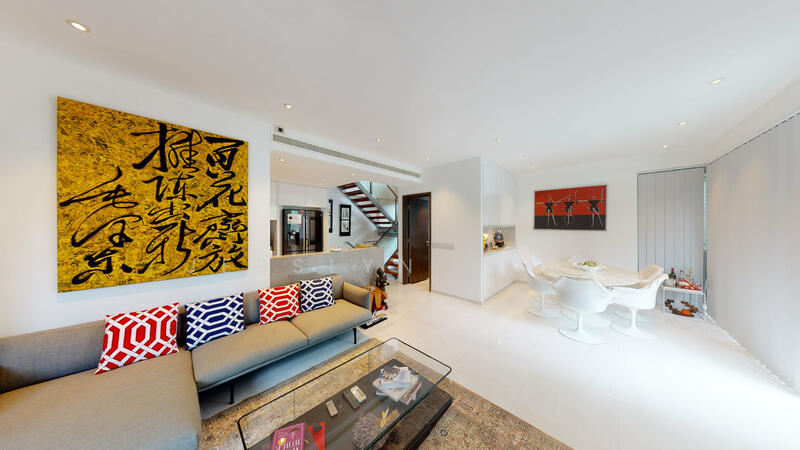
1 properties in Matlock Residences
Matlock Residences offers freehold status, which is exceptionally rare in Singapore's residential market and provides indefinite ownership with no lease decay concerns, unlike leasehold properties that depreciate as their tenure shortens. District 13, encompassing areas like Lorong Chuan and Macpherson, has historically seen strong capital appreciation due to its central location and proximity to multiple MRT lines, making freehold bungalows particularly attractive to long-term investors seeking generational wealth retention. Freehold properties in this district typically command a 15–25% premium over comparable leasehold developments, reflecting the scarcity and permanence of the tenure structure.
The current market environment presents a mixed outlook for ultra-premium freehold bungalow purchases; whilst interest rates have stabilised and the luxury segment shows selective strength, entry prices for freehold properties in District 13 remain elevated at S$4M+, which may limit buyer pools to ultra-high-net-worth individuals or institutional investors. The scarcity of freehold units and Matlock Residences' positioning as a standalone development mean inventory moves slowly, offering motivated buyers potential negotiation leverage if properties remain on the market beyond 6–9 months. Buyers should consider their investment horizon carefully, as freehold bungalows typically appreciate 3–5% annually, aligning with long-term wealth preservation rather than short-term capital gains.
Freehold bungalows in District 13 typically achieve gross rental yields of 2–3%, reflecting the premium asset class nature and limited tenant pool compared to apartment developments; for a S$4.28M property, this translates to approximate annual rental income of S$85,600–S$128,400, which is lower than many other property categories but compensated by capital appreciation and tax stability. The primary tenant profile consists of expatriate executives, multinational company relocations, diplomatic staff, and ultra-high-net-worth individuals seeking privacy, space, and proximity to prime business districts like Marina Bay and Orchard—demographics less price-sensitive and more focused on lifestyle amenities and school proximity (such as Anglo-Chinese School or Raffles Institution nearby). Vacancy risk is generally low for well-maintained freehold bungalows in desirable locations, though longer turnaround periods between tenancies (30–60 days) should be factored into yield calculations, and properties may remain vacant seasonally if tenant demand fluctuates.
Lorong Chuan MRT (CC14 line) is strategically important as it provides direct connectivity to Marina Bay, Raffles Place, and the CBD within 15–18 minutes, which materially enhances accessibility for working professionals and justifies the area's premium positioning despite being a bungalow enclave traditionally associated with quieter, car-dependent living. The 1.1 km walking distance (approximately 13–15 minutes) is manageable for commuters but still maintains the neighbourhood's suburban character and absence of intensive foot traffic, striking a balance that appeals to families and executives who value both accessibility and residential tranquillity. This MRT proximity differentiates Matlock Residences from more distant bungalow developments in areas like Bukit Timah or Sentosa Cove, potentially supporting 5–8% higher valuations and rental rates compared to equally-sized properties in less connected districts.
As a freehold landed property (bungalow), the S$4.28M Matlock Residences unit triggers ABSD at the rate of 15% on the purchase price for non-citizen foreign investors, or 5% for permanent residents investing in their second residential property onwards, representing a significant S$642,000 or S$214,000 cost respectively on this transaction. Singapore citizens purchasing as an investment property (second property onwards) are subject to 5% ABSD, whilst first-time buyers benefit from no ABSD, though landed properties have stricter eligibility criteria than apartments and may be restricted under the Residential Property Act depending on nationality. The total stamp duty liability (ABSD plus conveyancing duty) on a S$4.28M purchase could reach S$750,000+, substantially impacting the effective entry price and yield calculations, making this property most suitable for exempt buyer profiles such as first-time citizen buyers or those qualifying under specific exemption categories.
Matlock Residences appears to be a limited-scale or standalone development, with very constrained new supply of freehold bungalows in District 13, meaning scarcity is a fundamental value driver that should support price stability and potential appreciation beyond general market cycles. Unlike mass-market HDB or apartment developments with frequent new launches, the freehold bungalow segment benefits from natural supply constraints due to land scarcity and estate tenure limitations, insulating properties from oversupply risks that typically pressure prices in other categories. Over the next 3–5 years, limited new freehold supply in accessible urban districts combined with sustained demand from high-net-worth individuals should support price appreciation of 2–4% annually, though macroeconomic downturns or interest rate shocks could temporarily suppress valuations by 10–15%.
Buyers should conduct thorough land searches with the Singapore Land Authority to verify freehold tenure clarity, check for any encumbrances, restrictive covenants, or easements that may limit future development or sub-division potential, which are particularly important for ultra-premium landed properties where flexibility and future optionality carry significant value. Environmental and flood risk assessments are critical given recent climate concerns and the property's proximity to low-lying areas near Lorong Chuan; buyers should request drainage plans, historical flood incident reports, and seek independent hydrological surveys to assess resilience to future weather events. Additionally, buyers must verify all building permits, occupancy certificates, renovation approvals, and estate management structures (if any), as well as confirm utilities access (water, power, telecommunications) and check for any planned infrastructure projects or MRT extensions that could affect privacy, noise levels, or future valuation.
The freehold status of Matlock Residences eliminates lease decay concerns that plague leasehold properties, meaning buyers will not face refinancing restrictions common to leasehold properties approaching 70, 60, or 40 years remaining, which typically trigger bank lending hesitations and valuation haircuts. Freehold properties are viewed as indefinite collateral by financial institutions and can be refinanced or mortgaged throughout the owner's lifetime and even passed to heirs with minimal tenure-related depreciation, providing superior long-term financing flexibility and estate planning certainty compared to leasehold alternatives. However, the ultra-premium price point (S$4.28M+) means that conventional financing options may be limited; many banks cap loan quantum at S$3M–S$3.5M for residential properties, necessitating buyers to have substantial equity (40–50%) and explore specialist wealth management financing solutions from private banking divisions, which may impose stricter income/net worth verification requirements.
The ideal buyer for Matlock Residences is a Singapore citizen or permanent resident ultra-high-net-worth individual (net worth S$10M+), typically in the 40–60 age bracket, seeking a multi-generational family home or strategic property investment with minimal yield pressure and maximum capital preservation—profiles significantly more conservative and wealth-focused than apartment buyers in District 13. These buyers often have primary residences elsewhere (overseas or in Marina Bay / Orchard area) and view Matlock Residences as a legacy asset, trophy property for entertaining, or alternative residence for extended family, rather than a yield-generating investment; they prioritise privacy, exclusivity, architectural customisation potential, and proximity to international schools. Unlike apartment developments in District 13 (such as those near Paya Lebar or Serangoon) that attract young professionals, upgraders, and yield-focused investors, freehold bungalow buyers operate in a completely different psychographic and economic tier, with purchase decisions driven by personal and family lifestyle requirements rather than market timing or rental arbitrage opportunities.
Buyers should investigate potential MRT line extensions, new town planning policies, or nearby mixed-use developments that could increase traffic, densification, or noise in the Lorong Chuan area; currently, no major rail expansions are publicly announced for District 13, but estate-level planning studies and potential business district intensification around neighbouring nodes should be monitored through Urban Redevelopment Authority (URA) master plans and tender announcements. The surrounding neighbourhood has stable, established character with low risk of radical urban transformation, which supports long-term residential quality and capital preservation but may also limit upside from infrastructure catalysts that typically drive appreciation in developing areas. Buyers should also verify whether Matlock Residences has any governing estate management structure, planned roadworks, or covenant-based beautification / maintenance initiatives that could affect future property conditions, resale marketability, and ongoing residential cost of ownership.
Free Property Valuation
Enter your postal code and get a free instant valuation report straight to your inbox.