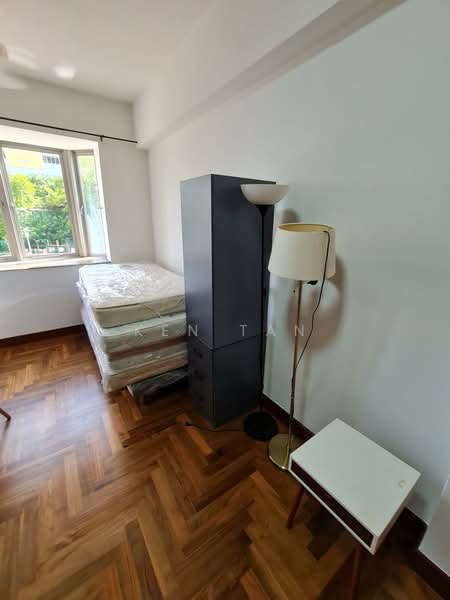
1 properties in Eastpoint Green
Eastpoint Green's location in the Simei area positions it well within Singapore's broader urban renewal strategy, with the eastern corridor seeing steady infrastructure development and population growth. The property's proximity to Simei MRT station (7 minutes walk) aligns with the government's focus on transit-oriented developments, making it strategically sound for both owner-occupiers and investors seeking stability over speculation. Given current market conditions where cooling measures remain in place, properties in established neighbourhoods with strong connectivity tend to outperform speculative launches, making this a prudent choice for long-term wealth building rather than quick capital gains.
Eastpoint Green's price point of approximately S$1.39 million places it in the mid-to-upper segment of the eastern corridor, reflecting the premium that Simei's improved connectivity and amenities command compared to less developed areas. Over the past three years, similar sized units in this zone have appreciated at approximately 3-5% annually, which is modest compared to central locations but stable and less volatile for risk-averse investors. The pricing reflects the maturity of the Simei precinct as an established residential hub, rather than speculative value, indicating that much of the growth has already been captured and future appreciation will be gradual and sustainable.
Eastpoint Green is ideally suited for middle-income to upper-middle-income families (household income S$8,000-15,000 monthly) who prioritise convenience, safety and proximity to transport over prestige or central location appeal. This property attracts young professionals, established families with school-aged children, and owner-occupiers seeking suburban comfort with urban accessibility—demographics that comprise the core resident base of East Coast developments. For investors, Eastpoint Green appeals to those seeking steady rental yields from tenants in stable employment sectors (healthcare, education, finance) rather than high-growth capital appreciation, making it suitable for conservative portfolio diversification rather than aggressive yield-chasing strategies.
At S$1.39 million, buyers will typically require a deposit of S$139,000 to S$278,000 (10-20%), with the remaining financed through mortgage at current rates of approximately 4.0-4.5% over 25-30 year tenures, resulting in monthly payments of S$5,500-7,000 depending on loan-to-value ratio and tenure. Most banks will lend up to 75-80% of the property value for owner-occupiers, requiring household income of approximately S$12,000-15,000 monthly to comfortably service debt under prudent lending stress tests. First-time buyers in this bracket often benefit from HDB upgrade grants or family contributions, whilst investors should factor in 25% down payment requirements due to ABSD, making the equity requirement substantially higher and affecting overall portfolio returns.
Investors purchasing Eastpoint Green will face Additional Buyer's Stamp Duty (ABSD) of 16% on the purchase price (S$222,400 for a S$1.39 million property) since it is their second or subsequent residential property, alongside standard Buyer's Stamp Duty of approximately 3-4%, resulting in total upfront costs of approximately 19-20% of purchase price. This substantial ABSD burden significantly impacts cash-on-cash returns and means investors must hold the property for a minimum of 5-6 years to break even on acquisition costs alone, assuming 3-5% annual appreciation. Stamp duty on sale will be minimal (S$1,390-2,000) due to the graduated stamp duty regime, but the ABSD outlay at purchase makes this more attractive for long-term wealth accumulation rather than short-term trading strategies.
Eastpoint Green, located in the established Simei precinct with strong transport connectivity, typically yields 2.8-3.5% gross rental return (approximately S$1,200-1,450 monthly for a 2-3 bedroom unit), which is in line with eastern corridor averages but lower than central location yields due to lower rental price points. Vacancy risk in this area is relatively low (typically 3-5% annually) because Simei attracts a stable demographic of young families and working professionals seeking affordable, well-connected neighbourhoods, with consistent tenant demand across economic cycles. However, investors should note that rental growth in eastern locations has lagged prime central areas, averaging only 1-2% annually, so this property is suited to income-focused investors rather than those seeking substantial capital appreciation combined with high yields.
Properties within a 7-10 minute walk of an MRT station like Eastpoint Green command a premium of approximately 10-15% compared to non-MRT served properties in the same zone, with this premium justified by reduced transport costs, shorter commute times, and broader tenant appeal for younger professionals without vehicles. The EW3 Simei MRT station provides direct connectivity to the Central Business District, making Eastpoint Green particularly attractive to tenants working in financial or professional services, thereby reducing vacancy risk and stabilising rental income. This MRT proximity also provides downside protection during economic slowdowns, as such properties maintain tenant demand better than car-dependent alternatives, and capital value erosion tends to be less severe compared to peripheral non-MRT locations.
The eastern corridor, including the Simei precinct, has a relatively modest new supply pipeline compared to central locations, with most upcoming projects concentrated in emerging zones like Pasir Ris and Tampines, indicating that Eastpoint Green's existing stock will face limited direct competition. However, the broader East Coast corridor has seen Government Land Sales (GLS) tenders and new en-bloc developments, particularly around Tampines and Pasir Ris stations, which may gradually absorb some housing demand that might otherwise flow to established areas like Simei. Nevertheless, because Eastpoint Green is already a mature, fully-occupied development with established community amenities and strong MRT connectivity, new supply is unlikely to significantly erode its value; instead, it may shift buyer preference marginal towards newer products, potentially moderating appreciation rates rather than causing capital decline.
Buyers of Eastpoint Green should confirm the remaining lease tenure before purchase, as properties with lease periods below 75-80 years face increasing difficulty in obtaining mortgage financing from most Singapore banks, with loan amounts capped or financing withdrawn entirely below 60 years remaining. For a property at Simei of this price point, lease tenure directly impacts not only bank financing availability but also future resale value and rental appeal, with each year of lease decay typically reducing property value by approximately 0.5-0.8% annually once tenure falls below 80 years. Owner-occupiers planning to hold for 20+ years should verify lease tenure is at least 95-99 years; investors should insist on 85+ years to ensure two full financing cycles and avoid purchasing properties approaching the critical 80-year threshold where liquidity and lending availability deteriorate substantially.
When shortlisting units at Eastpoint Green, buyers should examine floor level and orientation carefully, as eastern-facing units in this location experience significant afternoon heat and higher cooling costs, whilst higher floors (12th and above) typically command 8-12% premiums but face stronger wind exposure and potential structural noise; mid-to-high floors (8th-15th) with north or south-facing orientations typically offer the best balance of value and liveability. Proximity to lift lobbies and service areas should be assessed, as units directly adjacent to these facilities experience higher foot traffic noise, smells, and vibration, potentially affecting rental appeal; corner units and those at the end of corridors are typically quieter and command modest premiums of 2-5% despite potentially smaller layouts. Buyers should also verify the status of common area maintenance funds, review sinking fund contributions, and assess the building's age-related capital expenditure liabilities (roof works, external painting, lift replacements), as Eastpoint Green's maintenance cost trajectory will directly impact future affordability and resale value, particularly for investors sensitive to net yield compression over the holding period.
Free Property Valuation
Enter your postal code and get a free instant valuation report straight to your inbox.