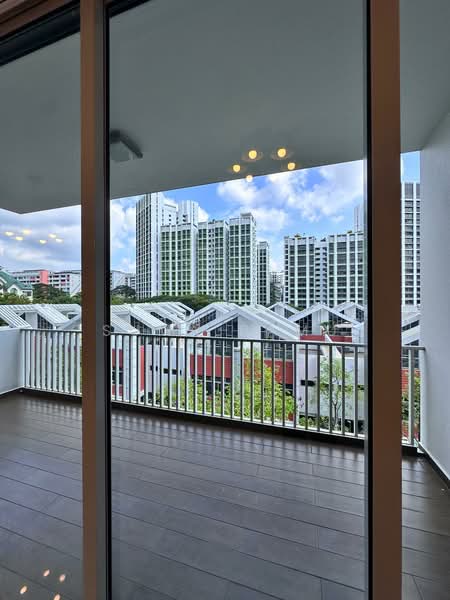
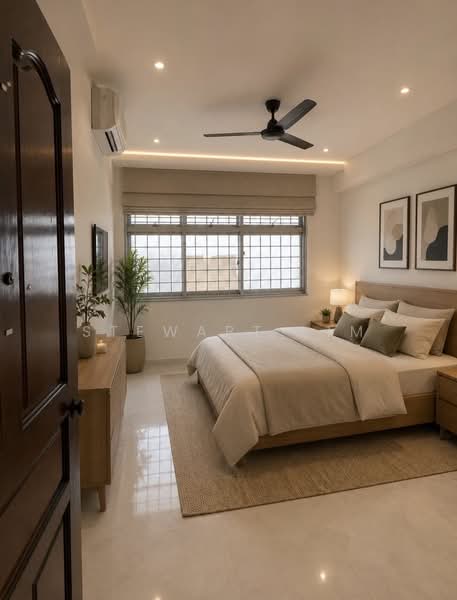
7 properties in Woodlands MRT
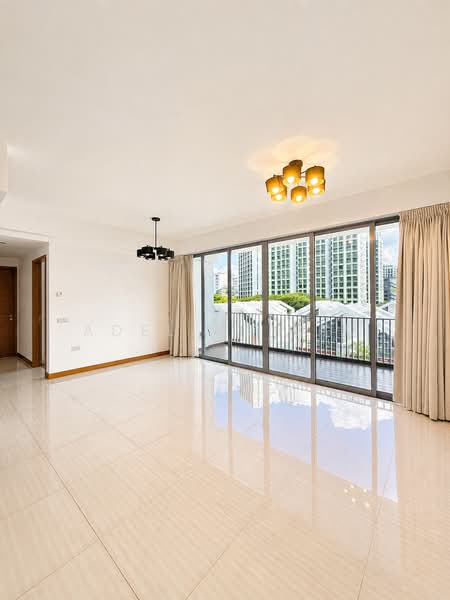
S$ 1,828,938
71 Woodgrove Avenue · Condo · 14 min (1.14 km) from TE2 Woodlands MRT Station
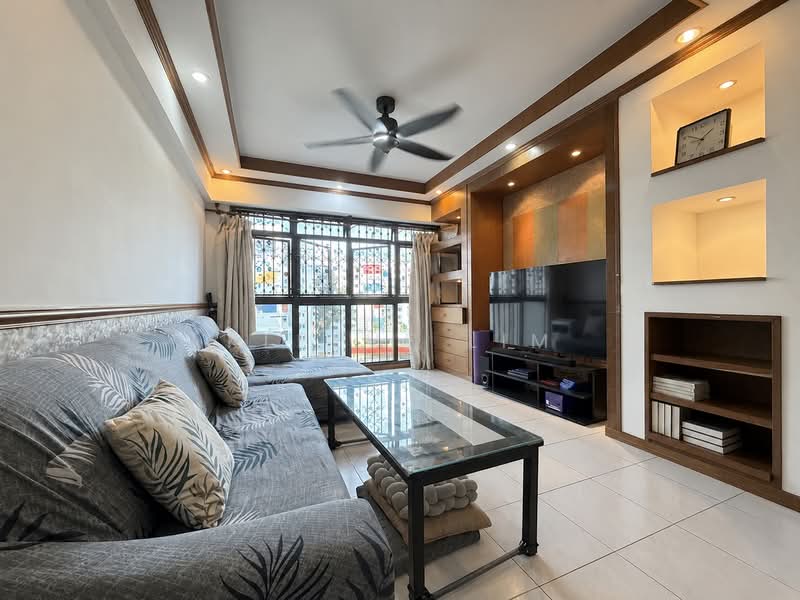
S$ 580,000
525 Woodlands Drive 14 · HDB · 11 min (950 m) from TE2 Woodlands MRT Station
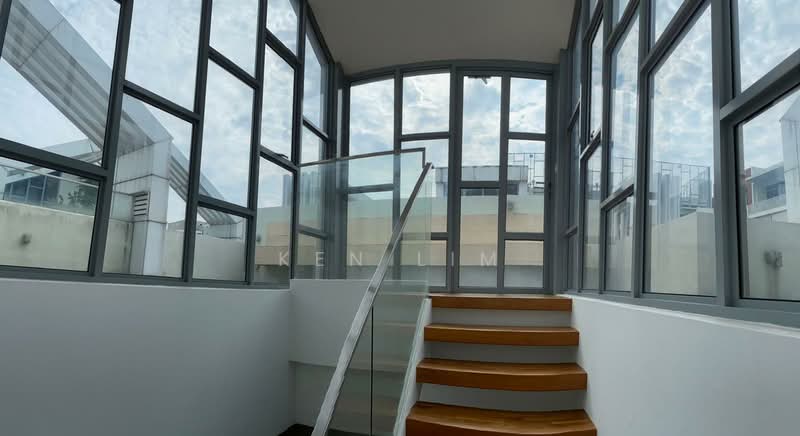
S$ 4,138,340
71 Woodgrove Avenue · · 14 min (1.14 km) from TE2 Woodlands MRT Station
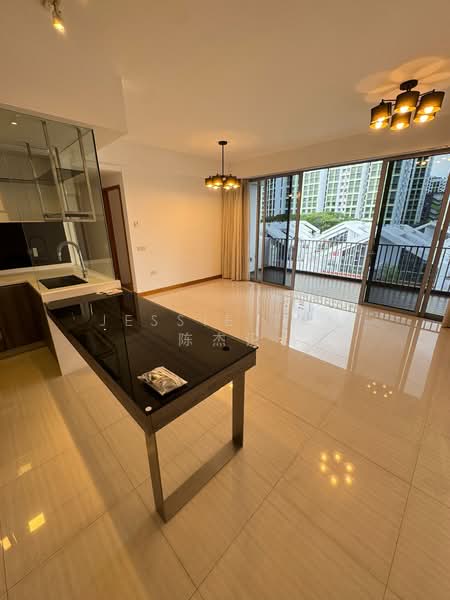
S$ 1,677,330
71 Woodgrove Avenue · Condo · 14 min (1.14 km) from TE2 Woodlands MRT Station
S$ 1,759,667
71 Woodgrove Avenue · Condo · 14 min (1.14 km) from TE2 Woodlands MRT Station
S$ 1,000,000
124 Marsiling Rise · HDB · 12 min (990 m) from NS9 Woodlands MRT Station
S$ 1,178,800
847 Woodlands Street 82 · HDB · 14 min (1.18 km) from TE2 Woodlands MRT Station
Woodlands MRT properties represent good value in 2024-2025 as the North-South Line (NS9) and Thomson-East Coast Line (TE2) provide dual connectivity, making the area less cyclical than single-line stations. The diverse price range—from HDB flats at S$580,000 to cluster houses at S$4.1 million—suggests the market has stabilised after previous cooling measures, with genuine long-term migration patterns supporting demand rather than speculative buying. However, buyers should monitor the incoming Lentor Central mixed-use development and Singapore's broader economic growth trajectory, as interest rate movements could still impact mortgage affordability over the next 12–18 months.
Woodlands MRT properties have shown more moderate appreciation than core central region estates, reflecting its suburban positioning and proximity to Malaysia, which can attract price-sensitive first-time buyers and investors seeking stable rental yields rather than capital gains. The HDB resale market in Woodlands has remained resilient with typical price movements of 2–4% annually, whilst private condominiums like Woodhaven have experienced gentler volatility than CCR projects due to lower speculative interest. This relative stability makes Woodlands an attractive hedge against market downturns, particularly for rental-focused investors seeking predictable cash flow in the northern corridor.
Woodlands MRT attracts three distinct cohorts: young families and first-time HDB buyers seeking affordability (targeting the S$500,000–S$1.1 million HDB segment), middle-income households upgrading to private condominiums (S$1.6–S$1.9 million range), and buy-to-let investors prioritising rental yield stability over capital appreciation. Tenants are typically young professionals, expatriates working in the northern business parks, and families valuing proximity to Malaysia for cross-border activities and lower cost of living for non-work essentials. Marketing should emphasise dual MRT line connectivity, established residential character, proximity to Woodlands Regional Centre, and strong schools like Woodlands Primary and Secondary, which appeal to families planning 5–10 year residencies.
For HDB flats in the S$580,000–S$1.0 million bracket, buyers can typically access 80–90% LTV through HDB housing loans at rates currently hovering around 2.6–3.2%, resulting in monthly payments of S$2,500–S$4,500 depending on tenure and income. Private residential properties like Woodhaven condominiums at S$1.6–S$1.8 million attract 75–80% LTV from banks at prevailing SIBOR-linked rates (approximately 3.5–4.2%), translating to monthly mortgage servicing of S$7,000–S$8,500 for a 25-year tenure. Buyers should stress-test affordability at a 2% rate rise (to 4.5–5.5%) to ensure debt servicing ratios remain below 60%, particularly important given Woodlands' appeal to first-time upgraders with variable household incomes.
Singapore Additional Buyer's Stamp Duty (ABSD) applies at 20% on the purchase price for a second residential property (for individuals) or significantly higher for corporate/foreign entities, making a S$1.8 million Woodlands condo acquisition trigger approximately S$360,000 in ABSD liability. First Buyer's Stamp Duty and conveyancing fees typically total 3.5–4.5% of purchase price, so a S$1.0 million HDB flat incurs around S$35,000–S$45,000 in upfront taxes. Woodlands' northern suburban location does not provide ABSD exemptions, but its strong fundamentals (dual MRT lines, established housing stock, stable rents at S$2,800–S$3,800 monthly for comparable 4-room flats) justify the tax burden for yield-focused investors targeting 3.5–4.5% gross rental returns.
Woodlands MRT properties—particularly HDB 4-room flats and private condominiums—typically command gross rental yields of 3.5–4.5% annually, with monthly rents ranging from S$2,800–S$3,800 for HDB units and S$3,500–S$4,500 for private residential units, reflecting demand from expatriates and young families avoiding city-centre rents. Vacancy risk is relatively low (averaging 2–4 weeks annually) because Woodlands' affordability, dual MRT connectivity, and proximity to employment nodes in Lentor, Springleaf, and Marina Bay attract consistent tenant turnover rather than prolonged voids. However, investors should monitor the upcoming Lentor Central development's impact on rental supply—whilst it may increase demand for housing, it could also fragment the market if newer developments offer superior amenities, potentially pressuring yields on older stock like estates built in the 1990s–2000s.
Dual MRT connectivity at Woodlands (NS9 North-South Line and TE2 Thomson-East Coast Line) provides exceptional commuting flexibility, allowing residents to access diverse employment clusters—the CBD via NS9, Outram and Marina Bay via TE2—without dependency on a single line or frequent interchange, typically justifying a 5–8% value premium over comparable properties at single-line suburban stations. This connectivity reduces commute fragility; if one line experiences disruptions, residents retain alternative routes, a consideration increasingly valued post-pandemic given employer flexibility and multi-hub working patterns. Properties within 1.0–1.2 km of either station (like those sampled here at 950 m–1.14 km distances) command stronger tenant demand and faster resale velocity, making them more attractive to both owner-occupiers and investors seeking liquidity and reduced holding periods.
Lentor Central (mixed-use development with residential, retail, and commercial components) is the most significant pipeline addition, likely to introduce 2,000–3,000 new residential units (estimate) within the Woodlands corridor by 2026–2027, potentially moderating capital appreciation for existing stock and introducing pricing competition. The Thomson-East Coast Line completion has stabilised supply expectations; no major new residential launches are expected directly at Woodlands MRT station itself, suggesting limited near-term oversupply. Investors should view moderate appreciation (2–3% annually) as the realistic baseline for Woodlands properties over 3–5 years, with upside from rental yield accumulation and potential MRT line extensions (future considerations beyond current timelines) rather than speculative capital gains, making this a classic rental yield play rather than a growth-focused investment.
HDB flats near Woodlands MRT with 70+ years remaining lease tenure (typical for stock built in 1980s–1990s, like 525 Woodlands Drive 14 and 847 Woodlands Street 82) remain highly mortgageable and saleable, with most banks lending comfortably at 75–80% LTV up to a 30-year repayment horizon. However, flats approaching 70-year thresholds will experience accelerating lease decay—at 60 years remaining, banks reduce LTV to 65–70% and some lenders withdraw entirely, significantly impairing future refinancing and resale appeal. Buyers should prioritise units with 75+ years remaining, particularly if purchasing for long-term occupation, as the HDB lease buyback scheme (allowing top-up to 99 years) typically covers only flats with 70–79 years remaining and is means-tested; younger flats avoid this friction entirely.
For HDB flats, assess fire safety records (check with HDB for any fire incidents), water supply sufficiency (Woodlands' expansion means some older precincts experienced pressure fluctuations), and neighbouring unit composition (strata demographics affect resale appeal); also verify the exact MRT walking distance, as 14 minutes at 1.14 km assumes flat terrain and direct pedestrian pathways, which may not exist in all directions around the station. For private residential like Woodhaven, scrutinise the developer's track record, sinking fund adequacy (critical given building age and potential major repairs), tenure of the leasehold interest (most condos are 99-year leases but some may be 103-year or 999-year; verify documents), and rental comps in the same building to validate yield assumptions. Additionally, evaluate the condo's proximity to Marsiling Road and Bukit Timah Expressway for noise exposure, check the management agency's responsiveness (via online reviews and recent complaint records), and confirm layout suitability (Woodlands flats often feature older configurations; units facing common corridors may suffer noise issues from street-level activities).
Free Property Valuation
Enter your postal code and get a free instant valuation report straight to your inbox.