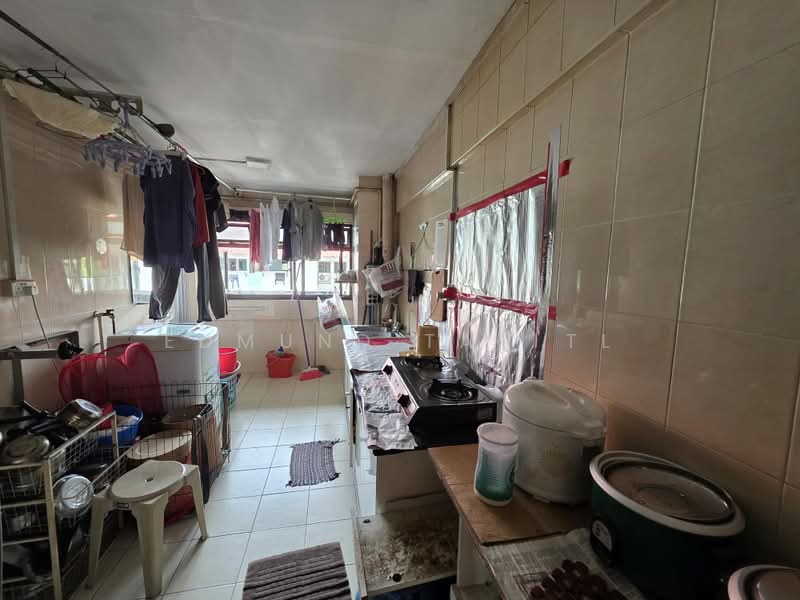
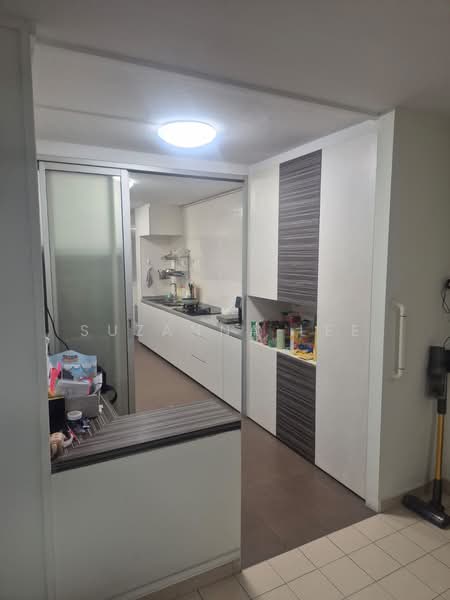
2 properties in Ubi MRT
S$ 550,000
301 Ubi Avenue 1 · HDB · 9 min (760 m) from DT27 Ubi MRT Station
S$ 645,000
344 Ubi Avenue 1 · HDB · 6 min (490 m) from DT27 Ubi MRT Station
The Ubi area remains attractive for first-time buyers and upgraders due to its established residential character and proximity to the Downtown Line, which has consistently supported rental demand and price stability. Current price points in the S$550,000–S$645,000 range for 3-room and larger units represent reasonable value compared to similarly-located estates like Macpherson or Paya Lebar, particularly if you plan to hold for the long term or upgrade within 5–10 years. However, buyers should monitor the broader HDB resale market for any softening in transaction volumes, as interest rate expectations and economic conditions can influence both buyer competition and price momentum in mature estates like Ubi.
HDB flats near Ubi have tracked closely with the overall HDB resale index, appreciating at a steady 1–3% annually, which is slower than condo and landed property price growth but reflects the stability of public housing in established heartland locations. Unlike city-centre fringe areas that saw sharper appreciation driven by urban redevelopment, Ubi's value gains have been driven primarily by MRT connectivity, proximity to employment nodes in Paya Lebar and the central business district, and rental yield attraction. The dual price points shown (S$550,000 vs S$645,000) suggest a price differential linked to unit size and exact distance to the station, which is a typical pattern in mature HDB estates where walk distance to transport remains a key value driver.
HDB flats near Ubi MRT appeal strongly to working professionals and young families seeking affordable entry into the property market with reliable commuting access to the CBD, Paya Lebar business district, and surrounding employment zones via the Downtown Line. Tenants in this area are typically mid-market renters (S$2,200–S$2,800 per month) who value the balance of affordability, transport connectivity, and proximity to amenities without the premium associated with central or transformed estates. Investors targeting moderate rental yields (2.5–3.5% gross) also favour Ubi, as the consistent demand from working professionals and the stable HDB rental market reduce vacancy risk compared to more speculative locations.
For the lower-priced unit at S$550,000, first-time buyers can typically secure HDB loans up to 90% (S$495,000) with CPU (Credit Proportion Utilisation) affordability checks easily met for dual-income households earning S$8,000–S$10,000 monthly; for the S$645,000 unit, the threshold is slightly higher but still achievable for most professional couples. Bank loans for HDB flats near Ubi benefit from lower interest rates (typically 2.0–2.4% for 25-year terms) compared to private property, and stamp duty on purchase is minimal at S$10 for the first S$500,000 and S$15 thereafter, making the total acquisition cost predictable. First-time buyers should factor in CPF usage (both ordinary and special account withdrawals are possible), and those upgrading from previous HDB purchases will be subject to the 5% ABSD stamp duty, which adds approximately S$27,500–S$32,250 to the second unit purchase.
For investors (non-owner-occupiers), ABSD is not applicable to HDB flats, which is a key advantage compared to condo or landed property investment; however, investors must declare non-owner-occupier status and comply with HDB regulations, including a minimum 5-year holding period and restrictions on concurrent ownership of private property. Stamp duty on purchase of an HDB resale flat is extremely low (S$10 + S$15 = S$25 for these price points), making HDB acquisition costs significantly cheaper than condo investment and allowing more capital to be allocated toward yield optimisation. Investors should note that rental income from HDB flats is taxable, and IRAS will assess rental yield based on market rates; the consistent 2.5–3.5% gross yield available in the Ubi market makes HDB a steady, low-risk income asset without the capital gains exposure of appreciating properties.
Gross rental yields for HDB flats near Ubi typically range from 2.5% to 3.5%, with the lower band reflecting newer or very well-maintained units and the higher band for units requiring modest renovations or targeting the mass-market renter segment; a S$550,000 unit could command S$1,450–S$1,650 monthly rent, generating approximately 3.2–3.6% gross yield. Vacancy risk is relatively low in this location due to consistent demand from working professionals commuting to the CBD and Paya Lebar, with typical re-letting cycles of 2–4 weeks; however, during economic downturns or if broader HDB rental markets soften, turnover and void periods can extend to 6–8 weeks. Investors should account for management costs (approximately S$50–S$80 monthly for HDB flats) and maintenance contributions (between S$30–S$80 monthly), which reduce net yield to approximately 2.8–3.2%, still competitive relative to the broader HDB portfolio but lower than some buoyant condo markets.
The two sample listings show a clear price differential: the unit 6 minutes away (490 metres) commands S$95,000 more than the unit 9 minutes away (760 metres), equating to approximately a 17% premium, which reflects the substantial value impact of walk distance to the MRT station in a mature HDB estate. Rental rates also follow this pattern, with units within 5–7 minutes walk typically achieving 5–8% higher monthly rent than those at the 8–10 minute perimeter, as tenants consistently prioritise reduced commute friction and reliability of MRT access. Ubi MRT's position on the Downtown Line, which connects directly to the CBD and provides interchange with the Circle Line at Tai Seng, makes sub-800-metre proximity particularly valuable for time-sensitive renters and owner-occupiers, justifying the pricing premium and supporting stronger capital appreciation potential over 5–10 year holding periods.
Ubi is an established estate with minimal new HDB development planned in the immediate vicinity; the Housing and Development Board's recent focus has shifted towards mature estate rejuvenation programmes, meaning incremental supply growth will be limited compared to growth areas like Punggol or Tampines. However, nearby developments such as the broader Geylang–Paya Lebar corridor and potential landed housing intensification in adjacent areas could marginally increase rental supply competition, though this is unlikely to materially depress HDB flat values given the distinct price points and tenant profiles. Investors and buyers should monitor the HDB website for any selective en bloc redevelopment schemes or enhancement initiatives (e.g., lift upgrading, precinct improvements) that could boost desirability and maintain long-term capital appreciation potential in the Ubi micromarket.
HDB flats near Ubi are typically 99-year leasehold properties; buyers should verify the remaining lease tenure before purchase, as flats purchased today with 85–90 years remaining will decline in value as they approach the 30-year mark, when banks begin tightening loan-to-value ratios and buyers face significant financing constraints. For first-time buyers planning to hold for 25–30 years or longer, current units with 85+ years remaining pose no practical concern, but investors targeting yield and eventual resale should favour units with 90+ years remaining to maximise future buyer appeal and maintain capital value. HDB's lease renewal scheme (launched in 2019) allows qualified owners to renew their lease by 30 years for a moderate fee, but this is conditional on ownership tenure and property condition, so early-stage buyers should factor this into long-term wealth planning and prioritise higher-tenure units when comparing similar properties.
Walk distance to Ubi MRT station is paramount—units within 500–700 metres (6–9 minutes) command significant premiums and offer superior rental demand; buyers should physically verify the walking route, accounting for overhead bridges, traffic light waits, and pedestrian path conditions, as mapped distances can underestimate actual commute friction. Unit orientation, layout, and renovation status are critical: units facing away from Ubi Avenue 1 traffic tend to command higher rental rates, and kitchens with modern utilities reduce tenant-funded renovation costs and accelerate re-letting; inspecting the unit's age, lift system, and any ongoing estate enhancement works (e.g., top-up grants, HDB conversions) is essential. Finally, buyers should review the HDB block's maintenance reserve fund status, the estate's amenity profile (hawker centres, supermarkets, polyclinics), and the sociodemographic trend of the area via HDB's block-level data; Ubi's proximity to the Geylang-Paya Lebar employment corridor and stable demographic profile support consistent demand, but comparing schools, accessibility to MRT interchanges, and future metro expansions (if any) with alternative locations ensures optimal long-term value retention.
Free Property Valuation
Enter your postal code and get a free instant valuation report straight to your inbox.