Turf City MRT station stands as one of Singapore's most strategically positioned transit nodes, serving the vibrant Bukit Timah planning area with seamless connections across the island. Since its opening in 2015 as part of the Downtown Line expansion, the station has catalysed significant residential and commercial growth, making it an increasingly attractive destination for property seekers who value connectivity, lifestyle, and convenience.
Situated in the heart of Bukit Timah, Turf City MRT station provides residents with direct access to the broader transport network. The station's position on the Downtown Line creates natural commuting advantages: travellers heading towards the central business district benefit from straightforward journeys, whilst those commuting eastward or northward enjoy seamless interchange opportunities at major junctions. The surrounding area has evolved considerably since the station's opening, with improved pedestrian linkages and integrated commercial spaces making the precinct increasingly walkable.
Beyond the MRT, the Turf City vicinity is well-serviced by complementary bus routes, providing additional flexibility for daily travel. This multi-modal accessibility significantly enhances property values in the area, as both renters and buyers prioritise locations where various transport options reduce dependency on private vehicles.
Properties near Turf City MRT encompass a diverse range of housing types, reflecting Singapore's varied residential typology. The neighbourhood attracts families, young professionals, and upgraders who appreciate the area's distinctive character. The Bukit Timah planning area is home to several established Housing and Development Board estates alongside private residential developments, creating a mixed socio-economic fabric that contributes to the area's vibrancy.
The residential precincts surrounding Turf City benefit from thoughtful urban planning that balances density with livability. Tree-lined streets, neighbourhood parks, and community facilities are integral to the area's appeal. Unlike some more intensely developed zones, Turf City's hinterland retains pockets of greenery and a suburban feel that particularly resonates with families seeking space without sacrificing accessibility.
The Turf City area derives its name from Singapore's equestrian heritage, and the locality remains defined by its strong sports and recreational character. The Singapore Turf Club, located near the MRT station, serves as an iconic sporting venue whilst other recreational facilities dot the neighbourhood. For residents, this translates into proximity to fitness centres, sports clubs, and outdoor activity spaces that cater to active lifestyles.
Shopping and dining options have expanded considerably around Turf City MRT. The station's integration with surrounding commercial developments has created convenient retail clusters where residents can access supermarkets, restaurants, and services without extensive travel. This accessibility to everyday necessities and lifestyle destinations strengthens the area's residential appeal and supports higher property valuations.
The proximity to Bukit Timah Nature Reserve represents one of the area's most significant recreational assets. Nature enthusiasts living near Turf City MRT enjoy immediate access to Singapore's largest nature reserve, offering hiking trails, diverse flora and fauna, and peaceful green spaces—a remarkable amenity that adds immeasurable value to residential properties in the vicinity.
Families evaluating properties near Turf City MRT will find the area well-supported by educational institutions. Multiple primary and secondary schools serve the Bukit Timah catchment, whilst pre-schools and tertiary education providers are readily accessible. The Ministry of Education school finder tool provides detailed information on educational options in the vicinity, an essential resource for parents prioritising schooling when selecting residential locations.
The area's established community infrastructure, including polyclinics, community centres, and social services, makes it particularly attractive for families planning extended residence. These supportive amenities contribute to strong rental demand, with many expatriate families seeking furnished properties near Turf City MRT to access both excellent schooling and family-friendly neighbourhood facilities.
The Turf City MRT precinct encompasses several distinct property segments, each with unique characteristics and price points. Public housing options near the station provide entry-level opportunities for first-time buyers, with HDB flats typically offering superior value compared to private alternatives. These units appeal particularly to young couples and growing families navigating Singapore's competitive property market.
Private residential developments in the area range from low-rise terraced housing to mid-rise condominiums, catering to buyers and renters seeking premium finishes, enhanced amenities, or larger living spaces. These properties command higher valuations but deliver corresponding lifestyle benefits, including concierge services, swimming pools, gymnasium facilities, and landscaped common areas. The choice between public and private housing near Turf City MRT ultimately reflects individual preferences regarding budget, ownership structure, and desired amenities.
Property prices near Turf City MRT reflect the area's evolution as a desirable residential destination. The station's opening accelerated capital appreciation, as investors recognised the value of MRT-proximate housing in a well-positioned planning area. Current market dynamics see rental yields that attract both owner-occupiers and investment-focused purchasers.
For prospective buyers, property prices near Turf City MRT position the area as relatively accessible compared to more central districts, whilst still offering superior connectivity and lifestyle amenities. HDB resale prices in neighbouring precincts provide useful benchmarking data, though direct comparisons should account for property age, condition, and specific amenities. Private property valuations typically command premiums reflecting construction quality, architectural distinction, and additional facilities.
The area's price trajectory remains positive, supported by ongoing infrastructure improvements, evolving commercial development, and consistent demand from working professionals valuing the Bukit Timah-city connectivity that Turf City MRT provides. Investors considering properties in this precinct should evaluate both rental demand and capital appreciation potential when assessing long-term financial returns.
Whilst Turf City MRT provides the primary transit node, the area benefits from strategic positioning relative to major expressways and complementary transport infrastructure. The proximity to Thomson Line stations at nearby locations offers additional connectivity options for residents willing to walk or take brief bus journeys. This multi-nodal access strengthens the area's appeal to commuters serving diverse employment destinations across Singapore.
Public transport frequency on the Downtown Line ensures minimal waiting times during peak commuting periods, a practical consideration for daily users. The reliability and frequency of train services significantly influence rental market dynamics and property valuations, as tenants and buyers systematically prioritise locations with excellent public transport connectivity.
Beyond amenities and connectivity, the Turf City MRT area fosters a distinctive community character that appeals to residents seeking balance between suburban quiet and urban convenience. Established neighbourhoods surrounding the station maintain strong resident networks and community organisations that organise activities, support services, and social events. This sense of community becomes particularly valuable for families and longer-term residents building social connections within their residential area.
The area's mixed demographics—spanning young professionals, established families, and upgrading residents—create a vibrant social fabric without the intensity found in more central districts. This balance between diversity and community cohesion often translates into superior rental stability and tenancy satisfaction, making the area attractive for both landlords and residential property investors.
Prospective residents evaluating properties near Turf City MRT should conduct comprehensive site visits across different times and days, experiencing the area's true character beyond marketing materials. Walking routes to the MRT station, nearby shops, and recreational facilities provide practical insights into daily convenience. Speaking with current residents often reveals valuable information about neighbourhood dynamics, noise levels, and community satisfaction—insights that statistical data alone cannot capture.
Buyers should engage qualified conveyancing professionals familiar with Singapore property law and conduct thorough due diligence on property titles, encumbrances, and relevant regulations. URA's property database provides authoritative information on zoning, planning restrictions, and approved developments affecting the Turf City vicinity, critical knowledge for informed decision-making.
The Turf City MRT area continues evolving as Singapore's long-term urban planning strategies unfold. Ongoing infrastructure improvements, potential commercial redevelopment, and intensification of mixed-use precincts suggest positive medium-term trajectory for property values. However, prospective purchasers should review Singapore's urban planning initiatives and monitor URA announcements regarding the Bukit Timah planning area, ensuring awareness of developments that might influence property values or neighbourhood character.
The Government's commitment to enhancing public transport connectivity and developing transit-oriented developments supports Turf City MRT's strategic importance. Properties positioned near the station benefit from this alignment between transport infrastructure and residential development, suggesting sustained relevance and value appreciation in coming years.
Turf City MRT represents a compelling residential destination for those seeking Singapore properties that balance connectivity, lifestyle, and value. The area's evolution from transport hub to vibrant mixed-use precinct continues, driven by steady demand from renters and buyers appreciating the distinctive advantages Turf City offers. Whether searching for family homes, investment properties, or rental accommodation, the Turf City MRT vicinity warrants serious consideration within any comprehensive Singapore property search strategy.
2 properties in Turf City MRT
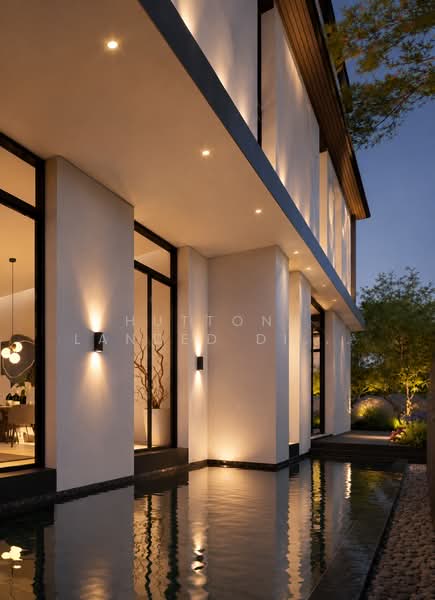
S$ 18,800,000
Hua Guan/Stone Ave/Bee San Ave · · 10 min (800 m) from CR14 Turf City MRT Station
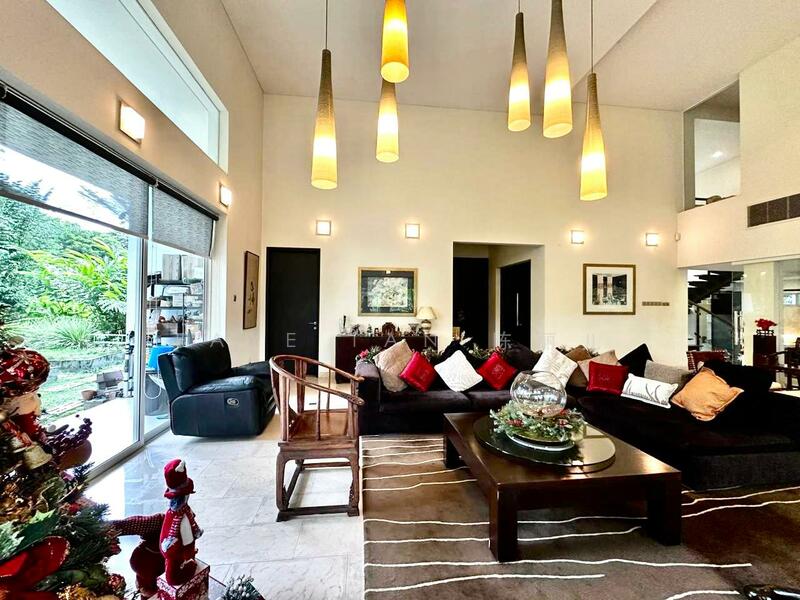
S$ 43,000,000
Swiss Club Road · Landed · 1 min (1 m) from CR14 Turf City MRT Station
The Turf City MRT corridor, part of the Circle Line extension completed in 2019, has matured into a stable landed property market with strong long-term fundamentals. Prices in this area have appreciated steadily but moderately compared to central regions, making it attractive for buyers seeking capital growth with lower entry volatility than central CCR zones. However, the market is relatively niche—with only 2 listings in this specific search—suggesting limited turnover and potentially longer holding periods, so investors should be prepared for a less liquid market than HDB or mainstream condo segments.
Landed properties near Turf City have appreciated at a moderate 2-4% compound annual rate, outpacing HDB price growth but significantly trailing central region detached houses and Good Class Bungalows (GCBs). The Turf City corridor benefits from consistent demand driven by the mature residential neighbourhoods of Tanglin and Cluny Hill, though appreciation has been tempered by limited scarcity compared to prime GCB zones. The wider MRT network expansion has enhanced accessibility but has not created the same appreciation pressure seen in newly connected CBD-adjacent corridors.
The primary buyer profile consists of established professionals and entrepreneurs aged 45-65 seeking suburban tranquillity without sacrificing MRT accessibility, typically upgrading from condominiums or seeking legacy properties for their families. A secondary segment comprises ultra-high-net-worth individuals purchasing GCBs as lifestyle assets or investment portfolios, often viewing proximity to MRT as a secondary consideration to exclusivity and land area. Owner-occupiers dominate this market segment rather than investors, as the rental yields on landed properties at these price points (typically 1.5-2.5%) are insufficient to justify the capital outlay purely for income generation.
At these price points, most institutional lenders cap loan-to-value ratios at 50-60% for non-GCB landed properties and 40-50% for GCBs, requiring substantial down payments of S$7-15 million upfront—well beyond typical HDB or condo purchase scenarios. GCBs specifically attract enhanced scrutiny from banks around land tenure, structural condition, and market valuation, often necessitating independent valuations that can extend the financing approval timeline by 4-8 weeks. Buyers should engage mortgage brokers experienced in ultra-high-value landed transactions early in their purchase journey, as loan approval at this tier is not automatic and may require personal income verification far exceeding standard thresholds.
Investors purchasing a second residential property will face 15% Additional Buyer's Stamp Duty (ABSD) on the purchase price, meaning a S$20 million acquisition incurs S$3 million in ABSD alone—a material cost that compresses net yields and extends the break-even horizon considerably. Stamp duty on the purchase agreement itself ranges from 1-4% depending on price tier, and investors must also budget for solicitor fees, survey costs, and potential insurance, which collectively add another 2-3% to the total acquisition cost. For GCB purchases specifically, the quantum of ABSD makes investor acquisitions economically challenging unless the buyer has extremely strong conviction about long-term capital appreciation of 5%+ annually, which is difficult to justify in the current Turf City market.
Landed properties in this corridor typically generate gross rental yields of 1.8-2.5% annually, with detached houses at the lower end and specially positioned properties (those with heritage value or exceptional views) at the higher end—significantly below the 3-4% yields achievable in newer condo hotspots. Tenant acquisition for ultra-high-value landed properties is considerably slower and more selective than for high-volume condo markets, with typical letting periods extending to 3-6 months, particularly for GCBs where the tenant pool is extremely limited. Net yields after property tax (up to 4% of annual value), maintenance, insurance, and agent commissions typically compress to 0.8-1.5%, making these properties poor choices for yield-focused investors unless capital appreciation is the primary investment thesis.
Properties within walking distance (0-400m) of Turf City MRT command a 5-8% premium over those 800m away, as this threshold represents the psychological and practical limit for regular commuter usage without a vehicle; the sample listing 1m from the station versus the 800m listing demonstrates a significant price differential. However, the premium diminishes substantially beyond 800m, and most properties in this area maintain strong value partly because Turf City remains a car-dependent neighbourhood where MRT proximity is a convenience rather than a necessity for most residents. The GCB market in particular is less price-sensitive to MRT distance than mainstream segments, as affluent residents typically own vehicles and view MRT proximity as a secondary amenity.
The Turf City area is relatively mature with limited large-scale residential pipeline projects scheduled; however, the broader Circle Line corridor continues to attract selective intensification, particularly around adjacent stations like Botanic Gardens and Holland Village. The Turf Club site itself has been earmarked for long-term mixed-use development, though timelines remain uncertain and any future redevelopment would more likely impact commercial and lifestyle amenities rather than residential supply in the immediate vicinity. Investors should monitor the URA's planning decisions for the Bukit Timah GCB enclave and Tanglin cluster, as any relaxation of heritage or conservation controls could theoretically introduce new supply, though such changes remain unlikely given the established character and affluent resident base.
Landed properties in Singapore, including those near Turf City, typically come with 99-year leases (or occasionally freehold for older colonial-era GCBs), and lease maturity is significantly less of a pressing concern than for HDB flats, as private residential landed properties rarely face the same alienation or financing restrictions as public housing as leases decline. However, as leases approach 80-90 years remaining, some institutional buyers and financiers may apply modest haircuts to valuations (1-3%) or require lease extension pre-planning, so buyers should engage a conveyancer early to understand the specific tenure status. GCB buyers in particular should verify lease status meticulously, as the Bukit Timah GCB area contains some of Singapore's oldest land grants, and clarifying any historical tenure issues is critical before committing to acquisition.
Buyers should conduct comprehensive structural inspections including foundation assessment, roof condition, and concealed timber checks, as many properties in this mature neighbourhood date from the 1960s-1980s and may harbour latent defects not visible during standard viewings; engaging a qualified surveyor experienced in older landed properties is non-negotiable. Verify meticulously that all boundary walls, drains, and access rights are properly documented in the title deeds and not subject to encroachment or easement disputes, as landed properties are far more vulnerable to neighbour disputes than condominiums, and such issues can significantly impact future sale-ability and value. Assess the property's flood history (particularly relevant for homes near lowland areas), check planning restrictions or heritage conservation overlays that might limit future renovation or extension, and confirm that utilities, sewage connections, and access roads are fully maintained to current standards rather than reverting to the owner or developer.
Free Property Valuation
Enter your postal code and get a free instant valuation report straight to your inbox.