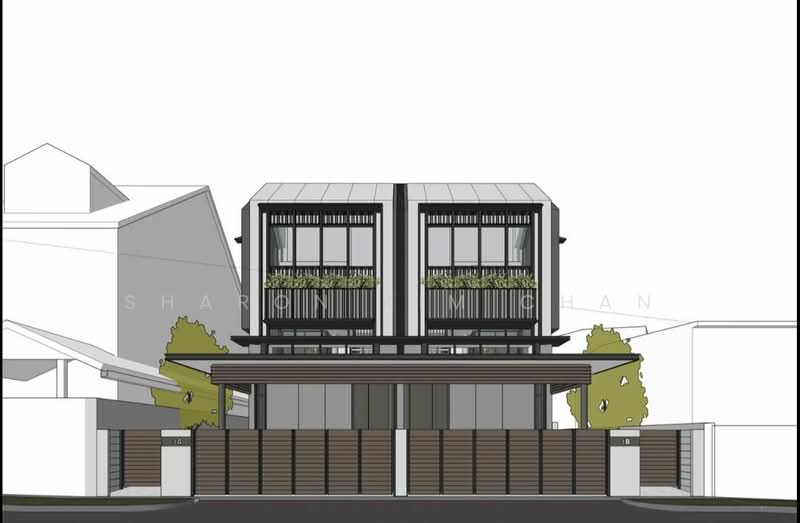
2 properties in Tavistock MRT
S$ 8,950,000
· 13 min (1.05 km) from CR10 Tavistock MRT Station
S$ 8,800,000
TAVISTOCK/ SERANGOON GARDENS/FARLEIGH · · 8 min (630 m) from CR10 Tavistock MRT Station
The landed property market near Tavistock MRT remains relatively resilient despite broader economic headwinds, with semi-detached houses in the S$8.8–9 million range reflecting stable pricing in the Serangoon Gardens enclave. This is an opportune time for serious buyers as transaction volumes have moderated, reducing competitive pressure compared to the 2021–2022 peak, whilst interest rates have stabilised around 3–3.5%, making financing more predictable. Tavistock's positioning on the Circle Line extension (CR10) makes it strategically valuable for long-term capital appreciation, particularly as the neighbourhood continues to attract affluent families seeking established greenery and proximity to quality schools.
Semi-detached properties in the Serangoon Gardens–Tavistock corridor have appreciated at a slower pace than prime landed districts like Bukit Timah or Holland Road, with typical price gains of 5–8% over three years, reflecting the area's maturing market status and established housing stock. The S$8.8–9 million price points observed here represent a 10–15% premium over comparable properties in nearby Novena or Kallang regions, justifying this premium through superior land plot sizes, heritage garden design, and the newly operational Tavistock MRT station. Unlike the speculative surges seen in suburban new launches, this segment has demonstrated steady but measured appreciation, making it attractive for buyers seeking stability rather than rapid capital growth.
The primary buyer demographic for properties at this price point comprises established families with household incomes exceeding S$300,000 annually, typically professionals aged 40–60 seeking owner-occupied residences rather than investment assets, given the landed property's primary residence tax efficiency and lifestyle utility. Secondary buyers include downsizers from larger landed estates or expat expatriate families relocating to Singapore who value the established neighbourhood character, proximity to international schools (Tanglin, ISS), and the refined Serangoon Gardens infrastructure. Investment demand remains modest for this category, as the relatively high entry price and limited rental demand from transient populations makes yield expectations challenging; most investors in this segment focus on long-term capital preservation and lifestyle utility rather than rental income generation.
Buyers at this price point typically require a 25–30% down payment (S$2.2–2.7 million) to secure competitive mortgage rates from Singapore banks, with loan-to-value ratios capped at 70–75% for non-landed properties and potentially stricter terms for landed estates depending on the lender's risk appetite. Monthly mortgage servicing on a S$6.5 million loan at current 3.3% interest rates with a 25-year tenure amounts to approximately S$30,000–32,000, requiring gross household monthly income of at least S$90,000–95,000 to satisfy prudent debt servicing ratios. Additional costs include stamp duty (3–4% of purchase price), legal fees, and stamp duty on the loan (~0.15%), totalling S$750,000–810,000 in upfront transaction costs, which informed buyers should factor into their overall capital planning.
Investors purchasing landed properties near Tavistock MRT face significant Additional Buyer's Stamp Duty (ABSD) charges: 25% for Singapore Citizens on a second residential property (S$2.2–2.25 million on an S$8.8–9 million purchase), or up to 35% for foreign persons, making the investment entry cost substantially higher than owner-occupied scenarios. Conveyance stamp duty adds an additional 3–4% to the purchase price, and if the property is later rented out, stamp duty on the tenancy agreement (~0.4% of annual rental value) applies each time a new lease is executed. The cumulative tax burden—potentially S$3 million+ for investors—means breakeven rental yields must exceed 4–5% annually to justify the investment, a challenging threshold for semi-detached properties in established neighbourhoods where rental demand is dominated by whole-unit lease seekers rather than family renters seeking landed accommodation.
Landed properties near Tavistock MRT typically command gross rental yields of 2.5–3.5% annually (S$220,000–315,000 per annum on an S$8.8–9 million property), positioning them below the 4–5% yields achievable in newer suburban developments or HDB-adjacent landed estates where family tenant demand is stronger. Vacancy risk is moderate to high for this category because the target tenant demographic—affluent families seeking landed properties—is relatively small in Singapore's rental market; most such families either own their residences or seek expat-oriented villas with furnished, short-term lease flexibility that this older Serangoon Gardens stock does not naturally offer. Prudent investors should model for 15–20% annual vacancy or accept that properties may remain untenanted for 3–6 month periods between quality tenants, significantly eroding net yield expectations to 2–2.8% and potentially dipping below the 2% threshold during economic downturns.
Properties within 500 metres (8–10 minute walk) of Tavistock MRT command a 10–15% valuation premium compared to properties 800 metres–1 kilometre away, with the sample listings showing tighter distance correlation: the 630-metre property priced at S$8.8 million versus the 1.05-kilometre property at S$8.95 million, demonstrating MRT proximity as a meaningful but not decisive factor in a mature, well-serviced neighbourhood. Tavistock's integration into the Circle Line network (CR10) enhances connectivity to Marina Bay and Dhoby Ghaut, reducing commute times for professionals working in the CBD to 18–22 minutes, which justifies the premium relative to nearby non-MRT-served landed pockets like Jalan Anak Bukit or Farrer Road estates. However, the valuation uplift from MRT proximity is considerably more modest for landed properties (10–15%) than for apartments (20–30%), because landed buyers prioritise the standalone residence experience and vehicular access, viewing MRT convenience as a secondary amenity rather than the primary value driver.
Unlike suburban growth corridors such as Woodlands or Tengah, the Serangoon Gardens–Tavistock precinct has extremely limited new landed supply, as the area is predominantly characterised by mature, conservation-listed neighbourhoods where new development is restricted by the Urban Redevelopment Authority's heritage guidelines and low-density zoning constraints. The absence of large-scale new launches in this catchment means future price appreciation will rely primarily on scarcity value and organic upgrading of existing stock, rather than being suppressed by competing new inventory as occurs in Bukit Timah or Orchard Park precincts. Investors and buyers should view this supply scarcity as a structural support for long-term valuations, though it also limits the addressable buyer pool and reduces downside price volatility—a characteristic typical of established, heritage-protected neighbourhoods across Singapore.
Unlike HDB flats or apartments with fixed 99-year leases, freehold landed properties in Serangoon Gardens are typically sold with absolute title and indefinite tenure, eliminating the lease decay concerns that affect apartment valuations as residual lease declines below 70 years; however, buyers should conduct thorough title searches to confirm freehold status, as a small portion of older estates in the vicinity may have long leasehold tenure (typically 999-year leases granted in the colonial era). The freehold nature of most properties in this precinct provides substantial long-term capital preservation and eliminates refinancing or succession complexity, making landed properties here particularly attractive for wealth preservation and intergenerational transfers compared to leasehold apartments. However, freehold properties are subject to full property tax rates (currently 4–6% of annual value based on property classification), higher than HDB charges, so buyers should factor this ongoing cost into their long-term ownership projections when comparing landed versus apartment investments.
Buyers should commission a comprehensive structural survey from a qualified surveyor, particularly for older properties in the Serangoon Gardens estate, to assess foundation integrity, subsidence risk, and renovation requirements—a detail inspection can reveal S$50,000–200,000 in hidden remedial costs that dramatically affect true acquisition cost. Title verification is critical: confirm the property's freehold status, check for restrictive covenants that may limit usage (common in heritage-protected areas where external renovations may require URA approval), and verify that all boundary walls and shared facilities (gardens, gates, common drains) are legally resolved with neighbours to avoid costly disputes. Proximity checks should extend beyond MRT distance to include flood risk assessments (Serangoon Gardens sits in a valley and experiences localised flooding in heavy downpours), verifiable neighbouring property transactions and selling times (to gauge actual market liquidity), and confirmation that the property qualifies for bank financing without exotic loan structures, as some heritage properties face lender hesitation that could restrict future refinancing options.
Free Property Valuation
Enter your postal code and get a free instant valuation report straight to your inbox.