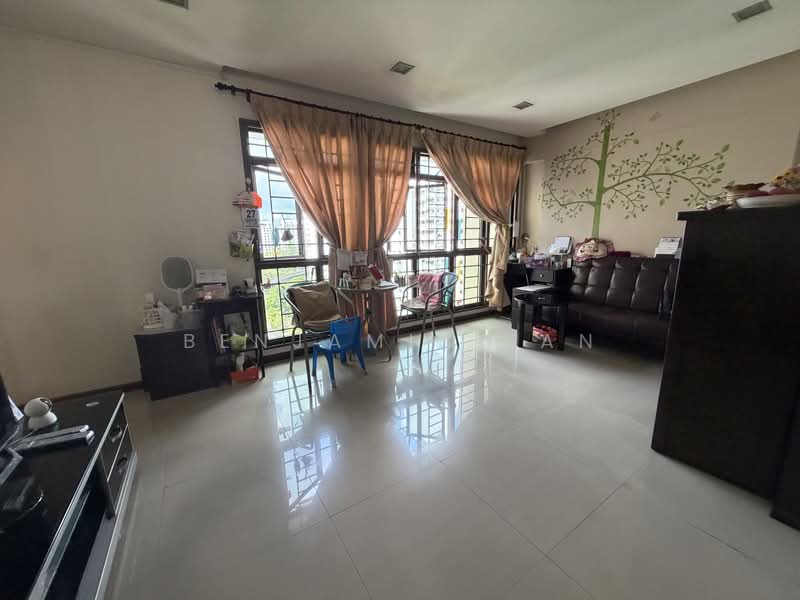
2 properties in Rumbia LRT
S$ 608,000
164B Rivervale Crescent · HDB · 4 min (330 m) from SE2 Rumbia LRT Station
S$ 599,000
154 Rivervale Crescent · HDB · 1 min (90 m) from SE2 Rumbia LRT Station
The Rumbia LRT station area, located in the mature Sengkang estate, presents a balanced buyer's market in 2024 as HDB resale prices have stabilised after the sharp appreciation of 2021-2022. Properties within 5 minutes' walk of the station command a modest premium of approximately 3-5% over non-MRT-proximate units in the same precinct, reflecting steady commuter demand rather than speculative fervour. This is an opportune moment for owner-occupiers seeking stability and connectivity rather than rapid capital appreciation, particularly as interest rates have peaked and mortgage affordability remains manageable for first-time buyers in the S$600,000 range.
The Sengkang HDB market, including areas surrounding Rumbia LRT, has grown at approximately 4-6% annually since 2021, slightly below the overall HDB resale price index growth of 5-7% driven by stronger appreciation in central and fringe estates. This relative underperformance reflects the maturity of the Sengkang estate—built in the 1990s—where capital growth is inherently capped compared to newer estates like Bukit Merah or Pasir Ris which benefit from urban renewal narratives. However, this slower appreciation translates to lower entry prices and better rental yields, making it more attractive to yield-focused investors than capital appreciation seekers.
The ideal buyer for properties in this catchment is a young working professional or small family earning S$6,000-S$8,000 monthly who prioritises commute efficiency and stable long-term housing over capital gains, as the S$600,000 price point aligns with HDB loan quantum limits and first-time buyer CPF drawdown capacity. Commuters working in the east coast business parks (Changi Business Park, Loyang) or the central business district via the direct SE2 line connection find the location exceptionally convenient, reducing commute times to under 30 minutes. A secondary buyer profile includes empty-nesters downsizing from larger flats or investors seeking modest rental yields in a non-speculative, lower-risk HDB segment.
For a S$600,000 purchase, a first-time buyer can typically secure an HDB loan of up to S$480,000 (80% LTV) with a remaining cash/CPF down payment of S$120,000, spread across both spouses' CPF Ordinary Accounts if eligible. Current HDB concessionary loan rates hover around 2.6% per annum, significantly below market rates of 4.5-5.0%, making the HDB route substantially cheaper than bank financing and preferable for owner-occupiers. Over a 25-year mortgage term, the monthly instalment would be approximately S$2,200-S$2,400 before CPF contributions, positioning the property comfortably within affordable range for dual-income households in Singapore's eastern zone.
Investors purchasing HDB resale properties are subject to a 5% ABSD on the purchase price (S$30,000 on a S$600,000 transaction), significantly higher than the 15% ABSD applicable to private property purchases, making HDB investment relatively less attractive on an after-tax basis. Conveyancing costs add a further S$1,500-S$2,000, and whilst there is no annual property tax on HDB flats, rental income is subject to income tax at marginal rates up to 22%, further pressuring net yield calculations. However, the absence of land tenure risk and the stable tenant base in mature estates like Sengkang provide some offsetting advantage to investor returns, though careful underwriting of rental demand is essential.
HDB flats in the Sengkang–Rumbia LRT catchment typically achieve gross rental yields of 3.0-3.8% annually, with 2-3 bedroom units renting for S$2,200-S$2,800 monthly, reflecting steady but not exceptional demand from young professionals and expatriates seeking affordable east-zone accommodation. Vacancy risk is relatively low—typically 2-4 weeks between tenancies—given the area's strategic position on the Sengkang–Punggol transport corridor and proximity to established amenities, though turnover costs and potential rent moderation during economic downturns should be factored into longer-term yield projections. Investors must recognise that HDB rental yields have compressed by 0.5-0.75% since 2022 as resale prices have appreciated faster than rental growth, making this category less attractive for yield chasers than it was historically.
Properties within 1-2 minutes' walk of Rumbia LRT station (approximately 90-150m, such as 154 Rivervale Crescent) command a premium of 2-4% over similar units 4-5 minutes away, typically translating to S$12,000-S$24,000 on a S$600,000 base price in this mature estate where extreme MRT premiums are not sustained. The rental premium for ultra-proximate units is comparatively modest—around 1-2% or S$20-S$40 monthly—as most tenants accept a 3-5 minute walk to the station, suggesting that ultra-proximity adds more to owner-occupier value than to yield. This pricing dynamic suggests that whilst location sensitivity exists, it is substantially lower than in nascent or central-location developments, making the S$9,000 price differential between the two listed properties (154 vs. 164B Rivervale Crescent) somewhat arbitrary rather than durably justified by utility differences.
Sengkang, as a mature estate developed primarily in the 1990s, has minimal new HDB supply in its immediate vicinity, with most Housing and Development Board Build-to-Order (BTO) projects focused on peripheral zones in Punggol and Yishun; no major residential developments are planned immediately adjacent to Rumbia LRT station in the current planning horizon (2025-2028). The Punggol Regional Centre, approximately 1km west, is undergoing significant mixed-use redevelopment with new commercial and residential elements, which may moderate long-term appreciation in peripheral Sengkang areas but is unlikely to substantially depress Rumbia LRT–adjacent HDB values given their distinct neighbourhoods. Investors should monitor HDB's periodic release of BTO projects in nearby zones, as unexpectedly large supply could dampen resale price growth, but the likelihood of material headwinds is low given the state's strategic focus on New Towns further out (Tengah, Woodlands).
HDB flats in Sengkang, built predominantly from 1990-2000, typically have remaining lease periods of 65-75 years, which remain comfortably above the 60-year threshold where banks and buyers become cautious; however, savvy investors should confirm the exact built year and lease commencement, as some earlier phases may approach 70 years more rapidly. Unlike private condominiums where lease decay accelerates value erosion after 80 years of age, HDB policies permit Conservative Estimate of Holding Value (CEHV) loans to borrowers even with 55-60 year remaining tenure, providing longer financing windows that mitigate tenure risk for owner-occupiers. Nonetheless, properties with remaining tenure below 70 years may face refinancing constraints and tighter buyer pools from 2035 onwards, so investors with 5-10 year holding horizons should factor in potential residual lease discount trajectories when modelling exit valuations.
Beyond the obvious metrics of price and MRT proximity, carefully examine the unit's age and condition (walk through to assess BTO vs. resale quality standards), the block's maintenance record and pending CBRE (Central Building) upgrading programmes—Sengkang has undergone selective enhancement and may see further focused renewal in certain precincts that could add value. Verify the unit's orientation (north-facing units in this area tend to be warmer and less desirable), its floor level (mid-to-high floors typically rent and resell faster), and the availability of nearby amenities including wet markets, childcare centres, and secondary schools, as these significantly influence both rental appeal and resale buyer pools. Additionally, cross-reference the transaction history via HDB resale records to identify units with persistent listing challenges or rapid turnover, which may signal latent defects, and inspect statutory compliance certificates to confirm the building's structural integrity—critical given Sengkang's age and tropical climate exposure.
Free Property Valuation
Enter your postal code and get a free instant valuation report straight to your inbox.