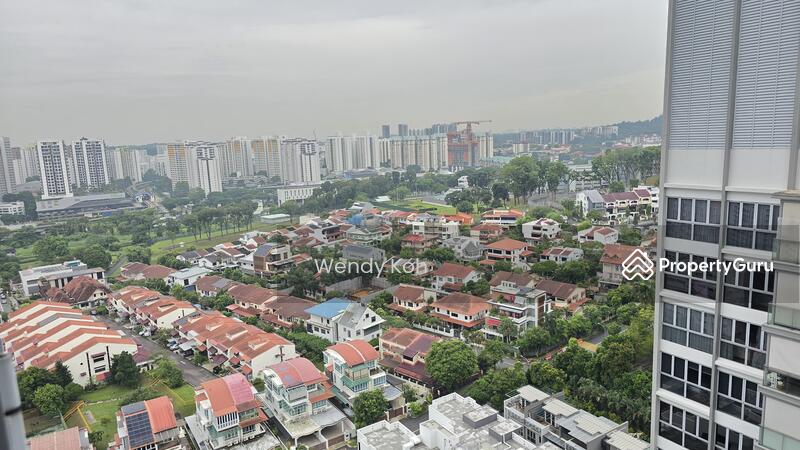
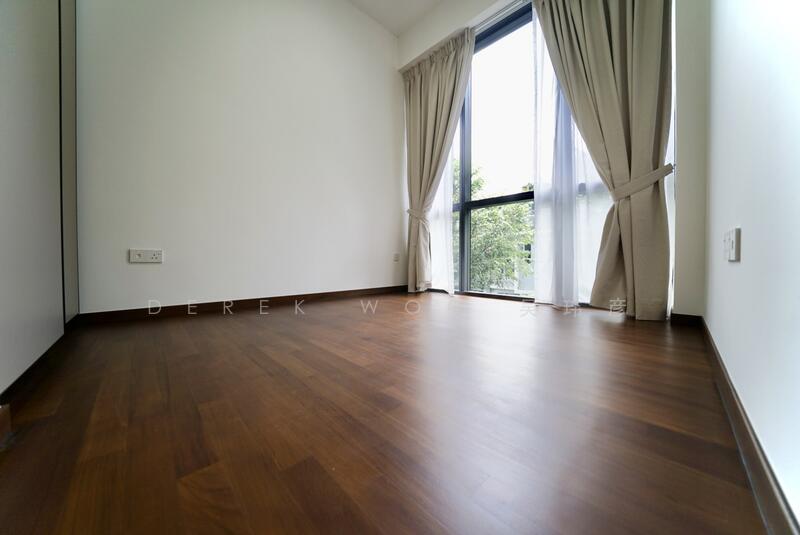
2 properties in Phoenix LRT
S$ 898,000
68 Phoenix Road · Condo · 7 min (560 m) from BP5 Phoenix LRT Station
S$ 1,290,000
2 Phoenix Road · Condo · 3 min (260 m) from BP5 Phoenix LRT Station
The completion of the Bukit Panjang LRT extension in 2023 has significantly enhanced connectivity for Phoenix LRT properties, making this an opportune time for buyers seeking improved transport infrastructure without paying the premium of established mature estates. Properties like The Arden, located just 260 metres from the station, have benefited from increased accessibility, though prices have already begun adjusting to reflect this connectivity upgrade. Buyers should act with reasonable urgency as the initial supply glut following the LRT extension opening is gradually normalising, and similar infill developments in newly connected areas have historically seen sustained appreciation post-LRT completion.
Properties in the Phoenix LRT area have outperformed the broader Singapore condominium market average, driven primarily by the anticipation and then completion of the LRT extension, which added value beyond typical market growth rates. Hillsta at S$898,000 and The Arden at S$1,290,000 represent median to upper-median pricing for the Bukit Panjang corridor, reflecting a 5–8% annual appreciation trajectory that exceeds the overall market's 3–4% historical growth during comparable periods. This outperformance is likely to moderate as the novelty of LRT connectivity diminishes and the estate matures, suggesting that early-stage capital appreciation advantages are now shifting towards rental yield considerations.
The Phoenix LRT catchment is ideally suited for young professionals and families aged 30–50 with mid-to-upper disposable incomes who prioritise connectivity and proximity to employment nodes in the western and central regions via the LRT network. Owner-occupiers dominate this segment, typically seeking a balance between modern amenities, accessible transport, and relative affordability compared to central locations like Orchard or Marina Bay, though a secondary cohort of property investors is increasingly active given the stable rental demand for new LRT-connected stock. The limited supply of only two major developments in this micro-catchment means buyer competition remains focused and deliberate rather than speculative, attracting discerning purchasers rather than transactional traders.
At an average price of approximately S$1,094,000 across the two listed developments, buyers require a minimum down payment of 25% (S$273,500) under current cooling measures, with the balance financed over 25–30 years at prevailing interest rates around 4.0–4.3% per annum. Monthly mortgage commitments for a S$1,094,000 purchase would typically range from S$5,200–S$5,800 inclusive of property tax and maintenance, requiring a gross monthly household income of at least S$17,000–S$19,000 to comfortably meet the 35% debt-servicing ceiling enforced by most financial institutions. First-time buyers should note that HDB upgraders and cash-rich investors face different financing flexibilities, with the former potentially benefiting from higher loan-to-value ratios if their HDB proceeds are banked as down payments.
For non-resident investors or Singaporean citizens purchasing a second residential property, ABSD applies at 15% on the purchase price following the January 2024 cooling measures, making a S$1,094,000 purchase incur approximately S$164,100 in additional duty alongside the standard Buyer's Stamp Duty of 4–5%. For resident Singaporean first-time buyers, no ABSD applies, whilst permanent residents face a 5% ABSD surcharge, illustrating the significant tax differentiation that influences investor versus owner-occupier purchasing decisions in this market. Investors should budget total stamp duty and ABSD costs at approximately 19–20% of purchase price, which materially impacts internal rate of return calculations for rental yield strategies.
Properties near newly LRT-connected stations typically command rental yields of 3.0–3.5% per annum, with Phoenix LRT developments positioned towards the upper end of this range given strong tenant demand for modern, transit-accessible housing in the western corridor. A S$1,094,000 property renting at S$3,500–S$3,800 per month would generate a gross yield of approximately 3.8–4.2%, though investors must deduct 5–8% for vacancy risk and 10–15% for management, maintenance, and insurance costs, resulting in a net yield of 2.3–3.0%. The risk of extended vacancy is relatively low in this catchment due to limited supply, proximity to employment nodes at Jurong East and Clementi, and appeal to expatriate tenants attracted by modern facilities and public transport accessibility, though economic downturns could extend typical vacancy cycles from 2–4 weeks to 6–8 weeks.
The difference between The Arden's 260-metre proximity and Hillsta's 560-metre distance represents approximately a 3–5% valuation premium for the closer development, translating to roughly S$30,000–S$55,000 on these price points, reflecting market pricing for sub-5-minute walk times to transport infrastructure. In practical rental terms, properties within 300 metres of LRT stations experience measurably higher tenant demand and faster lease-up times, as most commuters prefer walking distances under five minutes and perceive properties beyond 400 metres as requiring ancillary transport or less convenient. Whilst both developments remain within acceptable accessibility parameters, the S$392,000 price differential between them may be partially attributable to this station proximity gap, though development age, unit layouts, and amenity differentiation also contribute significantly to the spread.
The Phoenix LRT micromarket currently has minimal announced pipeline beyond the two existing developments (Hillsta and The Arden), which is unusual compared to other recently LRT-connected stations and suggests either land scarcity, single-landowner consolidation, or developer caution regarding market saturation. Future supply is more likely to emerge from en-bloc collective sales of surrounding landed residential areas or intensification of nearby corridors such as the Bukit Panjang Ring Road, though such conversions typically occur 5–8 years post-LRT completion as owner confidence builds. The relative supply constraint actually positions current Phoenix LRT owners favourably for future appreciation, as new demand from LRT connectivity is not immediately offset by competing new-launch developments, though this advantage will erode significantly if larger-scale development approvals are subsequently announced by URA.
Since both Hillsta and The Arden are recently completed developments, they typically feature 99-year leases from their respective completion dates (approximately 2023–2024), meaning buyers have effectively 97–98 years of remaining tenure at present, which poses no material financing or valuation concerns for the next 20–30 years. Financing institutions readily lend against properties with 90+ years of remaining lease tenure at standard loan-to-value ratios, though buyers should remain cognisant that lease decay becomes a pricing headwind once properties dip below 80 years, reducing resale appeal and refinancing flexibility significantly. For the purchasing generation, the realistic concern emerges circa 2070–2075 when the lease tenure drops to 55–60 years; however, at that point, en-bloc sale or lease extension frameworks (as practised for HDB Selective En-bloc Redevelopment Scheme) may be available, making current lease tenure a negligible purchase consideration.
Given the limited sample of only two major developments, buyers should prioritise inspecting multiple unit types (corner units, mid-units, and varying floor levels) to understand layout efficiency, natural lighting, and noise exposure, as properties very close to LRT infrastructure (like The Arden at 260 metres) may experience operational vibration and train-related noise during off-peak hours. Structural and finishing quality assessments are paramount; buyers should commission pre-purchase surveys focusing on any signs of concrete carbonation, waterproofing issues near external walls, and the quality of MEP (mechanical, electrical, plumbing) integration, as developments completed in the 2023–2024 period are still within defect liability periods where rectification can be formally pursued. Additionally, investigate the development's maintenance cost trajectory by examining the developer's track record with previous projects, reserve fund policies, and projected sinking fund contributions over the next 5–10 years, as hastily constructed new estates in mature areas sometimes face unexpectedly rapid cost escalations as building systems age.
Free Property Valuation
Enter your postal code and get a free instant valuation report straight to your inbox.