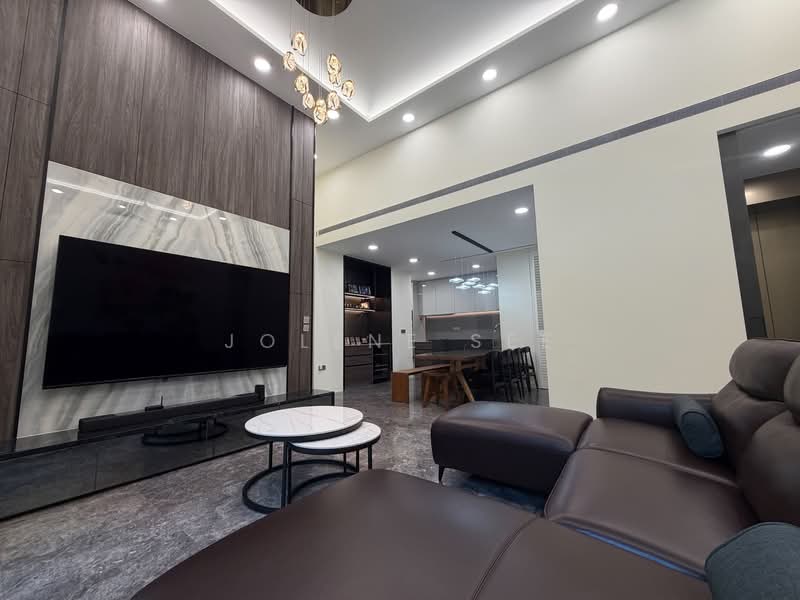
1 properties in Napier MRT
The Napier MRT station area, located in the Thomson Line (TE12), presents a mixed opportunity depending on your investment horizon. Properties in this catchment, such as the ultra-luxury Nassim Hill precinct, have maintained strong price resilience due to their proximity to the Central Business District and established expatriate communities, though overall market sentiment has moderated compared to 2021-2022 peaks. If you are a long-term owner-occupier seeking MRT accessibility in a prime location, current pricing offers reasonable entry relative to historical highs; however, investors should factor in the elevated base value and modest rental yields typical of this premium segment before committing.
Properties proximate to Napier MRT, particularly in the Nassim Hill and Tanglin areas, have outpaced the broader condominium market over the past five years, driven by limited supply, strong international demand, and the station's positioning as a gateway to the CBD via the new Thomson Line. However, post-2022, appreciation has moderated in line with overall market correction, and the premium neighbourhoods around Napier have seen less dramatic growth than emerging zones further along the Thomson Line corridor such as Woodleigh and Bright Hill. Investors comparing this location to other MRT-proximate options should note that the Napier catchment commands a persistent price premium of 20-30% relative to similarly-distanced properties on other lines, reflecting land scarcity and demographic factors.
The Napier MRT catchment attracts three distinct profiles: high-net-worth owner-occupiers (typically expatriate families and senior professionals) seeking luxury finishes and established infrastructure in close proximity to multinational offices; empty-nester couples downsizing from landed properties but unwilling to compromise on space or prestige; and institutional investors targeting trophy assets with stable, wealthy tenant pools. Tenants in this area are predominantly long-term corporate expats on relocation packages, senior local executives, and families prioritising school proximity (Tanglin Trust, Anglo-Chinese School) and country club memberships, meaning vacancy risk is low but rental yield expectations must remain conservative at 2.0-2.5% gross annually. This neighbourhood is NOT suitable for yield-focused investors seeking strong short-term returns or first-time buyers constrained by affordability.
Properties in the Napier MRT radius, exemplified by the S$7.2 million Nassim Hill listing, sit well above the median HDB resale and even private housing price points, placing them substantially outside the scope of HDB loan assistance and requiring private financing at banks' discretion. Most lenders offer 70-75% loan-to-value (LTV) on such ultra-premium assets, meaning a buyer requires approximately S$1.8-2.2 million in downpayment and cash reserves for a S$7 million purchase; this effectively restricts the buyer pool to those with strong proven liquidity and credit profiles. Mortgages are typically structured over 25-30 years at prevailing rates (currently 3.5-4.0%), making monthly debt servicing around S$28,000-35,000—a threshold that filters for household incomes exceeding S$150,000 annually or those purchasing with substantial accumulated wealth.
Singapore's Additional Buyer's Stamp Duty (ABSD) applies at 12% on a second residential property purchase by a Singapore citizen and 15% on subsequent purchases, meaning an investor acquiring a S$7 million Napier property would face an ABSD liability of S$840,000-1,050,000 on top of standard stamp duty (roughly S$280,000 at graduated rates). Non-residents and foreign entities face even higher ABSD at 15-20%, plus Additional Conveyancing Fees (ACF) of 3%, making the total tax burden 18-23%—a substantial headwind for offshore investors that effectively raises effective acquisition costs and reduces investment return prospects. Property developers and end-purchasers in this premium segment commonly structure acquisitions via corporate vehicles or utilise staggered purchasing strategies to manage tax exposure, though professional advisory is essential to ensure compliance with IRAS guidelines and ABSD exemption criteria (e.g., primary residence upgrades).
Properties in the Napier MRT catchment, particularly luxury condominiums on Nassim Hill, typically generate gross rental yields of 2.0-2.8% annually, reflecting the high capital base and conservative tenant demand; whilst this is below the island-wide 3.5-4.5% yield typical of mainstream private housing, it is justified by the demographic stability and low tenant churn in this expatriate-heavy locale. Vacancy risk is exceptionally low (estimated 2-4% annualised) due to persistent corporate relocation demand from MNCs headquartered around Shenton Way, Raffles Place, and Orchard, coupled with limited supply of comparable units—meaning landlords can expect consistent occupancy and predictable income over 3-5 year periods. However, investors must recognise that yield-chasing strategies are ill-suited to this category; rather, appreciation potential and capital preservation during property market cycles represent the primary return drivers, with income serving as a secondary benefit rather than the core investment thesis.
Properties within 400-500 metres of Napier MRT (such as the 490m-distanced Nassim Hill listing) command a location premium of 8-12% relative to similar units 800 metres to 1 kilometre away, driven by the convenience factor and perception of seamless transport connectivity to the CBD during peak hours (average journey time to Raffles Place approximately 15-18 minutes via Thomson Line + North-South Line interchange). This MRT proximity premium is lower than that observed on more congested older lines (e.g., Orchard, Dhoby Ghaut) because the Thomson Line, whilst newer and more efficient, serves a narrower geographic corridor; properties in the Napier catchment benefit from the accessibility but are not subject to the extreme scarcity premiums seen on Bukit Timah or Clementi lines. For owner-occupiers, this accessibility justifies the premium, as it unlocks genuine commute time savings and reduces reliance on private vehicles; for investors, however, the premium must be weighed against the rental yield trade-off, as MRT-adjacent units in this price tier do not necessarily command proportionally higher rents.
The Napier MRT station area is characterised by mature, largely built-out residential and commercial zones with minimal Large-scale residential development potential; the Nassim Hill and Tanglin precincts are dominated by established Good Class Bungalows (GCBs), private condominiums built in the 1990s-2010s, and heritage conservation areas, meaning new apartment supply is negligible. The Singapore government's broader Urban Renewal Strategy and conservation of the Nassim Hill conservation area suggest that high-rise residential intensification is unlikely, underpinning long-term supply scarcity and providing downside protection for existing unit valuations. Investors should monitor any government Land Sales in adjacent areas (e.g., near the recently completed Thomson Line stations at Woodleigh or Braddell) as potential pressure points, but the Napier MRT core itself lacks material supply risks over the next 10-15 year period, making this an attractive feature for long-term capital preservation.
Most condominiums in the Napier MRT catchment, including luxury developments like those on Nassim Hill, are built on 99-year leasehold tenures granted in the 1990s-2000s, meaning units purchased today will have remaining lease terms of 65-80 years at point of acquisition and will require lease extension decisions around 2055-2070. Whilst 99-year leasehold is standard and does not materially impact current valuations or financing availability, savvy investors should factor in potential future lease extension costs (estimated S$200,000-500,000+ for a S$7 million property, depending on timing and valuation methodology) and the likelihood that banks may tighten LTV ratios on leasehold properties approaching 60-year thresholds. For long-term owner-occupiers with 20+ year horizons, this is a manageable consideration; however, investors planning exit strategies within 10-15 years should prioritise properties with longer remaining tenures (80+ years) to maximise resale appeal and avoid future valuation compression.
Beyond the obvious location appeal, buyers should scrutinise building age and maintenance standards (older 1990s-era developments may face increasing capex demands for major renovations), proximity to transport interchanges (ability to reach Orchard, Marina Bay, and Airport via single or dual-line connections), and the profile of the residential community (school catchment for families, country club integration, expat concentration for rental stability). Specific to the ultra-premium Nassim Hill segment, security and privacy features are paramount—gated compounds, limited unit density, and strict management are essential value drivers, as international buyers and corporate expatriates prioritise these factors above size or finishes. Lastly, inspect any outstanding collective sale movements or en bloc discussions within the building or precinct, as developments over 25-30 years old may face increasingly active redevelopment conversations; whilst this can unlock value upside, it introduces execution risk and potential relocation disruption that sophisticated buyers must consciously evaluate and price into offer strategies.
Free Property Valuation
Enter your postal code and get a free instant valuation report straight to your inbox.