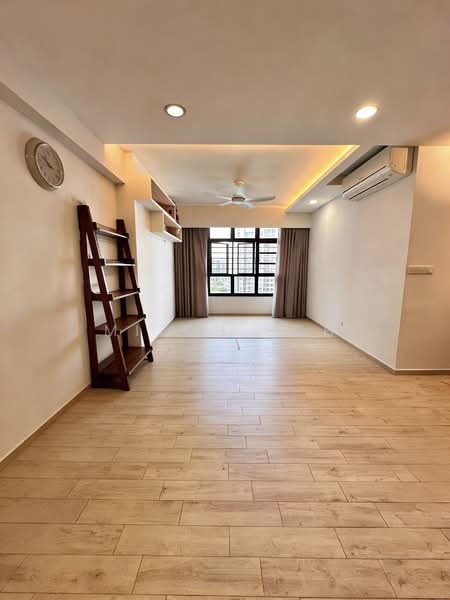
2 properties in Kupang LRT
S$ 2,120,000
Sengkang West Way/Fernvale · Condo · 7 min (590 m) from SW3 Kupang LRT Station
S$ 700,000
471B Fernvale Street · HDB · 4 min (360 m) from SW3 Kupang LRT Station
Yes, the completion of TEL has substantially improved accessibility and investor confidence in the Sengkang-Fernvale corridor, which includes Kupang station on the Sengkang LRT line. Property values in this precinct have shown steady appreciation over the past two years as connectivity benefits materialise, making it an opportune time for both owner-occupiers and yield-focused investors. However, market sentiment remains slightly cautious due to the broader economic climate, so buyers should conduct due diligence on specific projects rather than assuming blanket price appreciation across all properties near the station.
Properties in the Kupang catchment—comprising HDB flats and ECs like those in Fernvale and nearby Sengkang areas—have appreciated more moderately than prime districts but outpaced the broader HDB resale market, with average price growth of 2–3% annually over the last three years. Executive condominiums near Kupang have benefited from a dual-market appeal (accessible to HDB upgraders and private investors alike), resulting in stronger price resilience compared to purely private residential stock in secondary locations. The segment remains undersupplied relative to demand, particularly for well-maintained units within 500 metres of the station, which commands a premium of 5–10% over comparable properties 1–2 km away.
The primary buyer demographics are young families and HDB upgraders aged 30–50 seeking affordability without sacrificing connectivity, alongside property investors targeting steady rental yields from the growing young professional workforce in the north-east. Tenants attracted to this zone typically include company-sponsored housing seekers and working adults commuting to central business districts or employment nodes in Changi, given direct LRT access to multiple MRT interchange stations. Both owner-occupiers and investors should note that the area benefits from strong family-friendly amenities (schools, shopping centres, hawker markets), which sustains long-term value and tenant demand.
HDB flats near Kupang LRT (such as the S$700,000 specimen listed) are highly accessible to first-time buyers using HDB loans at competitive rates (currently around 2.6% p.a.), with maximum loan tenure of 25 years and ability to utilise full CPF-OA contributions. Executive condominiums (illustrated by the S$2.12 million Lush Acres example) sit between HDB and private condo pricing, qualifying for both HDB and bank financing options; most buyers opt for bank mortgages at 80% LTV over 25–30 years at rates around 3.2–3.5% p.a., resulting in monthly servicing costs of S$8,000–S$10,000 for the EC segment. First-time EC buyers benefit from HDB loan eligibility (capped at S$450,000 or 90% LTV, whichever is lower), making ownership affordable for middle-income households, though cash flow planning is essential given the higher strata fees (typically S$200–S$300 per unit monthly) compared to HDB blocks.
Singapore citizens and permanent residents purchasing their first residential property incur only buyer's stamp duty (BSD) of 1–4% on the purchase price depending on value tranches, with no Additional Buyer's Stamp Duty (ABSD) liability. However, investors or second-property buyers face ABSD of 5% (for citizens/PRs) or up to 20% (for foreign investors) on top of BSD, significantly increasing the cost of acquisition—for example, a S$2.1 million EC purchase by a citizen investor would incur total stamp duties of approximately S$126,000–S$150,000. This makes property flipping or portfolio expansion more capital-intensive, incentivising longer holding periods (5+ years) to justify the upfront tax burden; investors should factor ABSD into yield calculations and confirm eligibility for any remission schemes (e.g., downgrade to HDB) before proceeding with acquisition.
HDB flats near Kupang LRT typically yield 3–4% gross rental returns (on purchase price), reflecting stable tenant demand from young workers and families, whilst ECs in the same catchment deliver 2.5–3.5% gross yields due to their higher acquisition cost relative to rental income. Vacancy risk is low to moderate in this precinct given strong fundamentals (ongoing population growth in north-east Singapore, expanding employment base), but macroeconomic headwinds or oversupply in specific blocks could introduce 3–6% vacancy windows, particularly if comparable units are offered at lower rents. Savvy investors should monitor upcoming residential completions in the Sengkang-Fernvale planning zone and track average unit rents annually—currently trending at S$2,200–S$2,700 for 3-bedroom configurations—to ensure projected yields remain achievable over the holding period.
Properties within 500 metres of Kupang LRT station command a tangible premium of 8–12% compared to units 1–2 km away, reflecting the convenience of a sub-5-minute walk to the platform and reduced reliance on first-mile feeder buses. This proximity uplift is most pronounced in HDB and EC segments, where transport accessibility directly correlates with tenant appeal and rental velocity—a S$700,000 flat 4 minutes from the station (as in the specimen listing) is likely 5–8% more valuable than an equivalent unit 15–20 minutes away by foot. However, valuation gains plateau beyond the 500-metre radius, so properties listed as 7+ minutes from the station, whilst still well-served, do not command the same price density as those within the prime walking catchment.
The Sengkang planning zone, which encompasses Kupang LRT, has limited pipeline supply compared to growth zones such as Woodlands or Tengah; however, occasional EC or private condo launches in nearby Fernvale and Sengkang Central are expected over the next 3–5 years. Any significant new supply introduction could moderate price appreciation and rental growth in the immediate catchment, particularly if developments undercut existing unit asking prices or offer superior amenities. Prospective buyers and investors should liaise with HDB and URA websites to monitor Reserved Land and tender cycles, as well as review marketing launch announcements from major developers, to anticipate competitive pressure and time their acquisition or sale strategy accordingly.
HDB flats near Kupang LRT are typically 99-year leasehold from 1995–2000 builds, meaning they retain approximately 70–75 years of lease tenure at the current date; whilst still acceptable for owner-occupiers with 20–30 year horizons, investor-focused financiers may demand properties with 70+ years remaining, narrowing liquidity pools and rental tenant appeal as lease creep approaches. Executive condominiums in the same zone usually possess 99-year tenures with 80–85 years remaining (from late-2000s to early-2010s launches like Lush Acres), offering better lease security for long-term investors and younger buyer demographics. Both HDB and EC buyers should confirm exact lease start dates with the seller's agent and factor projected lease decay into exit strategy planning, particularly given HDB lease decay rules (property value depreciates more steeply below 60 years remaining) and the impact on refinancing and resale valuations in future decades.
For HDB flats, verify the Flat Eligibility Status (e.g., first-timer status, ethnic quota eligibility, resale levy implications), inspect the unit's structural condition, and confirm no outstanding renovation or home improvement infringements; additionally, cross-check nearby market comps to ensure the asking price is not inflated relative to recent transactions in the same block or precinct. For ECs, scrutinise the strata title documents, review 3–5 years of audited strata accounts to identify cost escalations or upcoming reserve fund collections, and validate that the projected rental yield aligns with actual unit rents advertised locally—overly optimistic yield claims (5%+ for ECs) should trigger scepticism. Both segments require site visits to assess unit condition, noise exposure (e.g., proximity to highways or commercial zones), natural light, and verifiable proximity to Kupang LRT (walk the route in person during peak hours), plus confirmation that the property faces no caveats, encumbrances, or disputed ownership histories by engaging a conveyancing lawyer to conduct searches at the Land Titles Registry.
Free Property Valuation
Enter your postal code and get a free instant valuation report straight to your inbox.