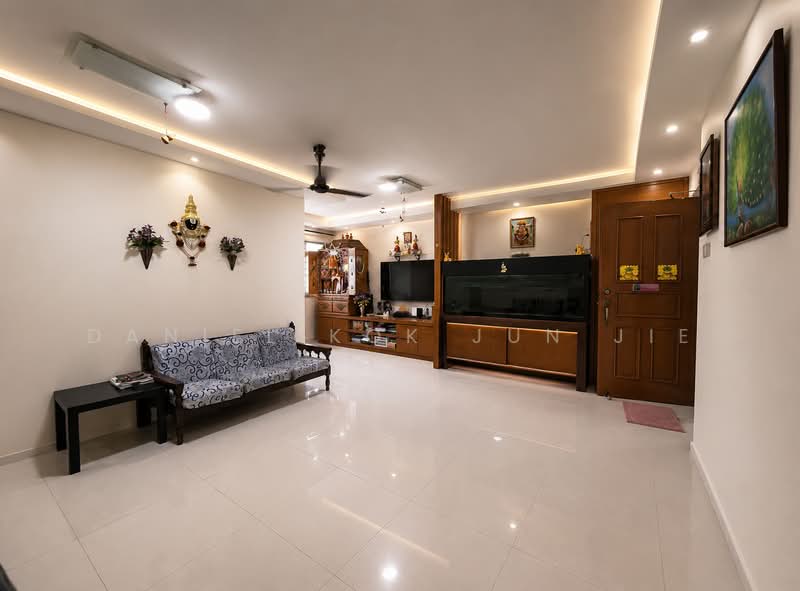
1 properties in Jurong West MRT
Jurong West remains an attractive entry-point for first-time buyers given its proximity to the JS6 station and relatively moderate price points compared to central regions; however, the broader HDB market has seen cooling measures implemented, which has stabilised prices but also reduced transaction velocity. Current conditions favour buyers with patient timelines rather than those seeking rapid capital appreciation, particularly as the Jurong Lake District masterplan continues to develop nearby infrastructure. The single listing at S$585,000 for a unit 10 minutes from the MRT suggests reasonable pricing within the Jurong West corridor, making it suitable for owner-occupiers prioritising accessibility and value retention.
Jurong West has outperformed some outlying HDB estates but trailed the overall market recovery seen in central and prime fringe locations, reflecting its position as a mature, well-planned estate with stable but not exceptional demand drivers. Price growth in the Jurong West corridor has been largely driven by interest rate movements and mortgage accessibility rather than scarcity premiums, unlike younger estates such as Punggol or Sengkang. The current asking price of S$585,000 for a unit in the area represents a modest appreciation trajectory, positioning Jurong West as a steady performer rather than a volatile speculative play.
The primary demographic comprises first-time buyers and upgraders seeking affordability combined with established infrastructure, particularly young families prioritising good schooling options and community facilities within the Jurong West precinct. Investors also view this catchment as a stable rental market, though with more modest yields than fringe estates, appealing to conservative portfolios seeking long-term tenure and steady occupancy. Working professionals employed in the western corridor, including those in petrochemical, manufacturing, and logistics hubs, form a secondary cohort valuing the MRT's connectivity to employment centres along the Kranji-Jurong corridor.
At this price point, a 25-year HDB loan would translate to monthly instalments of approximately S$2,500–2,700 (assuming a 5% interest rate and 90% LTV), placing it within reach for dual-income households earning S$8,000–10,000 combined monthly income and meeting HDB eligibility criteria. CPF can be utilised for both downpayment and monthly mortgage servicing, effectively reducing out-of-pocket cash requirements to around S$58,500 upfront, though current CPF contribution caps must be considered. Grant eligibility via HDB schemes (such as the proximity grant for first-time buyers) can further reduce the effective purchase price, making this segment accessible to middle-income buyer profiles.
An investor purchasing an HDB flat near Jurong West MRT would not incur Additional Buyer's Stamp Duty (ABSD), as ABSD applies only to private residential properties; however, they remain liable for standard Buyer's Stamp Duty at 4% on the first S$180,000 and 8% thereafter. For a S$585,000 purchase, stamp duty would be approximately S$32,400, increasing the total acquisition cost significantly and reducing initial gross rental yields. HDB investor regulations also restrict rental eligibility and mandate a minimum ownership period before resale, which differs from private property rules and should factor into investment decision-making.
Gross rental yields for HDB flats in the Jurong West vicinity typically range from 2.5% to 3.2% annually, reflecting moderate tenant demand driven by the MRT's accessibility and the area's mature resident profile; net yields after maintenance and management fees would be 1.8% to 2.5%. Vacancy risk is relatively low due to strong institutional demand from young families and working professionals, with typical re-tenanting timeframes of 2–4 weeks, though this can extend during economic downturns. The HDB rental market in Jurong West is less speculative than private condominiums, offering greater stability but lower upside potential, making it suitable for yield-focused rather than capital-appreciation-focused investors.
Units within 10–15 minutes' walk of Jurong West MRT command a valuation premium of 3–6% over comparable flats located 20+ minutes away, driven by the tangible time and transport cost savings for daily commuters. The listed property at 820 metres (10 minutes' walk) sits within the optimal premium band, benefiting from the MRT's connectivity to the Jurong East financial hub, EJC, and the city centre whilst avoiding the steep density and pricing of central MRT clusters. This proximity also enhances rental appeal, particularly for working professionals and young families seeking urban convenience without paying CBD-adjacent property prices.
The Housing and Development Board's indicative Build-To-Order (BTO) programme for the Jurong West precinct has been relatively constrained in recent years, with most new supply directed towards the Jurong Lake District developments (predominantly private and mixed-tenure projects); this scarcity of new HDB units supports resilience in existing flat values. The Jurong Lake District masterplan may indirectly increase demand for adjacent HDB estates like Jurong West as spillover accommodation for workers employed in the emerging commercial hub, though this effect will materialise over 10+ years. Limited new supply in the immediate vicinity suggests that existing resale inventory near Jurong West MRT is unlikely to face significant downward pressure from new competition.
Most HDB flats in Jurong West are 99-year leasehold properties, with older estates having entered their 30–45 year range; buyers should verify the remaining tenure before purchase, as properties with <75 years remaining may face financing constraints and reduced resale appeal. The listed property's specific tenure should be a critical evaluation point, as units with 80+ years remaining command stronger financing terms and broader buyer pools compared to those approaching the 60-year mark. HDB lease renewal schemes and en bloc sale provisions provide certain protections, but buyers should factor in the potential for policy changes and the long-term viability of tenure extension mechanisms when assessing holding periods and exit strategies.
Prospective buyers should prioritise the property's exact walking distance and accessibility to the JS6 MRT station (accounting for actual pedestrian routes rather than straight-line distance), the unit's floor level and block orientation (as lower floors and north-facing blocks may be less desirable in Jurong West's mature estate context), and the condition of common areas and lift maintenance records, which directly impact long-term livability and resale appeal. Secondary considerations include proximity to Jurong Point shopping mall, primary schools within the catchment, and the age and planned maintenance schedule of the block, as aging HDB estates may require significant component replacement (water pipes, electrical systems) within the next 10–15 years. Finally, verify the property's upgrading eligibility under the HDB Improvement Programme (HDBIP) or Home Improvement Programme (HIP), as completed upgrades significantly enhance value and marketability compared to estates pending renewal schemes.
Free Property Valuation
Enter your postal code and get a free instant valuation report straight to your inbox.