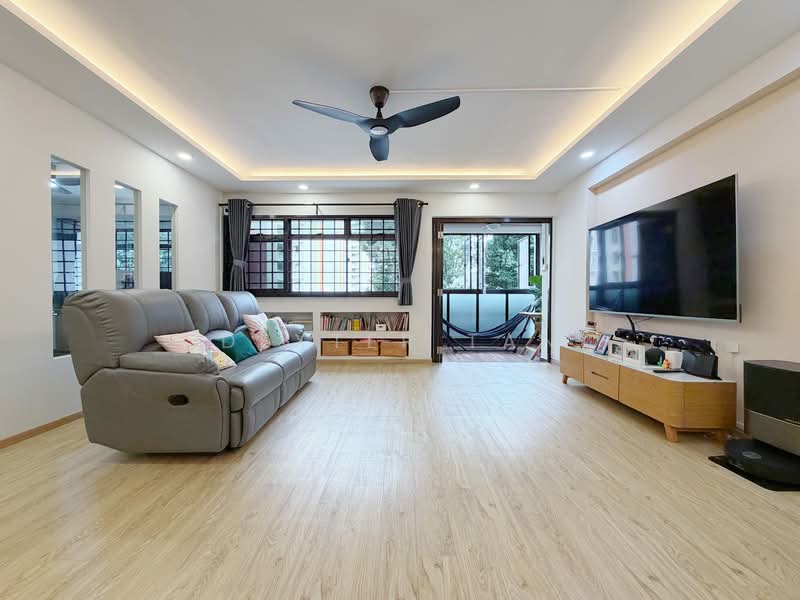
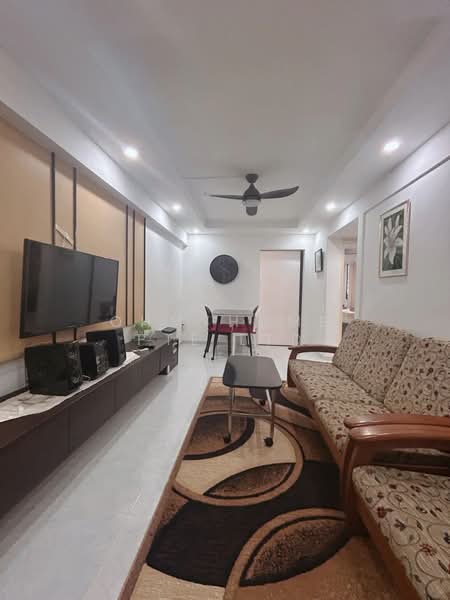
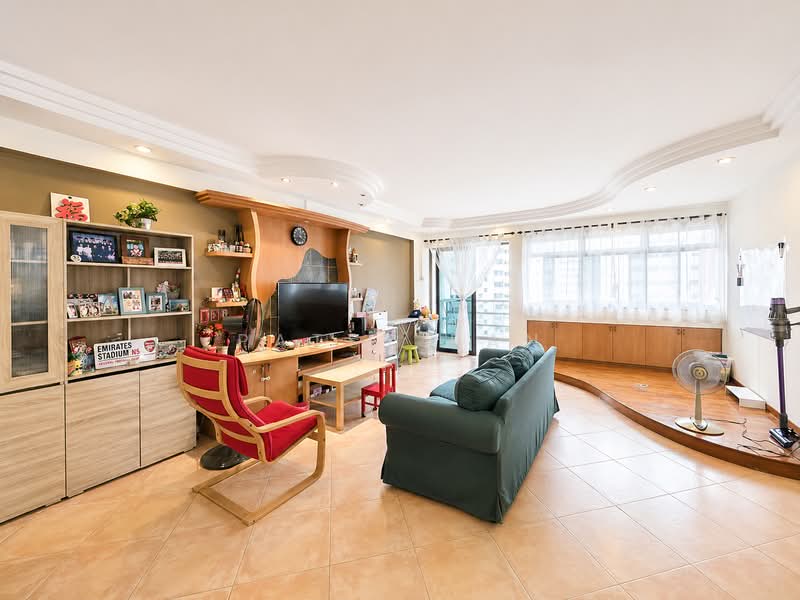
4 properties in Jurong East MRT
S$ 1,830,000
117 Jurong East Street 13 · Condo · 9 min (720 m) from NS1 Jurong East MRT Station
S$ 730,000
265 Toh Guan Road · HDB · 16 min (1.37 km) from NS1 Jurong East MRT Station
S$ 430,000
102 Jurong East Street 13 · HDB · 9 min (750 m) from NS1 Jurong East MRT Station
S$ 790,000
281 Toh Guan Road · HDB · 18 min (1.49 km) from JE5 Jurong East MRT Station
Jurong East remains a compelling entry point for buyers, particularly in the HDB segment where prices range from S$430,000 to S$790,000, offering better value than central zones amid the current cooling measures. The area benefits from being a major commercial and transport hub, which insulates it from speculative price cycles that affect purely residential neighbourhoods. However, buyer sentiment has softened in 2024 due to successive interest rate hikes and ABSD increases, so negotiating power has improved compared to the 2021-2022 peak.
Jurong East has outperformed the broader HDB market, with resale flats appreciating approximately 8-12% over three years, whilst private condominiums like Ivory Heights have seen more moderate gains of 5-8% as luxury segments faced headwinds. The area's resilience stems from continuous infrastructure investment, including the new JE5 station opening and the Greater Southern Waterfront development, which have attracted both owner-occupiers and investors seeking capital stability. Unlike district-fringe areas, Jurong East has maintained steady demand from first-time buyers and upgraders, preventing the sharp corrections seen in some outer ring developments.
HDB properties in Jurong East attract first-time buyers aged 25-35 and upgraders from older estates, particularly those working in the nearby financial services and technology clusters in the CBD and Tuas industrial zones. Private condominiums like Ivory Heights appeal to high-net-worth expatriates and established professionals seeking premium facilities with direct MRT access, typically aged 35-50 with household incomes exceeding S$300,000 annually. Young families upgrading from 3-room to 4-room or 5-room flats form a significant portion of HDB transactions, benefiting from the proximity to multiple shopping malls, schools, and employment opportunities.
HDB flats in Jurong East at S$430,000 to S$790,000 are highly accessible to first-time buyers using HDB loans with 25-year tenures and 80-90% loan-to-value ratios, resulting in monthly mortgage servicing of approximately S$1,200 to S$2,100 depending on income eligibility and CPF contributions. Private condominiums like Ivory Heights at S$1.83 million require bank financing typically at 75-80% LTV with 25-30 year terms, demanding monthly servicing of around S$6,500 to S$7,500 plus additional maintenance costs of S$300-400 monthly. First-time HDB buyers can leverage CPF OA withdrawals and housing grants (up to S$80,000 for some categories), making Jurong East particularly attractive compared to private property which requires substantial cash down payments and incurs higher transaction costs.
Investors purchasing HDB resale flats in Jurong East are exempt from ABSD, making this segment highly attractive for property investors seeking to build portfolios without additional tax burdens, though stamp duty remains at 4-8% of purchase price depending on property value. Private property investors face ABSD of 20% plus stamp duty of 3-4%, significantly increasing the acquisition cost for Ivory Heights and similar developments; for example, a S$1.83 million purchase would incur approximately S$367,000 in ABSD alone. This structural advantage of HDB investing has driven increased investor interest in Jurong East flats, particularly in well-connected units within 700-800 metres of the MRT station, though rental controls limit the yield upside compared to private residential segments.
HDB flats in Jurong East typically achieve gross rental yields of 3.5-4.5% annually, with 4-room units commanding S$2,200 to S$2,800 monthly rents and 5-room units fetching S$2,800 to S$3,500, representing solid returns given the lower acquisition cost and ABSD exemption. Vacancy risks remain minimal due to the area's status as a major employment hub and transport interchange, with tenant turnover typically occurring within 2-3 weeks; however, HDB income caps may limit tenant demographics to middle-income households, potentially creating eligibility mismatches for lower-priced units. Private condominiums like Ivory Heights offer lower gross yields of 2.5-3.5% but attract higher-income expatriate tenants with longer lease commitments, and despite premium facilities, vacancy rates of 3-5% are not uncommon during economic downturns.
Properties within 700 metres of Jurong East MRT (approximately 9-minute walk) command a 5-8% premium over similar units 1.3-1.5 kilometres away; for example, the HDB flat at 102 Jurong East Street 13 priced at S$430,000 is positioned at 750 metres, whilst the comparable unit at 265 Toh Guan Road at S$730,000 is 1.37 kilometres away and benefits from additional size and recent renovation rather than proximity alone. The NS1 line's high-frequency service and direct connectivity to CBD and Changi Airport reinforces this premium, as commuting time reductions have a measurable impact on tenant attraction and owner-occupier decision-making, particularly for professionals spending 1-2 hours daily commuting. Properties at the 18-20 minute walking threshold (1.4-1.5 km) show noticeably softer demand, particularly during cooling cycles, suggesting that the premium concentration centres on the 700-1,000 metre band where convenience remains high without demanding excessive construction costs for additional amenities.
The Greater Southern Waterfront development represents the largest upcoming supply catalyst, with plans for mixed-use residential, commercial, and recreational facilities phased through 2030, potentially introducing 10,000-15,000 new housing units within 2-3 kilometres of the core Jurong East station area. The JE5 station opening (adjacent to existing NS1) and the expanded rail network will enhance connectivity but may also shift demand patterns away from some existing fringe locations, particularly those 15+ minutes walking distance from any station. Developers have already begun launching projects in anticipation of these infrastructure upgrades, with several en-bloc acquisitions in the surrounding precincts suggesting that property owners and investors are positioning for potential value realisation before major supply influx, which typically drives short-term appreciation for well-located existing units before normalisation.
Most HDB flats near Jurong East MRT were built between 1980-2000, meaning lease lengths typically range from 75 to 95 years; buyers should carefully assess whether financing institutions and future buyers will accept such lease tenures, as banks increasingly scrutinise leases below 75 years and private purchasers may discount heavily below 60 years. Private condominiums like Ivory Heights typically offer 99-year leases, providing substantially greater longevity and appeal to institutional investors, though the effective lease length should still be verified as some older developments may have shorter remaining terms. HDB flats with lease lengths between 70-80 years remain highly financeable and retain strong market demand, but properties approaching 65-70 year thresholds may experience valuation pressures and reduced buyer pools, making tenure one of the most critical due diligence items for investment decisions in this mature estate.
Buyers should prioritise verifying the ABSD eligibility status for HDB units (particularly if investor-owned), reviewing CPF utilisation conditions, and confirming whether the property is under HDB or private financing to understand lock-in periods and resale restrictions; for HDB, checking the Upgrading status and future en-bloc acquisition risk is critical in a maturing estate like Jurong East. Physical condition assessment should include structural integrity (particularly for pre-1990 blocks prone to defects), lift upgrade status, and water pressure issues common in older estates, alongside verification of maintenance fees and sinking fund contributions for private properties. Finally, investors must confirm rental restrictions and tenant eligibility criteria for HDB units (tenant income caps), review recent resale transaction patterns and price trends within the specific block or development, and assess future infrastructure impacts (JE5 station noise, Greater Southern Waterfront construction), as these factors create material differentiation between seemingly comparable units within Jurong East.
Free Property Valuation
Enter your postal code and get a free instant valuation report straight to your inbox.