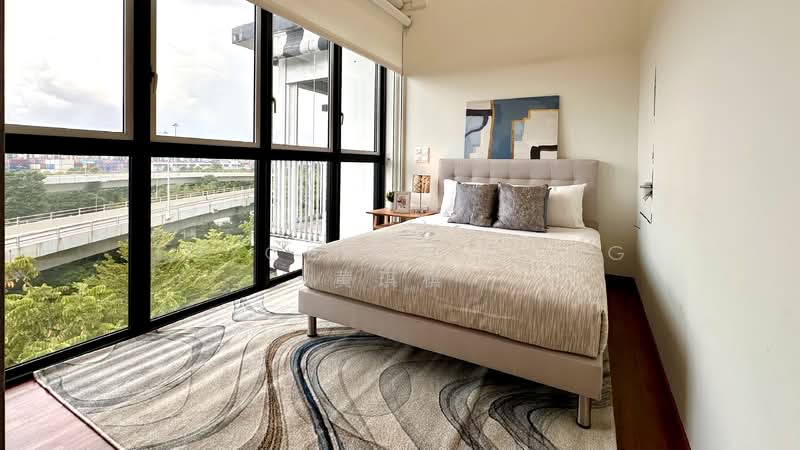
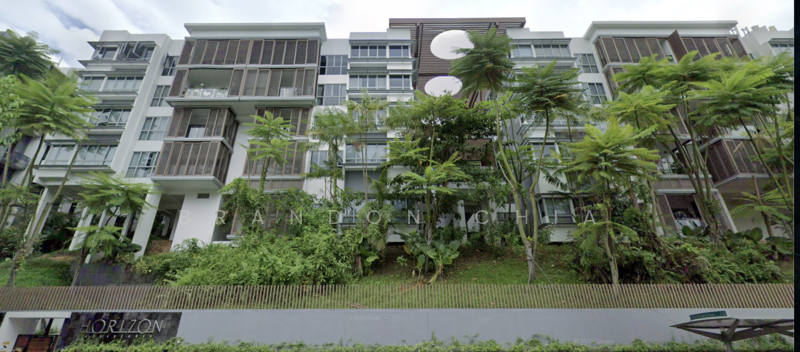
2 properties in Haw Par Villa MRT
S$ 1,590,000
231 Pasir Panjang Road · Condo · 9 min (770 m) from CC25 Haw Par Villa MRT Station
S$ 2,088,000
43 PASIR PANJANG HILL · Condo · 950 m (11 mins) from CC25 Haw Par Villa MRT
The Haw Par Villa MRT catchment area, centred on the CC25 line in the Pasir Panjang district, represents a moderately attractive entry point for buyers seeking established residential neighbourhoods with stable capital appreciation. Current listings in the area—ranging from S$1.59 million to S$2.09 million for two-bedroom units—reflect pricing that has held relatively steady despite broader market fluctuations, suggesting limited speculative activity and genuine occupier demand. This is particularly favourable for long-term owner-occupiers who prioritise stable cash flow over rapid gains, especially given the district's mature infrastructure and established community character.
Properties in the Pasir Panjang and Haw Par Villa vicinity have appreciated at a measured pace—typically 2 to 4 per cent annually—which trails the broader prime district market but outperforms some of the more speculative suburban zones. The stability in pricing reflects the area's mature status and limited new supply, as opposed to growth corridors like the Woodlands or Jurong East areas, where larger development pipelines and younger demographics have driven more volatile appreciation. Investors comparing yield-on-cost metrics will find that the slower price growth in this catchment is often offset by stronger rental demand from expatriate families and established mid-market tenants.
The ideal buyer for this catchment is typically a mid-to-late-career professional or established family seeking a mature, quiet residential setting with proximity to the city without the premium pricing of more central locations like Orchard or Bukit Timah. Owner-occupiers prioritising schools, parks, and a slower pace of life are particularly well-served, as the area hosts well-regarded institutions and the leafy Haw Par Villa heritage park and nature reserves. International expats on long-term Singapore postings also favour this zone, as the established expatriate community provides familiar social networks and the walkable streetscapes appeal to those accustomed to European or Commonwealth residential environments.
For a S$1.8 million mid-range property in the Haw Par Villa catchment, buyers financing 75 per cent of the purchase price (a typical threshold for established properties) would require approximately S$450,000 in equity, with monthly mortgage servicing costs around S$5,500 to S$6,200 depending on prevailing rates and loan tenure. Bank valuations in this mature, well-documented neighbourhood typically approach the purchase price, making it straightforward for borrowers to achieve competitive LTV ratios without difficulty. The total cost of ownership—inclusive of stamp duty at 4.0 per cent on the purchase price, annual property tax, maintenance charges of S$400–600 per month for condominiums, and renovation provisions—should be budgeted at approximately S$2.1 to S$2.3 million for a S$1.8 million unit.
An owner-occupier purchasing their first residential property in this catchment incurs only stamp duty—calculated at 1.0 per cent for the first S$180,000 and 2.0 per cent on the remainder (total approximately S$54,000 on a S$1.8 million purchase)—whilst an investor or second property buyer faces an Additional Buyer's Stamp Duty (ABSD) scale ranging from 5 per cent for a Singapore citizen's second residential property to 15 per cent for a foreigner, significantly raising the upfront cost of acquisition. For a S$1.8 million investment purchase, ABSD at the standard 5 per cent rate would amount to S$90,000, nearly double the stamp duty a first-time owner-occupier would pay. This substantial differential encourages owner-occupancy in the catchment and effectively prices many pure-play investors towards smaller units or secondary neighbourhoods where yields can better compensate for the acquisition cost burden.
Properties in the Pasir Panjang and Haw Par Villa area typically generate gross rental yields of 2.5 to 3.2 per cent per annum, reflecting the low-growth but steady rental demand from expatriate families, school-going households, and mature professionals seeking accessibility without central-zone premiums. Vacancy risk is comparatively low—typically averaging 1 to 2 months per year between tenancies—due to the established expatriate population, proximity to quality schools, and limited new competitive supply in the immediate catchment. However, investors must account for longer furnishing timescales and the need for unit-level appeal (updated kitchens, modern finishes) to command the upper end of rental ranges, as the tenant profile in this neighbourhood skews towards quality-conscious occupiers rather than those in purely transient or budget-focused segments.
Direct MRT proximity in this catchment commands a material 8 to 12 per cent valuation premium, as the Haw Par Villa station provides a 12-minute journey to Tiong Bahru and a 20-minute commute to the business hub of Marina Bay, substantially enhancing utility for working professionals who wish to avoid car dependence. Units within 400 metres of the station benefit from the strongest yield compression and rental velocity, as expatriate tenants specifically prioritise walkable transit access; properties beyond 800 metres—such as those located deeper in Pasir Panjang Hill—retain good but slightly weaker demand. The relatively flat topography and pedestrian-friendly design of the Haw Par Villa catchment mean that even the 950-metre distance cited in the listing for Horizon Residences remains materially walkable by local standards, preserving most of the MRT valuation benefit despite the slightly longer walking time.
The Haw Par Villa MRT neighbourhood is characterised by very limited land release and new development activity, as the area is substantially built-out and comprises predominantly mature condominiums and private houses dating from the 1980s through 2010s with few major en-bloc transactions or redevelopment proposals in the forward pipeline. The Urban Redevelopment Authority's planning framework designates much of the zone as stable residential, effectively constraining speculative supply-side pressures that might otherwise fragment gains; this supply scarcity supports price stability but also limits capital appreciation potential compared to emerging growth corridors. Investors with a 5–10 year horizon will likely benefit from this constrained supply environment through stable-to-modest capital preservation, but should not expect the 6–8 per cent annual appreciation seen in more supply-constrained prime districts like parts of Sentosa Cove or Bukit Timah.
Properties in the Pasir Panjang catchment include a mix of 99-year and 999-year leasehold tenures, with most condominiums dating from the 1980s–2000s now trading at 50–70 years remaining lease life; this reduced tenure can materially constrain both resale value and financing capacity, as banks increasingly restrict LTV ratios on properties below 60 years of remaining lease. A 60-year leasehold property typically suffers a 15–25 per cent valuation discount relative to an equivalent freehold or 99-year property, and refinancing or selling may become problematic once the remaining tenure falls below 50 years. Astute buyers should request the full strata title documentation and lease history before offer, and should factor in the potential requirement for en-bloc redevelopment or lease extension—which may prove challenging given the catchment's fragmented private property landscape—within their long-term ownership planning horizon.
Buyers should prioritise units with clear sight lines to amenities (the MRT station, parks, or the Haw Par Villa heritage precinct), recent major renovations (new electrical wiring, piping, and HVAC systems, which typically cost S$150,000–250,000 for a two-bedroom), and verified maintenance charge histories demonstrating stable or declining per-square-metre sinking fund contributions—older buildings with deferred maintenance often exhibit hidden capex risks. It is essential to conduct a detailed inspection of the unit's structural integrity, particularly the external facade, balcony sealing, and any signs of water ingress or subsidence, as properties in this mature neighbourhood may have weathered three decades of tropical climate exposure and poor maintenance by previous owners can impose five-figure remediation costs. Finally, cross-reference the unit's age, tenure remaining, and recent arm's-length transaction comparables (via HDB resale and condo transaction databases) against the asking price to avoid overpaying for cosmetic appeal or undisclosed defects—properties within the same condominium can vary by 5–10 per cent in effective square-metre pricing depending on aspect, floor level, and condition, making granular due diligence the difference between a prudent purchase and a costly mistake.
Free Property Valuation
Enter your postal code and get a free instant valuation report straight to your inbox.