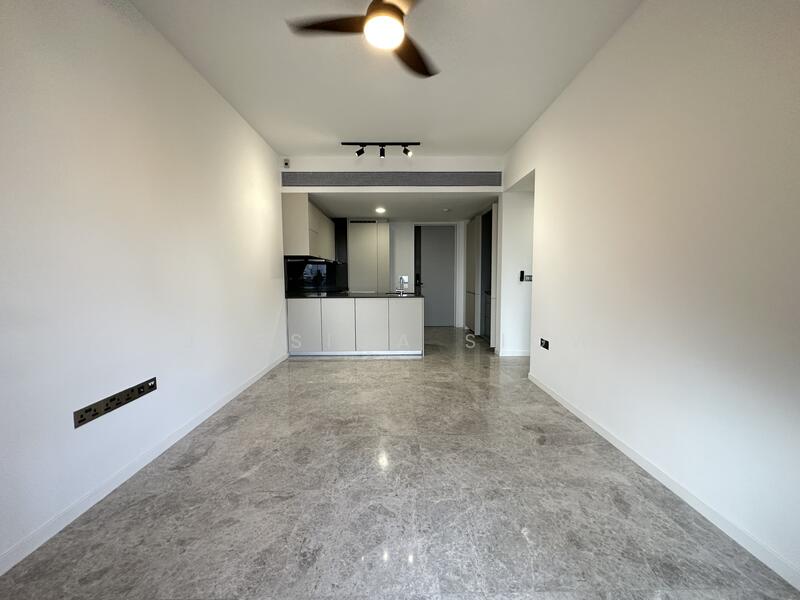
1 properties in Havelock MRT
Havelock MRT station is strategically positioned on the Thomson-East Coast Line (TEL), which has significantly boosted the appeal of surrounding properties since its opening. The central location bridging the financial district and residential areas means demand remains resilient despite broader market cooling, making it relatively a stable investment period compared to peripheral locations. However, with limited new launch supply in the immediate vicinity and existing stock already commanding premium prices (such as the S$2.7 million benchmark for Riviere), buyers should carefully assess their entry point against future appreciation potential.
Properties within the Havelock MRT catchment have demonstrated stronger resilience than the overall market, appreciating steadily as the TEL became operational and fully integrated into commuter routes. The central business district adjacency and proximity to heritage conservation areas like Tiong Bahru have supported valuations, with price growth outpacing HDB resale indices and newer suburban launch trends. The limited availability of strata-titled units in this mature estate means price corrections have been less pronounced, though absolute price points remain significantly higher than average Singapore properties.
The ideal buyer demographic consists of young professionals and established families seeking proximity to the Central Business District, MRT convenience, and walkable urban amenities—particularly expatriates and high-income earners unwilling to compromise on location. Tenants attracted to this area typically work in finance, law, or professional services within the CBD and value the 5-10 minute MRT commute alongside heritage charm and dining precincts. Investors targeting long-term capital appreciation favour this segment given the stable tenant pool and relative scarcity of supply, though rental yields may be moderate compared to high-density growth corridors.
At the S$2.7 million price point exemplified by Riviere, purchasers will require substantial equity or financing capacity, as most banks typically finance 75-80% of the property value for non-landed residential properties, necessitating a minimum cash outlay of S$540,000–S$675,000. Mortgage repayment on a 25-year loan at approximately 3.0–3.5% interest would result in monthly instalments of roughly S$12,000–S$14,000, making affordability contingent upon household income exceeding S$400,000 annually for prudent debt servicing. First-time buyers at this price tier may find it prohibitive, whilst investors and upgraders from smaller units represent the primary market segment.
Singapore permanent residents (SPRs) purchasing a second residential property near Havelock MRT must pay Additional Buyer's Stamp Duty (ABSD) at 15% on the purchase price, significantly elevating the total acquisition cost for a S$2.7 million property by approximately S$405,000. Conveyancing stamp duty remains payable on top of ABSD, calculated on a sliding scale from 1–4% depending on property value, adding a further S$67,500–S$108,000 to transaction costs. Foreign investors face even steeper ABSD at 20%, making this category markedly less attractive for non-citizen investment, whilst owner-occupier SPRs purchasing their first property are exempt from ABSD but remain subject to conveyancing duties.
Rental yields in the Havelock MRT catchment typically range from 2.5–3.5% gross annual return, reflecting the premium location premium and relatively stable, quality tenant base of working professionals—lower than growth corridor averages but compensated by capital appreciation and tenant quality. Vacancy risk remains relatively low given strong corporate demand from CBD employers and the scarcity of comparable units, though extended marketing periods of 4–8 weeks are not uncommon during market downturns or lease expiry cycles. Investors should model conservative occupancy assumptions of 95% and account for tenant acquisition costs and upkeep of heritage-listed or older buildings, which may command higher maintenance levies than newer developments.
Properties within 400 metres of Havelock MRT station command a substantial premium—typically 8–15% above comparable units 800+ metres away—due to the elimination of last-mile connectivity friction and enhanced walk-ability to commercial, retail, and social amenities. Rivière's positioning at 580 metres (approximately 7 minutes' walk) places it at the transition point where MRT convenience remains a compelling feature but some price pressure may exist relative to sub-400 metre units. This proximity band (500–700 metres) often represents optimal value for investors balancing the MRT benefit against acquisition costs, as the marginal convenience gain from closer locations does not always justify proportionally higher capital outlays.
The Havelock MRT precinct is characterised by limited new launch activity given the mature estate profile, conservation constraints on Tiong Bahru's urban conservation area designation, and scarcity of large vacant land parcels suitable for residential development. The Urban Renewal Authority (URA) has designated this zone for selective densification rather than wholesale redevelopment, meaning new supply is unlikely to materially increase beyond current levels in the 5–10 year horizon. This supply constraint structurally supports valuations and rental demand, reducing the risk of oversupply-driven price compression that affects less established locations, though it also limits unit selection for prospective investors.
The vast majority of strata properties near Havelock MRT are 99-year leasehold (from initial grant dates in the 1980s–1990s), with some developments like Rivière recently completed on 99-year tenures, meaning they face theoretical lease depletion in 2080–2090—a consideration unlikely to materially impact current owner-occupiers but increasingly relevant for investors focused on 20–30 year holding periods. Lease decay does not significantly affect valuations until the remaining tenure falls below 30 years; therefore, current units with 60+ years remaining offer comfortable investment windows without immediate refinancing or en-bloc redevelopment concerns. Buyers should verify tenure explicitly and factor potential future upgrading costs (lease extension premiums) into long-term financial projections, particularly for properties approaching the 70–80 year mark in future decades.
Buyers should prioritise verifying building quality, maintenance levy history, and structural condition reports given the prevalence of mature developments in this catchment; older buildings may harbour higher capital expenditure risks for en-bloc or major renovation projects that could materially impact net returns. Contextual factors such as conservation area restrictions (particularly for Tiong Bahru-proximate properties), ease of access to MRT platforms, and proximity to hawker centres versus luxury retail precincts should align with personal lifestyle preferences, as amenity profiles vary significantly across the diverse Havelock precinct. Transaction transparency is essential—engage qualified legal counsel to verify title encumbrances, potential collective sales challenges, and any pending conservation authority directives, as heritage status confers both prestige and regulatory complexity that can affect future disposition optionality.
Free Property Valuation
Enter your postal code and get a free instant valuation report straight to your inbox.