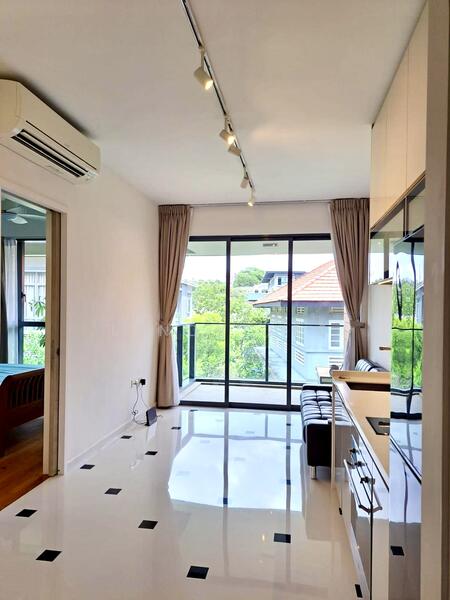
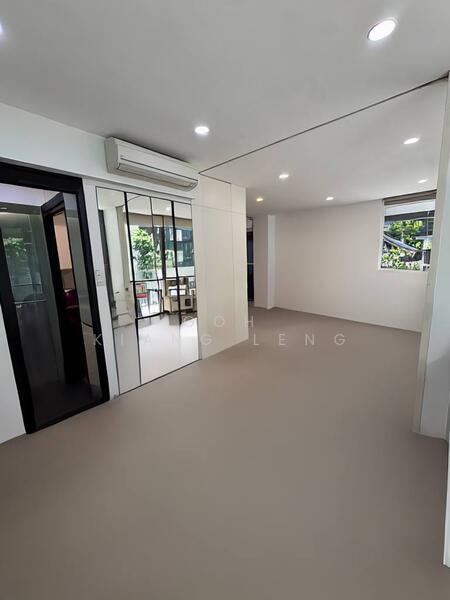
2 properties in Dhoby Ghaut MRT
S$ 1,600,000
17 Mount Sophia · Condo · 5 min (420 m) from CC1 Dhoby Ghaut MRT Station
S$ 1,740,000
20 Handy Road · Condo · 3 min (260 m) from NE6 Dhoby Ghaut MRT Station
Dhoby Ghaut remains one of Singapore's most strategically located stations, serving as a major interchange between the Circle Line and North-East Line, which continues to support property values in the surrounding areas. The properties listed near Dhoby Ghaut are priced between S$1.6 million and S$1.74 million, positioning them within the prime central location (PCL) segment that has shown resilience even during market downturns. Current buyer interest is driven by the precinct's accessibility to Orchard Road shopping district, cultural institutions, and the CBD, making it an opportune time for owner-occupiers seeking long-term value rather than speculative gains.
Properties within walking distance of Dhoby Ghaut have demonstrated stronger price appreciation than suburban developments over the past five years, primarily due to Singapore's sustained urban densification and land scarcity in central locations. The current S$1.6–1.74 million price range reflects a stabilisation phase following the 2022–2023 market correction, with prices holding firm rather than declining significantly as seen in outer-ring estates. Investors comparing Dhoby Ghaut properties to nearby Orchard or Novena precincts will notice competitive pricing, especially given the dual-line MRT advantage and proximity to heritage and cultural attractions that enhance rental appeal.
Properties at Dhoby Ghaut are most attractive to affluent professionals working in the CBD or financial district who prioritise a car-lite lifestyle and short commute times; the 3–5 minute walk to the station positions these units as ideal for time-conscious executives. Expatriate families and empty-nesters also form a strong demographic, drawn by proximity to Orchard Road amenities, international schools like UWCSEA at Mount Sophia, and cultural attractions such as the National Museum and Singapore Art Museum. Tenants seeking these properties typically command higher incomes (above S$12,000 monthly) and are willing to pay premium rents for the location's cosmopolitan credentials and convenience.
Properties in this price range typically fall within Singapore's residential financing parameters, with banks offering up to 75–80% loan-to-value (LTV) for owner-occupiers, meaning buyers require a down payment of S$320,000–580,000 depending on the exact purchase price. For such premium properties, total debt servicing ratios become stricter; buyers are generally expected to have a gross monthly household income above S$20,000 to comfortably service a S$1.2–1.4 million mortgage over 25–30 years. First-time buyer stamp duty relief is not available for properties exceeding S$500,000, so purchasers should budget for additional conveyancing costs; however, as these are new or relatively newer residential projects, buyers may benefit from developer financing schemes or deferred payment plans that ease the upfront capital requirement.
Investors purchasing a second or subsequent residential property near Dhoby Ghaut are liable for ABSD at rates starting at 20% for Singaporean citizens on the second property, rising to 30% on the third and beyond; for permanent residents, the rate is 25% for the second property and 30% for the third onwards. On a S$1.7 million property, ABSD could amount to S$340,000–510,000 for a citizen investor, making the true acquisition cost substantially higher than the headline price and significantly impacting returns-on-investment calculations. Additionally, investors holding the property for fewer than four years upon resale will incur SSD at declining rates (8%–1%), incentivising a longer hold period; savvy investors therefore evaluate Dhoby Ghaut properties primarily as medium-to-long-term appreciation plays rather than short-term trading vehicles.
Properties in the Dhoby Ghaut precinct typically command gross rental yields of 2.5–3.5% per annum, which is lower than suburban new launches but justified by lower vacancy risk and tenant quality; a S$1.7 million property can be expected to generate S$42,500–59,500 in annual rent, with prime properties often achieving the upper end of this range. Vacancy risk is minimal in this highly sought-after location, with average letting periods of 1–3 weeks for well-maintained units, particularly for properties within 5 minutes of the MRT station; expatriate and high-net-worth tenant pools provide stable, longer-term lease commitments (typically 2–3 years) that reduce portfolio churn. However, investors should note that rental growth in mature PCL locations like Dhoby Ghaut has moderated to 1.5–2.5% annually, meaning capital appreciation rather than rental income is the primary wealth-creation mechanism.
Properties within a 5-minute walk (approximately 400–500 metres) of Dhoby Ghaut MRT command a significant location premium of 10–15% compared to properties 10–15 minutes away in the same precinct, reflecting Singapore's commuter-centric valuation methodology. The dual-line advantage of Dhoby Ghaut—serving both the Circle Line and North-East Line—increases property appeal relative to single-line stations, as tenants and buyers gain flexibility to reach multiple destinations without transfers; this translates into measurable rental rate uplift and faster turnover. Sub-5-minute MRT proximity is particularly valuable for the professional renter segment, who represent the majority demand pool in this central location and are willing to pay 8–12% rental premiums for time savings and lifestyle convenience.
The Dhoby Ghaut precinct is largely developed with limited white land, meaning new supply is constrained to en-bloc redevelopment projects and intensification of existing sites; the Government's Draft Master Plan 2024 does not signal major new residential zoning changes in the immediate vicinity, supporting price stability. Any future launches would likely be ultra-premium developments targeting the affluent demographic, ensuring new supply does not commoditise the market or suppress values of existing units at Sophia Hills and Nomu. Investors and buyers should monitor potential Government Land Sales (GLS) sites on Dhoby Ghaut Road or neighbouring parcels, though historical trends suggest such sites are more commonly earmarked for commercial, hospitality, or cultural uses rather than mass residential development.
Most condominium developments near Dhoby Ghaut, including Sophia Hills and Nomu, are built on 99-year leases, which are standard for Singapore freehold-equivalent properties and do not present immediate depreciation concerns for owner-occupiers with a 10–20 year holding horizon. However, investors with longer time horizons (25+ years) should note that lease decay accelerates significantly after the 80-year mark; properties approaching this threshold may face refinancing difficulties and declining valuations, making early exit planning essential. First-time buyers should confirm exact lease commencement dates during due diligence, as a property launched in 2015 with a 99-year lease has approximately 93 years remaining and is substantially safer than one launched in 2005 (89 years remaining), affecting both mortgageability and long-term resale prospects.
Buyers should carefully assess the development's sinking fund and maintenance reserves, particularly for older projects, as central-location condominiums often incur higher-than-average maintenance costs due to premium facilities and older building systems requiring capital expenditure; request reserve fund statements and projected levies for the next 5–10 years. Noise and air quality are material considerations in this precinct given proximity to Orchard Road traffic and the station's bustling commuter flows; units on lower floors or facing the main road may experience elevated noise, whilst upper-floor units with eastern or northern exposures typically command premiums for cleaner air and light. Additionally, evaluate the property developer's track record and financial stability, particularly for recently completed projects like Nomu (2020s launches), as warranty claims, defect rectification, and potential collective sales disputes are more likely to arise in relatively new buildings within prime locations prone to aggressive redevelopment speculation.
Free Property Valuation
Enter your postal code and get a free instant valuation report straight to your inbox.