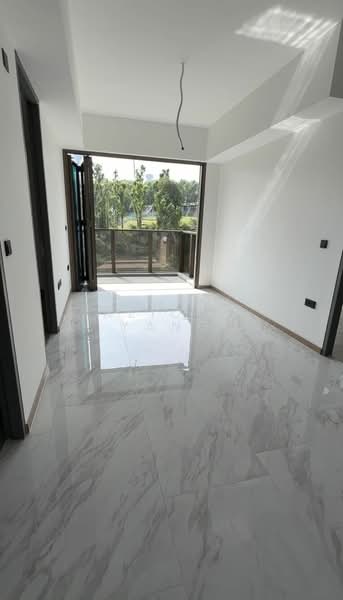
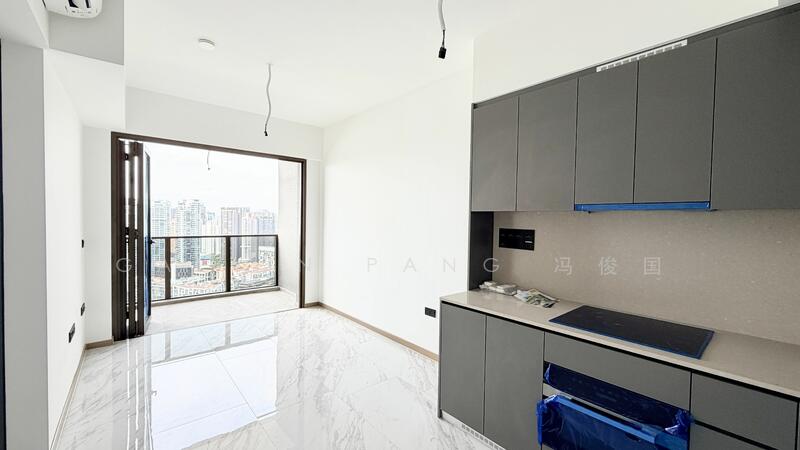
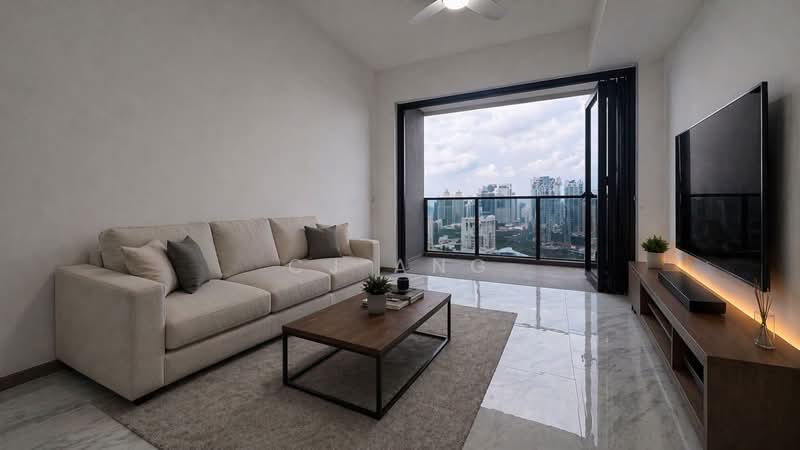
5 properties in Chinatown MRT
S$ 1,780,000
173 Chin Swee Road · Condo · 9 min (760 m) from DT19 Chinatown MRT Station
S$ 1,799,999
173 Chin Swee Road · Condo · 9 min (760 m) from DT19 Chinatown MRT Station
S$ 2,850,000
173 Chin Swee Road · Condo · 9 min (760 m) from DT19 Chinatown MRT Station
S$ 1,820,000
173 Chin Swee Road · Condo · 9 min (760 m) from DT19 Chinatown MRT Station
S$ 1,299,999
173 Chin Swee Road · Condo · 9 min (760 m) from DT19 Chinatown MRT Station
The Chinatown MRT catchment remains a resilient investment area due to its Heritage district status and prime central location, though prices have moderated from their 2021-2022 peaks. Current listings around Chinatown MRT show a pricing range of S$1.3 million to S$2.85 million for similar unit types, indicating a buyer's market where negotiation power is stronger than in previous years. With interest rates stabilising and rental demand remaining steady from both expatriates and local tenants seeking cultural authenticity and convenience, this represents a strategic entry point for investors with medium to long-term holding horizons.
Properties in the Chinatown vicinity have experienced a more moderate correction—typically 8 to 12 per cent—compared to the broader market's 10 to 15 per cent decline, benefiting from its status as a conservation area and cultural hub that attracts both lifestyle buyers and international investors. The relatively stable pricing at The Landmark development, which dominates the current listings, suggests strong demand absorption despite broader market headwinds. However, this area has underperformed compared to emerging OCR corridors and waterfront locations, as buyers have increasingly diversified their portfolios towards newer precincts with superior amenities and modern design.
Owner-occupiers seeking a vibrant urban lifestyle with easy access to dining, entertainment, and cultural experiences form the core buyer demographic, alongside expatriate professionals and young families valuing central location over sprawling space. Tenant profiles lean heavily towards international professionals on assignment packages, particularly those working in the financial district, as well as young affluent Singaporeans prioritising walkability and proximity to nightlife over car-dependent suburban living. These properties also attract culturally conscious investors and heritage enthusiasts who view the location's uniqueness as a hedge against commoditised mass-market residential segments, though the smaller transaction pool compared to mainstream locations does require patience in achieving target rental yields.
Most mortgageable properties in this range command loan-to-value ratios of 75 to 80 per cent for owner-occupiers and 60 to 70 per cent for investors, meaning down payments of S$260,000 to S$1.14 million depending on borrowing capacity and relationship with financial institutions. Monthly mortgage servicing on a S$1.8 million property (typical transaction price observed) at current interest rates of 4.5 to 5.0 per cent over 30 years would approximate S$9,100 to S$10,000, requiring gross household incomes of S$27,300 to S$30,000 to satisfy TDSR (Total Debt Servicing Ratio) constraints. Buyers should also factor in stamp duty liabilities (ranging from 1 to 4 per cent of purchase price) and legal costs (typically 0.6 to 0.8 per cent), which can total S$36,000 to S$90,000 depending on acquisition strategy and whether it is a first or subsequent property purchase.
Investors purchasing near Chinatown MRT face Additional Buyer's Stamp Duty (ABSD) of 5 per cent on purchase price for first additional property purchases and 10 per cent for subsequent ones, on top of standard stamp duty ranging from 1 to 4 per cent, resulting in combined duties of 6 to 14 per cent depending on the investor's property portfolio status. A S$1.8 million property acquisition would incur approximately S$90,000 to S$252,000 in total stamp duties and ABSD, significantly impacting the effective acquisition cost and return-on-investment timeline, necessitating careful modelling of rental yield expectations against these upfront costs. Investors should also consider that as a freehold property in a mixed-use heritage precinct, there are no leasehold decay concerns, but the taxation burden does mean that sub-4 per cent net rental yields observed in some Chinatown listings may not adequately compensate for the capital outlay and holding costs.
Net rental yields for properties near Chinatown MRT typically range from 2.5 to 4.0 per cent depending on unit size, finishes, and amenities, with The Landmark reportedly achieving gross rents of S$4,500 to S$6,500 per month for 2 to 3-bedroom units, translating to net yields (post-maintenance and management fees) of approximately 3 to 3.5 per cent. Vacancy risks are relatively moderate due to sustained demand from expatriate populations, corporate housing programmes, and tourism-adjacent serviced apartments, though seasonal fluctuations occur around Chinese New Year and year-end holiday periods when properties may experience 2 to 4-week vacant spells. However, investors should be aware that the heritage conservation designation restricts renovation flexibility and commercial sub-letting options, potentially constraining the tenant pool compared to unrestricted developments, and that rental growth in this area has lagged the broader market at approximately 1 to 2 per cent per annum over the past three years.
Properties within a 400-metre walking radius of Chinatown MRT (equivalent to approximately 5 minutes on foot) command a 12 to 18 per cent premium compared to those located 500 to 800 metres away, as evidenced by The Landmark's pricing commanding S$1.3 to S$2.85 million despite being classified as 9 minutes walking distance at 760 metres. The MRT connectivity premium reflects the value of seamless interchange capability to the Downtown Line and integration with the broader transport network, particularly for commuters working in the Central Business District and Marina Bay precincts, though the premium has compressed somewhat following the opening of competing developments with shorter MRT walking distances. Properties positioned directly above or adjoining the Chinatown MRT interchange achieve even higher premiums and faster rental/sales cycles, whilst those located deeper in the heritage conservation buffer, though quieter and more residential, suffer slower transaction velocity and require more proactive marketing to achieve comparable pricing benchmarks.
The immediate Chinatown MRT 400-metre catchment faces limited new supply given the conservation precinct status and historical building restrictions, with The Landmark remaining the primary large-scale residential development in the vicinity, meaning existing inventory should benefit from scarcity value and reduced competitive pressure. However, the broader People's Park Complex rejuvenation project and ongoing conservation area revitalisation may introduce new mixed-use developments in adjacent precincts (People's Park, Outram Park vicinity) by 2025 to 2027, potentially introducing alternative supply options that could moderate price appreciation in the Chinatown MRT micro-location. Developers and investors tracking the area should monitor URA guidelines on heritage conservation and mixed-use redevelopment policies, as any relaxation of current building height and density restrictions could materially affect both scarcity premiums and neighbourhood character, directly impacting buyer sentiment for heritage-focused acquisitions.
The Landmark and most residential properties in the Chinatown MRT precinct are freehold titles, eliminating lease decay concerns that plague leasehold properties approaching 60 to 70-year milestones, thereby providing indefinite asset longevity and stronger mortgage security with most lenders preferring freehold collateral. Freehold status also provides superior investment certainities for long-term hold strategies and intergenerational wealth transfer, though it does not exempt properties from enbloc redevelopment risk should future mass redevelopment initiatives affect the conservation area. Investors should verify title documentation meticulously to confirm freehold vs leasehold classification, and should be aware that even freehold heritage properties may face statutory limitations on modifications that could defer or eliminate future redevelopment optionality, a consideration less critical for owner-occupiers but material for investors modelling eventual exit strategies.
Buyers should prioritise inspecting unit orientation and natural light quality, as many Chinatown-adjacent heritage conservation buildings feature irregular floor plates, smaller windows, and obstructed views due to historical architectural constraints that can result in higher cooling costs and less appealing living environments compared to modern developments. Additionally, prospective purchasers must verify parking arrangements comprehensively—The Landmark's parking allocation, availability, and monthly charges (typically S$450 to S$600 per lot in this precinct) can materially affect effective acquisition costs and rental attractiveness for tenant profiles unwilling to pay premium parking fees. Finally, buyers should conduct detailed due diligence on conservation overlay restrictions including approved colour schemes, window modifications, balcony extensions, and renovation limitations, as these constraints directly affect future value appreciation, rental marketability (some tenants resist heritage 'limitations'), and long-term enjoyment, particularly for families seeking renovation flexibility that the heritage status explicitly denies.
Free Property Valuation
Enter your postal code and get a free instant valuation report straight to your inbox.