4 properties in Bedok MRT
S$ 450,000
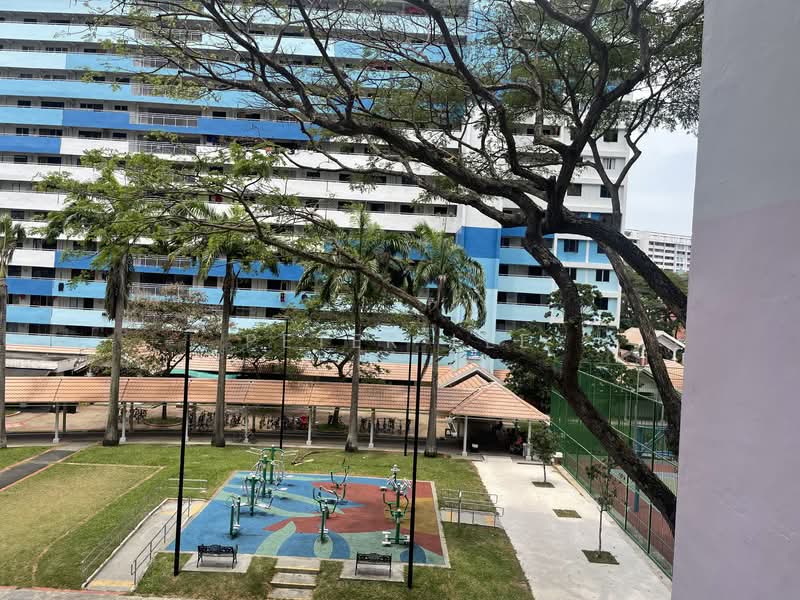
35 Chai Chee Avenue · HDB · 19 min (1.58 km) from EW5 Bedok MRT Station
S$ 495,000
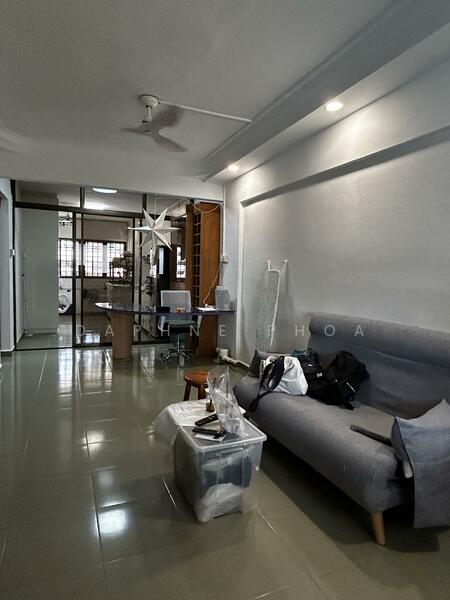
213 Bedok North Street 1 · HDB · 6 min (510 m) from EW5 Bedok MRT Station
S$ 9,980,000
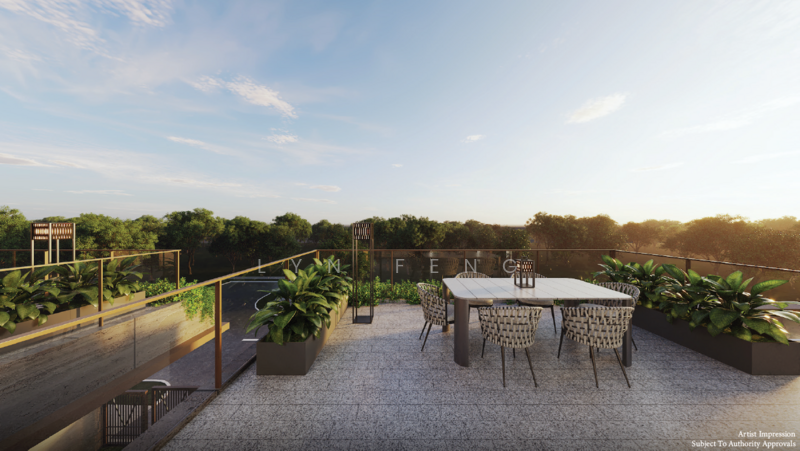
Aida Street · · 8 min (640 m) from EW5 Bedok MRT Station
S$ 399,999
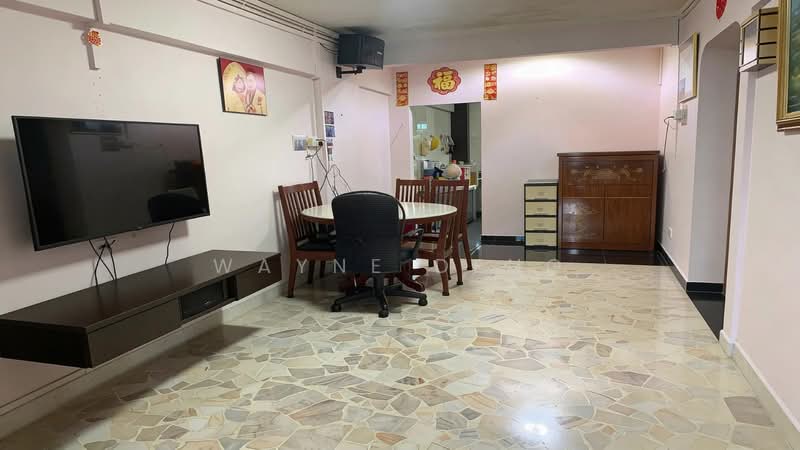
545 Bedok North Street 3 · HDB · 16 min (1.3 km) from EW5 Bedok MRT Station
Bedok MRT remains one of the most established and mature residential nodes on the East-West Line, with strong fundamentals that justify current pricing relative to newer alternatives like Tampines or Pasir Ris. The area's appeal lies in its proven rental demand, established amenities, and proximity to Bedok Town Centre, which continues to drive both owner-occupier and investor interest despite broader market consolidation. However, compared to less mature stations on the line, Bedok's price growth has plateaued in recent years; buyers should assess whether they seek stability and liquidity over appreciation potential.
The sample listings show a clear pricing differential: units within 510 metres (6 minutes' walk) command approximately S$495,000, whilst those 1.3–1.58 kilometres away trade at S$400,000–S$450,000, demonstrating a roughly 10–20% premium for sub-10-minute walking distances. This premium reflects genuine convenience for daily commuters and stronger resale appeal, particularly amongst younger buyers and professionals who prioritise station accessibility for work commutes. Beyond 1.5 kilometres, most buyers shift their calculus towards car dependency or alternative transport modes, reducing the MRT station's amenity value and narrowing the buyer pool accordingly.
HDB flats in the Bedok MRT cluster typically achieve gross rental yields of 2.5–3.5% annually, depending on unit size and condition, placing them in line with East Coast benchmarks but below high-demand nodes like Jurong East or Bukit Merah. Tenant demand remains steady due to the area's proximity to Changi Airport (approximately 15 minutes by MRT), established schooling options in Bedok, and affordability relative to private housing; however, tenant competition is moderate rather than intense, exposing investors to realistic vacancy periods of 4–8 weeks between lettings. The rental market here attracts primarily young professionals, families seeking HDB stability over private apartments, and airport workers, making it a low-volatility but modest-yield category.
Since HDB flats are non-residential-property instruments in Singapore's tax framework, standard ABSD does not apply; however, investors must pay the standard conveyancing stamp duty of 1–4% depending on purchase price (e.g., roughly S$3,000–S$9,000 for a S$450,000 transaction) plus legal, survey, and registration fees totalling approximately S$1,500–S$2,500. First-time HDB buyers enjoy a 0% ABSD and lower stamp duty rates, making this segment particularly attractive for owner-occupiers; second-time and subsequent buyers face a 5% ABSD threshold only when purchasing private residential properties, not HDB flats. Overall acquisition costs for HDB transactions at Bedok MRT typically run 3–5% of purchase price, significantly lower than private property acquisition and a key driver of HDB affordability for investment-minded buyers.
Many HDB flats at Bedok MRT were built during the 1980s and 1990s estate expansion, meaning typical remaining lease lengths range from 70–85 years depending on the specific block; this contrasts favourably with older Kallang or Lavender blocks (50–65 years remaining) but less favourably than newer Pasir Ris developments (90+ years). The HDB lease decay model—where values erode significantly below 70 years remaining—means buyers should scrutinise remaining lease length as a critical valuation factor; a 65-year lease flat may appear cheaper but faces rapid value compression over a 15–20 year holding period. For investment purposes, prioritising flats with 80+ years remaining lease minimises refinancing risk and preserves exit optionality, though this typically narrows available stock and may require paying a 5–10% premium.
Bedok MRT properties attract primarily three buyer cohorts: young professionals aged 25–35 seeking their first HDB near employment nodes (Changi Airport, CBD via MRT); families with school-age children benefiting from established schooling infrastructure in Bedok; and property investors targeting steady-state rental yields without speculative upside. Owner-occupiers dominate this market, comprising an estimated 70–75% of purchases, reflecting the area's mature residential character and strong affordability relative to private housing. An underserved segment includes downsizers and retirees moving from larger private homes—they often overlook Bedok due to preconceived notions of HDB flatness but would benefit from the MRT connectivity, lower maintenance burden, and lower acquisition costs versus maintaining a landed property.
The sample reflects Bedok's unusual heterogeneity: HDB flats (S$400,000–S$495,000) dominate the rental-yield-focused and first-time-buyer segment, whilst the S$9.98 million semi-detached house (Aida Street) targets ultra-high-net-worth individuals seeking landed luxury with MRT convenience and family-oriented privacy. These segments operate in virtually separate buyer markets with different financing, usage patterns, and exit strategies; HDB buyers prioritise affordability and long-term stability, whilst landed-property buyers in this postcode seek lifestyle positioning and are largely insensitive to price. The co-existence reflects Bedok's diverse demographic and economic composition, ranging from aspirational young professionals to established business owners, though most agent volume and transaction frequency concentrate in the HDB segment below S$600,000.
Bedok's HDB stock is mature with limited new estate development; most new residential supply near the station is from private infill projects, including potential en-bloc and collective-sale redevelopments in adjacent postcodes rather than direct Bedok MRT surroundings. The town's development trajectory is now focused on intensification—upgrading existing town centres and facilitating landed-property redevelopment into semi-detached or terraced housing rather than wholesale new HDB launches, meaning HDB supply pressure remains minimal. This supply constraint supports long-term HDB price resilience in Bedok, though it also suggests limited appreciation upside for owner-occupiers; investors should view this market as a yield-generation play with defensive pricing rather than as a growth opportunity comparable to emerging MRT nodes.
Bedok MRT prices sit at the mid-to-high end of the East-West Line for HDB flats (S$400,000–S$500,000 range), comparable to Tampines and slightly elevated versus Pasir Ris, reflecting its maturity and established amenity ecosystem but also potential saturation relative to growth nodes. Nearby alternatives—such as Kaki Bukit (slightly off-line but well-connected, lower price point) or Bedok North (marginal 5–10 minute walk trade-off for 10–15% lower pricing)—offer genuine value arbitrage for price-sensitive buyers willing to sacrifice peak MRT convenience. The broader market context shows Bedok flattening in price momentum, suggesting 'now is a good time' for buyer-occupiers seeking stability over appreciation, whilst investors should demand genuine yield compensation relative to risk of lease decay and demographic shifts towards newer estates.
Priority due diligence includes verifying exact MRT walking distance (as sample listings show variation from 510 metres to 1.58 kilometres significantly affects desirability and resale appeal), assessing unit age and remaining structural warranty (HDB units from the 1980s may face aging building systems), and inspecting for water ingress, structural cracks, or lift/common area defects that are commonplace in mature estates. Procedural checks must include confirming remaining lease tenure precisely through HDB records (not agent estimates), verifying outstanding SERS (Selective En-bloc Redevelopment Scheme) risk or town renewal notifications which could trigger forced acquisition, and obtaining a professional building survey for any unit over 30 years old. Finally, buyers should conduct a 12-month rental-market pulse check—visiting during peak viewing hours (weekday evenings, weekends) to gauge actual tenant demand density and competition, particularly important for investors who may be basing yield assumptions on outdated market conditions.
Free Property Valuation
Enter your postal code and get a free instant valuation report straight to your inbox.