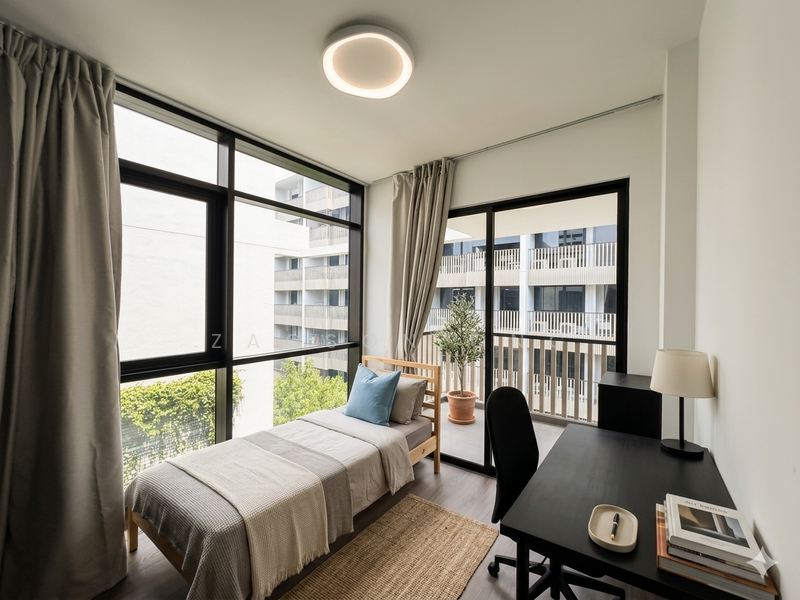
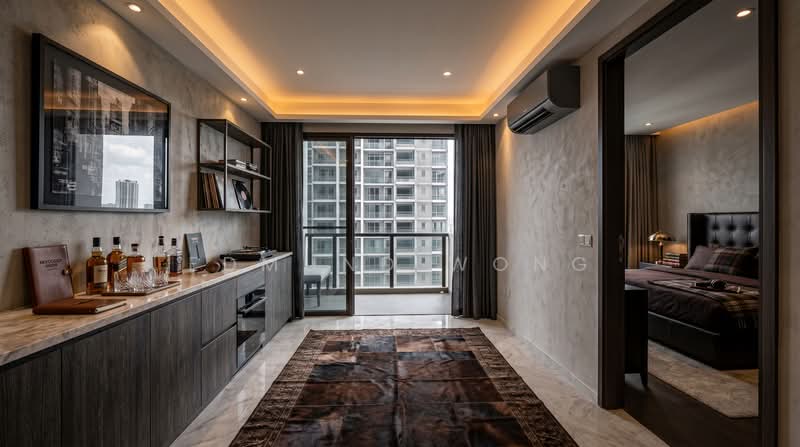
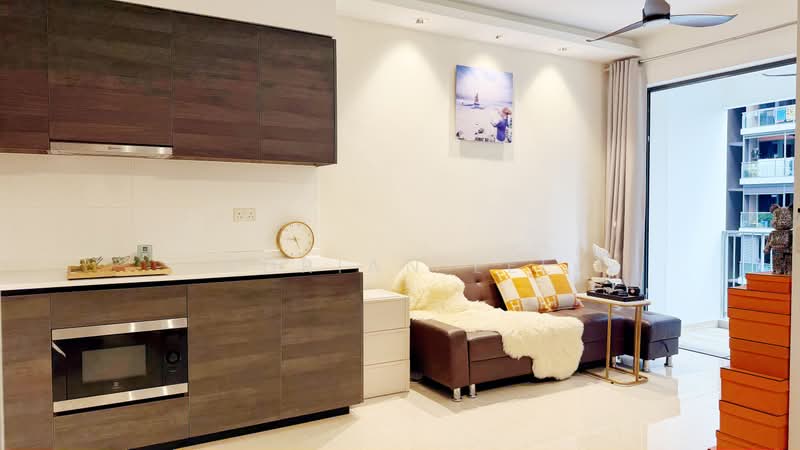
7 properties in Aljunied MRT
S$ 2,138,000
8 Lorong 13 Geylang · Condo · 10 min (820 m) from EW9 Aljunied MRT Station
S$ 1,198,888
2 Sims Drive · Condo · 5 min (450 m) from EW9 Aljunied MRT Station
S$ 2,138,000
8 Lorong 13 Geylang · Condo · 10 min (820 m) from EW9 Aljunied MRT Station
S$ 800,000
39 Lorong 24 Geylang · Condo · 7 min (610 m) from EW9 Aljunied MRT Station
S$ 2,380,000
223 Guillemard Road · Condo · 8 min (630 m) from EW9 Aljunied MRT Station
S$ 730,000
19 Lorong 24 Geylang · Condo · 6 min (530 m) from EW9 Aljunied MRT Station
S$ 1,288,888
2 Sims Drive · Condo · 5 min (450 m) from EW9 Aljunied MRT Station
The Aljunied MRT area presents a mixed market dynamic, with prices ranging from S$730,000 for compact apartments to S$2.38 million for larger condominiums, indicating strong segmentation across buyer profiles. Compared to Paya Lebar and Mountbatten stations on the same East-West Line, Aljunied offers relatively better value, particularly in the S$1–1.3 million band where the majority of listings cluster around Sims Drive properties. Current market conditions favour value-conscious buyers seeking MRT connectivity without the premium pricing of central business district-adjacent stations, though rental demand remains steady due to the area's established character and proximity to Geylang's commercial corridors.
Properties near Aljunied MRT have appreciated modestly in line with the wider condominium market, with mid-range units (S$1–1.5 million) showing cumulative gains of approximately 8–12% since 2021, slightly below the island-wide average of 10–15% driven by prime district strength. The category's relatively stable trajectory reflects its positioning as a mature, accessible residential node rather than a speculative growth area; investors have gravitated towards this belt for steady rental yields rather than capital appreciation spikes. Recent transactional activity suggests stabilisation at current price points, with limited oversupply pressure, making it attractive for buyer profiles prioritising long-term hold periods over short-term flipping returns.
The ideal buyer profile comprises young working professionals, small families, and investor-owner occupiers aged 28–45 seeking convenient East-West Line access without the cost burden of central districts; this demographic is typically employed in the CBD, Changi, or northern business hubs. Tenant demand skews heavily towards young professionals and expatriate workers from nearby industries, attracted by the 5–10 minute commute window and lower rental costs than comparable properties in Districts 9 or 10. The market also appeals to second-time property buyers upgrading from Housing and Development Board (HDB) flats, given the accessible entry price point in the S$1–1.3 million range for quality condominium living.
Properties in the S$730,000–S$2.38 million range are accessible to both first-time and subsequent property buyers, with banks typically offering 80% loan-to-value financing for owner-occupiers, resulting in manageable monthly commitments of S$2,500–S$5,500 at current prevailing interest rates of around 3.5–3.75%. Additional Buyer's Stamp Duty (ABSD) is not applicable for first-time Singapore citizen buyers but kicks in at 5% for permanent residents purchasing their first property and escalates to 20% for Singapore citizens acquiring a second residential unit (non-first-time buyers), making this category particularly attractive for first-time purchasers. The stamp duty on purchase prices at these levels ranges from 3–8%, payable on a sliding scale, which when factored into the total acquisition cost of 15–20% must be incorporated into financing discussions with mortgage advisers.
Properties near Aljunied MRT typically deliver gross rental yields of 3.5–4.5% annually, with the tighter supply of sub-S$1 million units (The Octet, Rezi 24) commanding premium yields of 4.2–4.8% owing to strong demand from expatriate and young professional tenant pools. Vacancy risk is moderate, averaging 6–8 weeks per year in the current market cycle, as the immediate catchment benefits from stable employer presence in nearby industrial zones and the CBD's eastern corridor connectivity. Units positioned within walking distance of the station (under 6 minutes) experience lower vacancy duration and can sustain higher rental rates, whilst properties on Lorong 13 Geylang (circa 10 minutes walk) may face marginal vacancy elongation during economic downturns, though the broader market fundamentals remain supportive.
MRT proximity is a critical valuation lever in this catchment, with properties within 5 minutes' walk (450–530 metres) commanding premiums of 8–12% over equivalent units located 10 minutes away, exemplified by Sims Urban Oasis at S$1.2–1.3 million versus Gems Ville at S$2.138 million despite both being condominiums. The East-West Line's capacity constraints and high utilisation during peak periods make sub-5-minute walkability a significant amenity; buyers and tenants willingly absorb higher prices to avoid congestion-prone secondary roads. Properties such as Sims Urban Oasis, positioned at 450 metres (5 minutes) from EW9 Aljunied, exhibit faster transaction velocities and lower days-on-market compared to properties beyond the 800-metre threshold, demonstrating that station proximity remains the primary demand driver in this locality.
The Aljunied MRT catchment faces limited new residential supply in the near term, as most developable land has been utilised by major projects such as Mori, The Octet, Rezi 24, and Sims Urban Oasis completed within the past 8–10 years. Urban Land Institute forecasts project minimal residential launches within 2–3 kilometres of the station until 2027–2028, supporting price stability and rental demand for current inventory; any significant new supply would likely emerge in the form of mixed-use regeneration along Lorong 13 or Guillemard Road, but such projects remain at preliminary planning stages. This constrained supply backdrop provides current property owners with downside protection and supports the case for long-term holds, whilst investors should remain cognisant of future Government Land Sales in adjacent Kampong Glam or Kallang precincts, which could fractionally compete for the same demographic cohort.
All sampled properties near Aljunied MRT are freehold condominiums or newly launched units with 99-year leasehold tenures, eliminating the lease decay concerns that plague properties in mature Housing and Development Board (HDB) estates or older private housing schemes. However, buyers should verify the exact lease commencement date when evaluating Sims Urban Oasis, Gems Ville, Mori, and other major developments, as a property launched in 2015 with a 99-year lease will have approximately 91 years remaining, which is approaching the threshold where some institutional lenders impose tighter loan-to-value restrictions (typically below 70 years remaining). For investors targeting a 10–15 year hold period, remaining tenure of 80+ years is largely immaterial, but those contemplating longer ownership horizons or eventual disposition should factor in the gradual tenure decay trajectory, particularly as Singapore's 99-year leasehold market matures and tenure becomes a more pronounced valuation variable.
Critical shortlisting criteria include verified MRT walking distance (favour properties within 450–530 metres, avoiding marketing claims exceeding 10 minutes), unit orientation and natural light exposure (east-facing units on Sims Drive command 5–8% premiums due to morning light and lower solar heat gain versus west-facing), and condominium facilities maturity and maintenance reserve adequacy. Red flags to monitor include aged mechanical and electrical systems in developments completed pre-2010, inadequate condominium sinking funds (typically signalled by special levies exceeding S$5,000 annually), and proximity to food establishments or industrial uses on Lorong 24 Geylang, which can generate olfactory and noise concerns during evening and night hours. Additionally, verify that units are not located above or adjacent to hawker centres, food courts, or automotive service facilities, as these land uses can adversely impact residual rental appeal and resale prospects, particularly for expatriate tenant segments seeking quieter residential environments.
Developments such as Sims Urban Oasis and Mori, managed by established condominium management firms, typically maintain higher maintenance standards and proactive sinking fund policies, resulting in lower special levies and better preservation of residual values compared to older, self-managed properties. The governance structure varies significantly: larger developments (200+ units) generally benefit from professional management and economies of scale in maintenance contracting, whilst smaller enclaves such as The Octet and Rezi 24 may rely on owner-appointed managing agents, introducing variability in service quality and reserve adequacy. Investors and owner-occupiers should request five-year financial statements, minutes from annual general meetings, and details of any outstanding disputes or planned major works before committing capital, as well-governed condominiums demonstrably outperform poorly-administered counterparts by 8–12% in residual valuations over 10-year investment horizons, reflecting lower tenant attrition and faster transaction velocities.
Free Property Valuation
Enter your postal code and get a free instant valuation report straight to your inbox.