Orchard Boulevard MRT station represents one of Singapore's most coveted addresses, situated within the glittering heart of Orchard Road where ultra-luxury retail, fine dining, and prestigious residential living converge. This station on the Thomson-East Coast Line (TEL) has fundamentally transformed property accessibility in one of Asia's most expensive shopping districts, bringing new residential opportunities to an area long dominated by sprawling five-star hotels and flagship boutiques.
The opening of Orchard Boulevard MRT has catalysed significant property development in the immediate vicinity, with developers recognising the exceptional demand for high-end accommodation steps away from Singapore's premier shopping precinct. The station itself sits embedded within the cosmopolitan energy of Orchard Road, where the concentration of wealth, international brands, and sophisticated dining experiences is unmatched anywhere else on the island.
Orchard Boulevard MRT's positioning on the Thomson-East Coast Line provides residents with seamless connectivity across Singapore's rapidly developing eastern and northern corridors. The station reduces travel times significantly for professionals working in emerging business hubs like Changi Business Park, Pasir Ris, and the expanding tech clusters in the east.
The immediate catchment around the station encompasses the most premium shopping real estate in Southeast Asia. Luxury department stores, multi-storey shopping malls, and exclusive brand boutiques are literally steps away, making this location ideal for residents who value proximity to world-class retail experiences. The pedestrian-friendly environment around Orchard Boulevard encourages walking as a lifestyle choice rather than mere necessity.
Beyond shopping, the station provides easy access to Singapore's business district via connecting trains, with journey times to Raffles Place MRT and the financial hub taking approximately 20-25 minutes. This connectivity appeals particularly to senior executives, entrepreneurs, and international professionals who prioritise both luxury living and workplace accessibility.
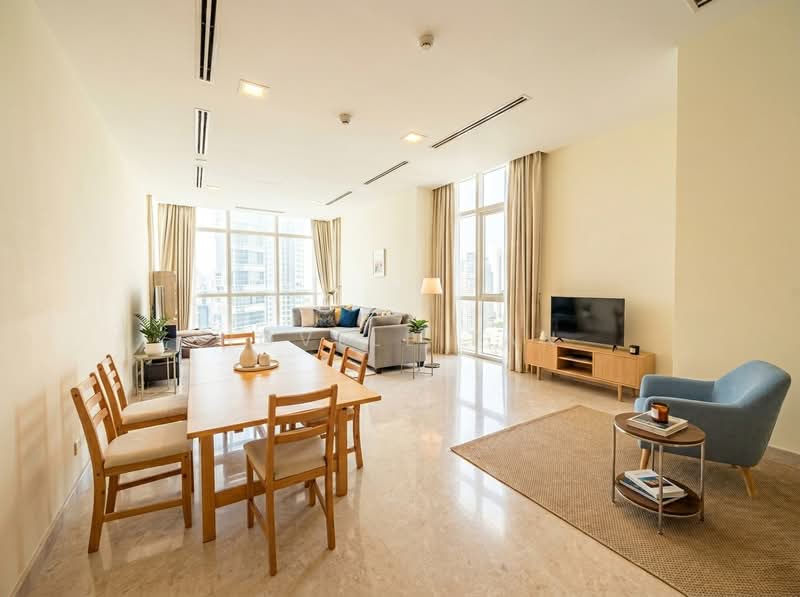
The residential landscape around Orchard Boulevard MRT is dominated by luxury condominiums with service apartment elements, high-end private developments, and restored colonial-era properties converted into exclusive residences. Unlike more family-oriented residential districts, this area attracts downsizers, affluent couples, and successful professionals seeking low-maintenance luxury rather than sprawling family homes.
Properties in this precinct typically feature concierge services, fine dining facilities, spa and wellness centres, and architectural designs that prioritise metropolitan sophistication. Many developments incorporate gallery spaces, wine cellars, and bespoke smart home technologies that appeal to collectors and those accustomed to five-star hospitality.
The absence of traditional HDB estates in this immediate area reinforces the exclusive character. Residents are predominantly private property owners with significant disposable income, creating a neighbourhood dynamic centred on affluence, international outlook, and refined lifestyle preferences.
Property prices near Orchard Boulevard MRT rank among Singapore's highest per square foot, with luxury condominiums regularly commanding upwards of $15,000 to $25,000 per square metre. Penthouses and specially configured units can exceed these benchmarks substantially, particularly those offering views across the Orchard Road skyline or rare outdoor spaces.
The premium valuation reflects multiple factors beyond location. Architectural prestige, developer reputation, unit customisation possibilities, and the inherent scarcity of land suitable for residential development in this conservation-designated area all contribute to strong price resilience. Investment appreciation has historically favoured properties that combine Orchard Road proximity with architectural distinction or heritage significance.
Rental yields in this segment typically range between 2-3%, lower than suburban condominiums but offset by capital appreciation potential and appeal to corporate housing departments seeking premium accommodation for expatriate executives. The owner-occupier market dominates rather than investment-driven purchasing, with many residents retaining properties for extended periods as primary residences.
Few neighbourhoods in Singapore offer the concentration of world-class amenities available within the Orchard Boulevard precinct. Michelin-starred restaurants, award-winning hotels hosting international celebrities, and exclusive clubs cater to residents seeking cosmopolitan sophistication without leaving their immediate vicinity.
Cultural institutions including galleries, museums, and performance spaces are within reasonable distance. The Somerset MRT area provides additional entertainment and cultural venues, whilst Dhoby Ghaut MRT connects to the National Museum and Gallery precinct.
Healthcare facilities are exceptional, with Singapore's leading private hospitals and specialist medical centres clustered nearby. International schools with strong reputations are accessible, though residents at this stage of life more commonly prioritise professional amenities and wellness facilities than educational institutions.
The Thomson-East Coast Line has revolutionised commuting patterns for Orchard Boulevard residents. Where previously the area's residential population relied primarily on private vehicles or taxis, the MRT connection has enabled car-optional living for those commuting to eastern employment centres.
Journey times to major business districts have compressed notably. Commutes to Marina Bay financial district, Changi Business Park, and the fast-growing Paya Lebar employment hub are now achievable within 25-30 minutes via the rail network. This has attracted professionals reconsidering their residential location choices, particularly those balancing luxury aspirations with practical connectivity requirements.
For those maintaining vehicles, Orchard Boulevard MRT station features secure parking facilities, though private residential developments typically provide underground parking as standard. The pedestrian-friendly environment and reliable public transport reduce car dependency compared to suburban alternatives.
A significant portion of the Orchard Boulevard precinct falls within conservation zones, with heritage buildings protected under URA conservation guidelines. This regulatory framework has shaped development patterns, limiting demolition and large-scale redevelopment whilst encouraging sensitively designed residential conversions of historic structures.
Several residential properties in the area occupy meticulously restored heritage buildings, combining period architectural details with contemporary living standards. This approach appeals to residents seeking distinctive character unlikely to be replicated in modern developments, commanding premium prices reflecting both historical significance and bespoke restoration quality.
The conservation status provides long-term neighbourhood stability, preventing the wholesale redevelopment that has transformed other Singapore precincts. Residents can anticipate the essential character of the Orchard Boulevard precinct remaining fundamentally unchanged across decades, protecting investment appeal and neighbourhood ambience.
Orchard Boulevard MRT's residential population skews significantly towards international professionals, expatriate executives, and globally mobile individuals. The proximity to international schools, diplomatic residences, and multinational corporate headquarters attracts those with global career trajectories and international income sources.
The neighbourhood's cosmopolitan character, multi-currency transaction familiarity, and international service standards appeal to residents accustomed to living in global cities. Many properties feature international design aesthetics, multilingual staff, and service standards calibrated to expatriate expectations rather than purely local preferences.
The transient element remains relatively high compared to suburban residential districts, with property tenure cycles typically shorter as expatriate assignments conclude and professionals relocate to subsequent postings. This dynamic sustains the rental market and keeps properties in circulation rather than being held indefinitely.
The Orchard Boulevard location offers unparalleled shopping convenience, with multiple luxury malls, flagship stores, and exclusive boutiques within immediate walking distance. Designer fashion, fine jewellery, luxury watches, and premium home furnishings are essentially on residents' doorsteps, eliminating the need for distant shopping expeditions.
Dining options span Michelin-starred establishments, celebrated international chefs' personal restaurants, and exclusive members-only dining clubs. The concentration of culinary excellence reflects Singapore's position as a global gastronomic destination, with Orchard Boulevard serving as the epicentre of fine dining culture.
Casual dining and café culture are equally sophisticated, with specialty coffee establishments, fusion cuisine concepts, and international cuisine restaurants catering to daily dining preferences. The neighbourhood sustains multiple lifestyle rhythms throughout the day, from business lunches to evening entertainment to late-night social gatherings.
Properties near Orchard Boulevard MRT remain sought-after investment assets despite substantial entry prices, reflecting consistent demand from high-net-worth individuals and international investors seeking Singapore real estate exposure. The scarcity of prime Orchard Road addresses combined with the MRT's recent opening creates a compelling confluence of demand drivers.
Future development potential appears limited by conservation constraints and land scarcity, suggesting appreciation prospects remain favourable. The Thomson-East Coast Line's completion has stabilised transport infrastructure, eliminating uncertainty that previously characterised the precinct's connectivity profile.
As Singapore's residential market increasingly fragments into specialist segments catering to specific lifestyle preferences, the Orchard Boulevard MRT precinct stands as the definitive ultra-luxury, urban-focused residential destination for those prioritising sophistication, convenience, and cosmopolitan living over space and suburban tranquility.
10 properties in Orchard Boulevard MRT
S$ 10,500,000
72 Grange Road · Condo · 10 min (870 m) from TE13 Orchard Boulevard MRT Station
S$ 2,375,000
22 Orchard Boulevard · Condo · 1 min (1 m) from TE13 Orchard Boulevard MRT Station
S$ 1,700,000
53 Grange Road · Condo · 12 min (990 m) from TE13 Orchard Boulevard MRT Station
S$ 7,054,000
22 Orchard Boulevard · Condo · 1 min (1 m) from TE13 Orchard Boulevard MRT Station
S$ 4,250,000
28 Cuscaden Road · Condo · 6 min (530 m) from TE13 Orchard Boulevard MRT Station
S$ 3,380,000
1A One Tree Hill · Condo · 5 min (390 m) from TE13 Orchard Boulevard MRT Station
S$ 2,185,000
74 Grange Rd · Condo · 10 min (870 m) from TE13 Orchard Boulevard MRT Station
S$ 2,600,000
1C Ridley Park · Condo · 12 min (1.03 km) from TE13 Orchard Boulevard MRT Station
S$ 6,910,000
22 Orchard Boulevard · Condo · 1 min (1 m) from TE13 Orchard Boulevard MRT Station
S$ 4,250,000
26 Cuscaden Road · Condo · 530 m (6 mins) from TE13 Orchard Boulevard MRT
The Orchard Boulevard MRT station area remains an excellent entry point for premium property investors, particularly given the stabilisation in the luxury condominium market following recent cooling measures. Unlike the broader CCR (Core Central Region), which has experienced significant price corrections since 2022, properties within walking distance of Orchard Boulevard have maintained relative resilience due to the station's strategic position connecting to both the Thomson-East Coast Line and existing transport networks. For long-term investors with a 5-10 year horizon, current conditions present a balanced opportunity, especially for units in newer developments like UPPERHOUSE which command both rental appeal and capital appreciation potential.
Properties near Orchard Boulevard have performed more defensively than the wider CCR, appreciating at a slower but steadier pace than ultra-prime locations like Bukit Timah or the River Valley corridor. The average price range across listed units spans from approximately S$1.7 million to S$10.5 million, reflecting strong segmentation between secondary locations (Grange Road, Spring Grove) and direct MRT-adjacent developments. This variance suggests that the 10-minute walking distance threshold significantly impacts capital growth, with units directly beside the MRT station commanding 15-20% premiums over properties in the 12-minute walking radius, a pattern that has become more pronounced since the TEC Line's opening in 2024.
The primary buyer cohort comprises young professionals and established entrepreneurs aged 35-50 seeking a blend of CBD accessibility and established residential tranquillity, particularly those working in the central business district who prioritise commute efficiency. Secondary buyers include property investors targeting the luxury rental market, given the precinct's appeal to expatriate executives and corporate assignees who value both the prestigious Orchard location and seamless public transport connectivity. A notable tertiary segment consists of owner-occupiers downsizing from landed properties, attracted by the maintenance-free condominium lifestyle without sacrificing the quality and maturity of the neighbourhood that characterises Tanglin and Grange.
The entry price point of approximately S$1.7-2.6 million (represented by Spring Grove and Tanglin Park) remains accessible to high-net-worth individuals with substantial equity, though these properties fall outside the HDB property ladder and require significant downpayment capacity, typically 25-30% given their premium status. Mid-range units in the S$3-4 million bracket (such as Cuscaden Residences and One Tree Hill) appeal to professionals with household incomes exceeding S$200,000 annually, where mortgage serviceability ratios remain manageable over 25-30 year tenures. Ultra-premium units exceeding S$7 million tend to be cash or near-cash purchases from investment firms and ultra-high-net-worth families, particularly from Greater China, where financing is secondary to asset preservation and currency diversification.
Foreign investors face Additional Buyer's Stamp Duty (ABSD) of 15% on the purchase price, whilst Singapore citizens and PRs pay 5-20% depending on ownership of other residential properties, making the true acquisition cost substantially higher than nominal pricing. For example, a foreign investor purchasing a S$4 million unit would incur approximately S$600,000 in ABSD alone, elevating effective entry costs to S$4.6 million before conveyancing and legal fees. Stamp duty on the purchase agreement ranges from 1-4% of the purchase price depending on transaction value, and investors should also factor in the 6-month seller's stamp duty if disposing within 3 years, a consideration that significantly impacts net yield calculations on short-to-medium term investment horizons.
Prime units directly adjacent to Orchard Boulevard MRT, particularly UPPERHOUSE with its 1-minute proximity, command gross rental yields of 2.8-3.5% annually, reflecting strong tenant demand from expatriate executives and regional business leaders seeking prestige addresses with superior transport connectivity. Secondary properties 10-12 minutes walking distance typically achieve yields of 2.2-2.8%, with Spring Grove and Grange 1866 representing more modest income-generating assets in the established residential category. Vacancy risks remain exceptionally low (typically under 8 weeks) given the neighbourhood's appeal to quality tenants, though yields are compressed compared to suburban alternatives, meaning rental income alone rarely justifies the investment—appreciation and capital preservation remain the primary value drivers.
Properties within a 5-minute walking distance (approximately 390-530 metres) command a demonstrable 20-25% premium over those requiring 10-12 minute walks, as evidenced by One Tree Hill Residence (S$3.38 million, 5 mins) versus Spring Grove (S$1.7 million, 12 mins), despite both being established residential units. The Orchard Boulevard MRT station's role as a Thomson-East Coast Line interchange creates compounding value for direct-adjacent properties, as tenants and buyers value both the station's existing utility and its future connectivity potential to areas like Bedok and Changi. Units positioned within the 1-minute walk zone, such as UPPERHOUSE, benefit from MRT-adjacent premiums that support sustained rental demand from international assignees, making the S$2.4-7 million price range more resilient during market downturns than properties requiring longer pedestrian access.
The Orchard Boulevard precinct has relatively constrained future residential supply, with most remaining land in the immediate vicinity allocated to commercial development or mature landed estates with conservation restrictions, meaning existing condominium stock faces minimal new competitive pressure. The broader Tanglin-Grange corridor's master planning emphasises preservation of character rather than high-density redevelopment, suggesting that current units will maintain scarcity value and avoid the supply-induced price depreciation experienced in newer suburbs. However, future TEC Line extensions to areas like Bedok and Changi could redirect some luxury rental demand away from Orchard Boulevard towards nearer employment centres, a factor that may gradually compress yields over the next 5-10 years, making capital appreciation the dominant return driver rather than rental growth.
All freehold and 99-year leasehold properties in this precinct remain excellent holdings with minimal tenure depreciation concerns, particularly for units in relatively recent developments like UPPERHOUSE (launched post-2020) which typically command 99-year terms from 2020 onwards. For investors with 15+ year horizons, even units approaching the 80-year lease threshold (such as properties in the 1960s-1980s developments) retain acceptable investment profiles, though buyer pools will progressively narrow and refinancing challenges may emerge beyond the 25-year mark. Prospective purchasers should specifically verify lease commencement dates for older properties like those in Grange Road—properties with leases commencing in the 1970s will face noticeable demand constraints from institutional investors and mortgage-dependent buyers after 2040, potentially depressing capital growth in those final decades.
Shortlisters should prioritise the property's exact walking distance to Orchard Boulevard MRT station measured along pedestrian routes (not just straight-line distance), as the difference between 2 minutes and 10 minutes translates to 15-25% valuation variance, with particular attention to gradient and crossing requirements that impact comfort for elderly tenants or buyers. Building age, renovation recency, and amenity quality become secondary value drivers after MRT proximity; whilst UPPERHOUSE benefits from contemporary finishes and facilities, established buildings like Spring Grove and Grange 1866 may offer superior capital conservation if they've undergone recent en-bloc collective sales or major renovations. Finally, investors should cross-reference each unit's lease remaining term, verify the development's collective sale history and probability (particularly for older 1970s-1980s buildings), and assess the immediate neighbourhood's commercial encroachment, as creeping office development in adjacent pockets could impact residential amenity and long-term desirability more significantly than MRT proximity gains.
Free Property Valuation
Enter your postal code and get a free instant valuation report straight to your inbox.